Weighted Vest Walking: Helpful Fitness Upgrade or Just Another TikTok Trend?
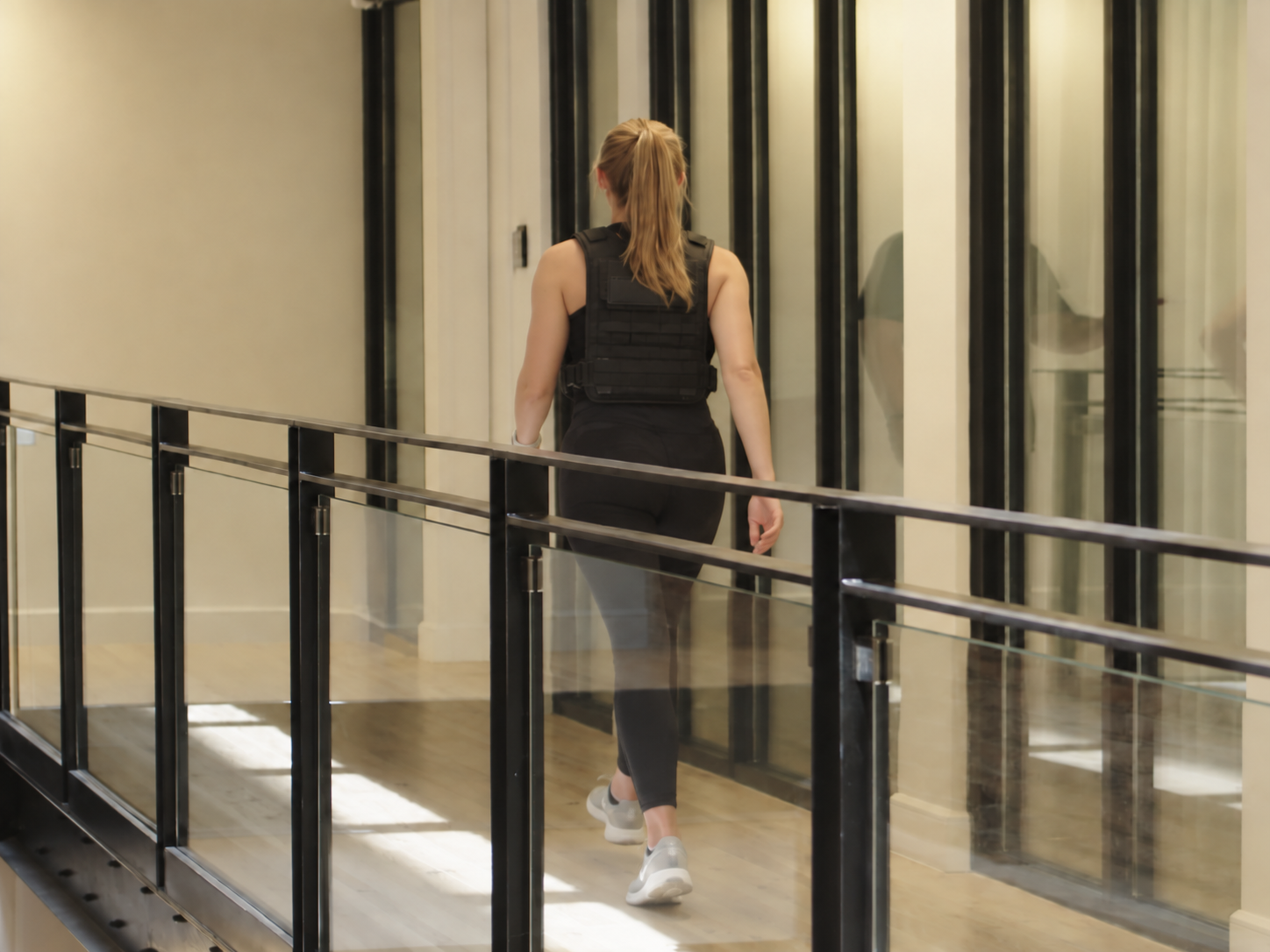
Weighted vests have officially entered the mainstream fitness conversation. Scroll through TikTok, Instagram, or your favorite fitness feed and you may see people wearing them on neighborhood walks, treadmill sessions, stair workouts, and even while doing household chores. The idea sounds simple: take something you already do, add a little extra weight, and suddenly your everyday walk becomes more challenging.
But does weighted vest walking actually offer meaningful fitness benefits, or is it another social media trend that looks more impressive than it really is?
There is some real science behind the idea. Adding external weight can increase the demand of a normal walk, making your body work harder than it would at the same pace without the vest. But that does not automatically mean heavier is better, everyone needs one, or wearing a weighted vest should replace traditional strength training.
Like most fitness tools, the answer depends on how you use it.
What Is Weighted Vest Walking?
Weighted vest walking is exactly what it sounds like: walking while wearing a vest designed to distribute additional weight around your upper body. You may also hear the term “rucking,” although rucking traditionally involves walking with weight carried in a backpack rather than a vest.
The concept is not particularly new. Athletes, military personnel, firefighters, and other tactical populations have trained with additional load for years. What has changed is how accessible weighted vests have become to the average person and how frequently they now appear in mainstream fitness content.
Instead of adding another complicated workout to the week, people are looking for ways to make activities they already enjoy more effective. For someone who regularly walks for exercise, a weighted vest can potentially provide that progression without requiring them to start running or dramatically increase their workout time.
What Are the Benefits of Walking With a Weighted Vest?
The first thing you are likely to notice when wearing a weighted vest is that the same walking route suddenly feels harder.
Adding weight increases the amount of work your body has to perform with every step. Your legs are moving more total load, your core has to stabilize your torso, and your cardiovascular system may have to work harder to maintain the same pace. Harvard Health notes that adding weight to walking can increase exercise intensity and may contribute to benefits involving muscle strength, bone density, cardiovascular fitness, calorie expenditure, and core strength.
That makes weighted vest walking particularly interesting for people who enjoy walking but feel like their usual route no longer provides much of a challenge. Instead of immediately walking much farther or dramatically increasing speed, adding a small amount of resistance can change the stimulus.
There is also a functional fitness component. Daily life regularly requires us to move while carrying weight. Groceries, luggage, backpacks, children, laundry baskets, yard supplies, and countless other everyday tasks all require the body to stabilize and move under load. Training your body to comfortably handle additional resistance may help support the type of strength and endurance that matters outside of a workout.
Does a Weighted Vest Burn More Calories?
Probably—but that should not be the only reason you wear one.
Because your body is moving more mass, walking with additional weight generally requires more effort than walking the same route at the same speed without it. That can increase energy expenditure during the activity. Cleveland Clinic also notes that weighted vests can help increase calorie expenditure during exercise.
However, turning every fitness tool into a calorie-burning competition can quickly miss the bigger picture. A weighted vest may be more valuable as a way to gradually increase exercise intensity, challenge your cardiovascular system, and build greater tolerance for moving under load.
If your primary goal is getting stronger, the vest should also not become a substitute for a well-designed strength training program.
Can Weighted Vest Walking Replace Strength Training?
This is where social media can make things confusing.
Wearing a weighted vest makes walking harder, but “harder” does not automatically mean it provides the same stimulus as progressive strength training. Cleveland Clinic specifically notes that weighted vests by themselves are not enough to build strength in the way a structured strength program can, although they can complement strength training.
Squats, rows, hinges, presses, carries, lunges, and other resistance exercises allow you to progressively challenge specific muscles through larger ranges of motion. Those movements can also be adjusted according to your goals, current abilities, injury history, mobility, and training experience.
Think of weighted walking as one tool in the toolbox rather than the entire toolbox.
For many people, a better weekly fitness routine may include traditional strength training, regular walking, mobility work, and cardiovascular exercise. A weighted vest can then become an optional progression within that bigger plan.
How Heavy Should a Weighted Vest Be?
This is one place where more is definitely not always better.
It can be tempting to buy a heavy vest because you assume more weight will produce faster results. The problem is that increasing your load too quickly can change your posture, shorten your stride, create unnecessary fatigue, and increase stress on muscles and joints.
Harvard Health suggests starting around 10% of body weight, while Cleveland Clinic recommends roughly 5% to 10% and cautions that additional weight beyond that may increase injury risk without providing meaningful additional benefit for many people.
Someone completely new to weighted walking may want to begin toward the lighter end of that range. The goal is not to finish your walk feeling crushed under the vest. Ideally, you should still be able to maintain controlled posture and a natural walking pattern.
A properly fitted vest matters too. Weight that shifts dramatically as you move can make walking awkward and may change your mechanics. Cleveland Clinic recommends a secure fit and breathable material, particularly if you plan to exercise outdoors.
When a Weighted Vest May Not Be the Best Choice
Weighted vest walking is not automatically appropriate simply because walking without one feels comfortable.
Adding external load changes how much stress your body needs to manage. Harvard Health cautions that weighted walking can strain joints and muscles and specifically advises against it for people with certain neck or back issues and during pregnancy. Cleveland Clinic also recommends talking with a physician if you have previous injuries before adding a vest.
Pain while wearing the vest is not something to push through just because the workout is supposed to be challenging. Sharp joint pain, significant back discomfort, changes in gait, unusual numbness, or symptoms that continue after the workout are signs that the exercise should be reassessed.
There are plenty of ways to progress walking without adding weight. You can increase your pace, extend your route, introduce hills, use intervals, improve walking consistency, or pair your walk with strength exercises.
The best progression is the one your body is actually prepared to handle.
Weighted Vest Walking Works Better When It Is Part of a Plan
One of the biggest problems with fitness trends is that they often focus on the tool instead of the person using it.
Buying a weighted vest does not automatically tell you how heavy it should be, how often you should wear it, how long you should walk, whether hills are appropriate, or how those walks should fit around your strength workouts.
That is where individualized programming becomes important.
For one person, a trainer may suggest adding a light vest to one or two walks during the week. Another person may benefit more from building lower-body strength first. Someone else may already be getting plenty of resistance training and need an easy recovery walk instead of turning every walk into another challenging workout.
Fitness becomes much more effective when every workout has a reason for being there.
How Weighted Walking Could Fit Into Your HOMEFIT Routine
One advantage of weighted vest walking is that it does not require a commercial gym. That makes it easy to integrate into the kind of personalized, location-flexible training HOMEFIT already provides.
A client receiving in-home personal training in Birmingham, Homewood, Hoover, Mountain Brook, or Vestavia Hills could combine a neighborhood walk with a trainer-designed strength program at home. Someone working with HOMEFIT in Huntsville or Madison might use weighted walking as part of a broader functional fitness plan focused on strength, balance, and endurance.
The same principle applies throughout HOMEFIT's Tennessee service areas, including Nashville, Brentwood, Franklin, Murfreesboro, and Chattanooga. The workout does not have to revolve around commuting to a gym. A trainer can build your program around your home, neighborhood, apartment gym, workplace, or another training environment that fits your routine.
HOMEFIT also currently serves Georgetown and Round Rock, Texas; 30A/Santa Rosa Beach and Pensacola, Florida; Medford, Oregon; and additional Alabama communities including Auburn/Opelika and Fairhope. The surroundings may change, but the principle stays the same: training should adapt to the individual instead of forcing every individual into the same program.
Your trainer can help determine whether weighted vest walking actually supports your goals and, if it does, how to incorporate it without sacrificing the strength training, recovery, mobility, and cardiovascular work your body needs.
So, Is Weighted Vest Walking Worth the Hype?
Weighted vest walking is not just a TikTok gimmick.
There are legitimate reasons to use additional resistance during a walk, especially if regular walking has become easy and you are looking for a manageable way to increase intensity. A properly selected vest can make a familiar route more challenging without requiring you to suddenly start running or double your workout duration.
But the vest is not magic.
You do not need one to get fit. You do not need the heaviest version you can tolerate. And you definitely do not need to copy someone else's weighted walking routine simply because it appeared on your feed.
The real value comes from knowing when to progress, how much resistance makes sense, and how the activity fits into everything else you are doing.
That is the difference between following a fitness trend and turning a useful fitness tool into part of a sustainable program.
Curious Whether Weighted Vest Walking Belongs in Your Routine?
HOMEFIT takes the guesswork out of building a fitness program around your goals, schedule, experience level, and lifestyle. Our certified trainers provide personalized in-home, onsite, and virtual personal training so your workouts can meet you where you actually are.
Whether you want to improve strength, cardiovascular fitness, mobility, balance, healthy aging, or simply become more consistent, your trainer can help you decide which tools are worth using—and which ones you can leave on TikTok.
HOMEFIT currently serves communities throughout Alabama, Tennessee, Texas, Florida, and Oregon, with in-home personal training available in Birmingham, Huntsville, Fairhope, Auburn/Opelika, Nashville, Brentwood, Franklin, Murfreesboro, Chattanooga, Georgetown, Round Rock, 30A/Santa Rosa Beach, Pensacola, Medford, and surrounding service areas.
Schedule your complimentary consultation and experience the HOMEFIT difference with a free first personal training or yoga session. Call 855-934-3834 or email info@thehomefit.com to get started.