Your Joints Aren't Worn Out — They're Starved for Motion: How In-Home Training Eases Arthritis Pain
When your joints hurt, movement can feel like the very thing you should avoid. A stiff knee makes the stairs look less inviting. Sore hands make gripping weights seem unrealistic. A difficult rheumatoid arthritis flare can make an ordinary trip across town feel like an event that requires planning, energy, and recovery.
For years, people with arthritis were often told to protect their joints by doing less. Today, the message is more nuanced. The right kind of exercise can help improve strength, movement, coordination, and everyday function for people living with rheumatoid arthritis and osteoarthritis. The American College of Rheumatology identifies flexibility, strengthening, aerobic exercise, and mindful movement as important parts of an arthritis-friendly exercise plan.
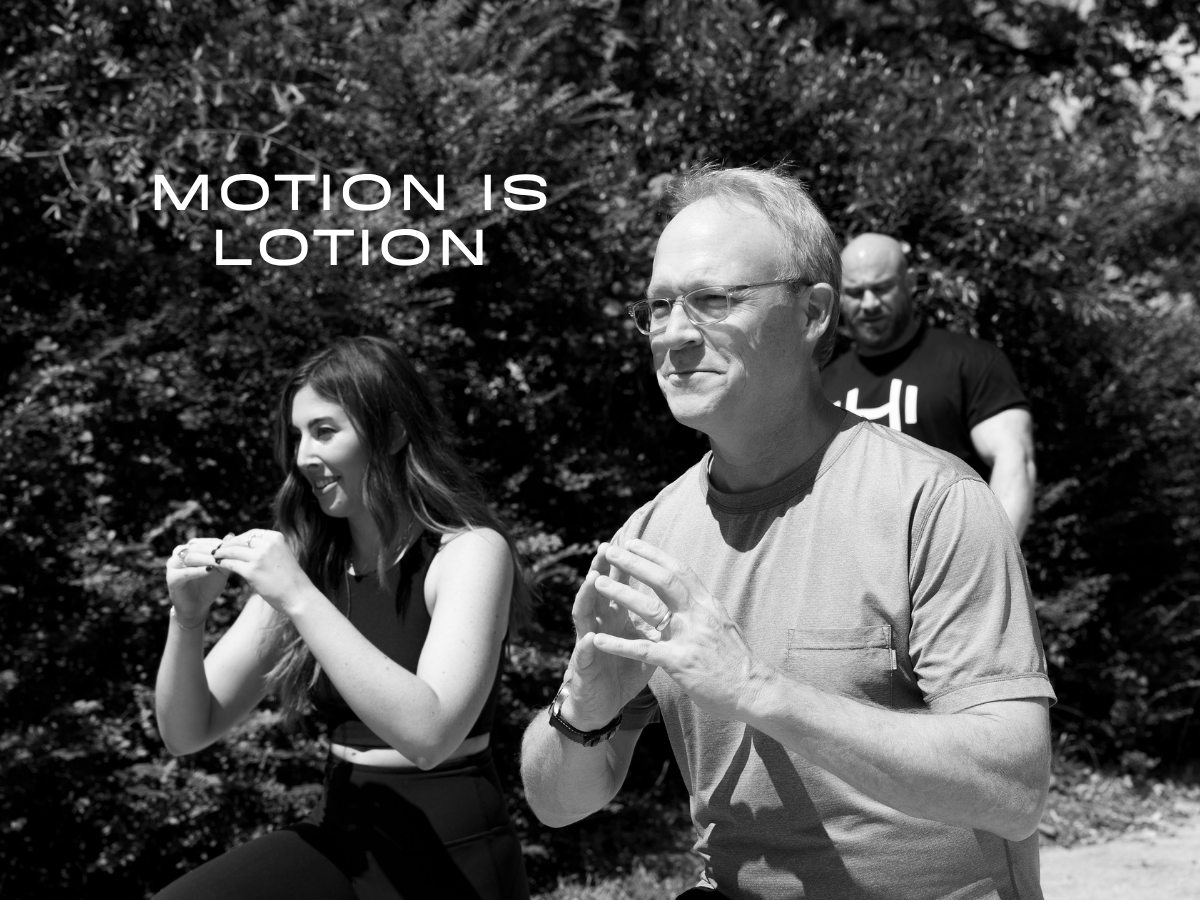
At HOMEFIT, we often use the phrase “motion is lotion.” It does not mean pushing through sharp pain or ignoring a flare. It means finding a level of movement that helps the body feel more capable, supported, and confident.
An in-home personal trainer makes that process more approachable. Instead of driving through Birmingham traffic, crossing a large parking lot, and entering an unfamiliar gym, your trainer brings personalized movement directly to the space where you already feel comfortable.
Why Gentle Movement Matters for Arthritic Joints
Articular cartilage does not have its own direct blood supply. It receives nutrients partly through the movement of fluid within and around the joint. Gentle loading and unloading can support this exchange while also helping maintain mobility in the surrounding tissues.
The goal is not to force a painful joint through a perfect range of motion. It is to give the joint an appropriate reason to move while strengthening the muscles that help support it. For someone with osteoarthritis, this may mean improving the strength around the hips and knees. For someone with rheumatoid arthritis, it may mean adapting the workout according to fatigue, stiffness, swelling, or the location of an active flare.
Exercise can improve strength and reduce pain and stiffness for many people with osteoarthritis. People with rheumatoid arthritis may also benefit from appropriately selected aerobic, resistance, aquatic, and mind-body exercise.
1. Range-of-Motion Drills: Starting Where the Joint Is Today
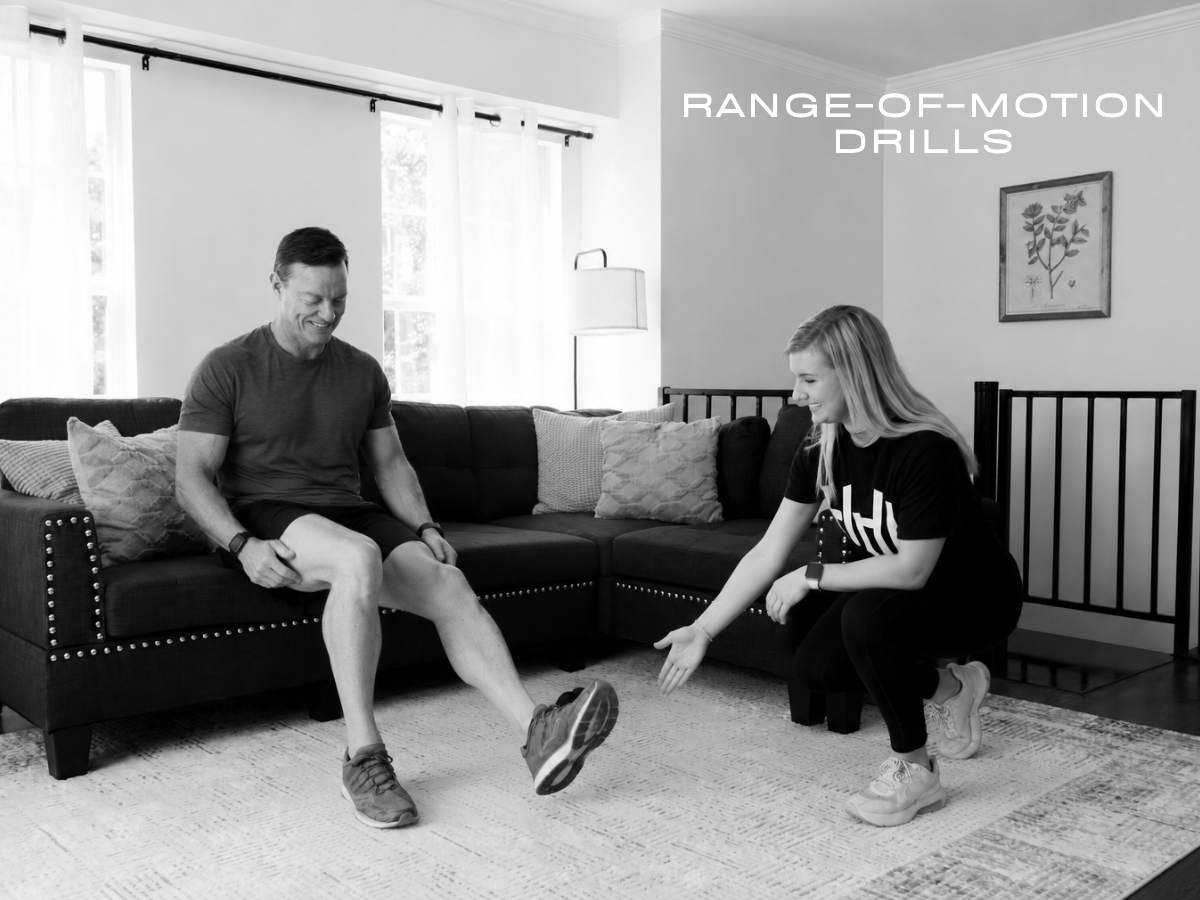
Range-of-motion drills are often the beginning of an arthritis-friendly workout. These are slow, controlled movements that take a joint through a comfortable range without adding heavy resistance.
A trainer might guide a client through seated ankle circles, heel-to-toe rocking, shoulder rolls, gentle wrist circles, finger opening and closing, slow neck turns, or seated knee extensions. Someone with significant morning stiffness may begin with smaller movements and gradually increase the range as the body warms up.
These drills should not look dramatic. Their value comes from control, consistency, and attention to how the joint responds. A HOMEFIT trainer can observe whether the client is compensating, holding their breath, shifting their posture, or forcing a movement that needs to be reduced.
That level of attention is difficult to receive from a generic workout video. Personal training at home allows each repetition to be adjusted in real time.
2. Isometric Holds: Building Strength Without Repeated Joint Movement
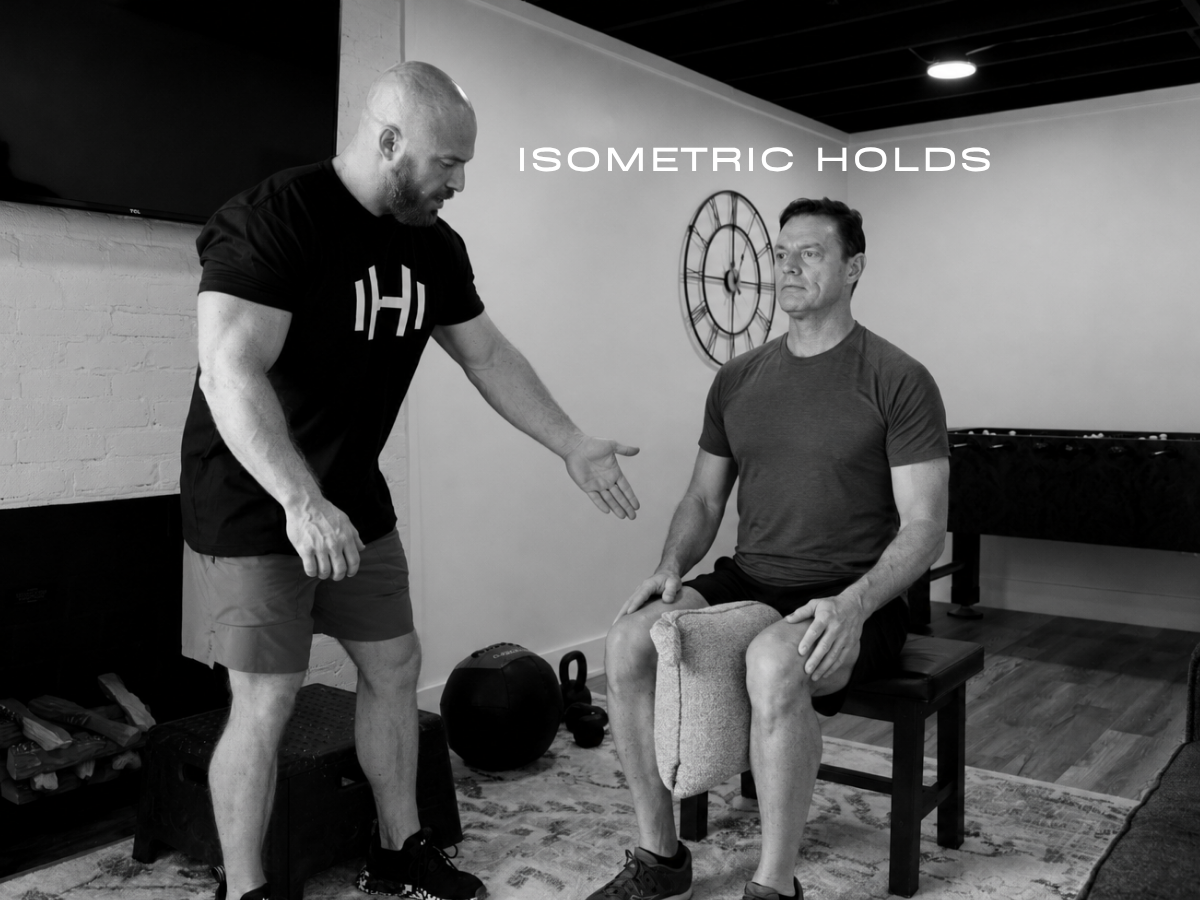
An isometric exercise creates muscular tension without requiring the joint to repeatedly bend and straighten. This can make isometric holds a useful option when traditional repetitions feel uncomfortable.
Examples include tightening the thigh while the leg is supported, gently squeezing a pillow between the knees, pressing the palms together at chest level, holding a shallow wall sit, or maintaining light outward pressure against a loop band.
The movement may appear simple, but the surrounding muscles are still working. Strengthening those muscles can help the body feel more stable during daily activities such as standing from a chair, carrying groceries, climbing stairs, or walking through the neighborhood.
The trainer’s role is especially important here. They can adjust the intensity of the contraction, shorten the hold, improve the client’s alignment, or choose a different position if the joint begins to feel irritated.
3. Resistance Band Work: Adjustable Strength Without Heavy Weights
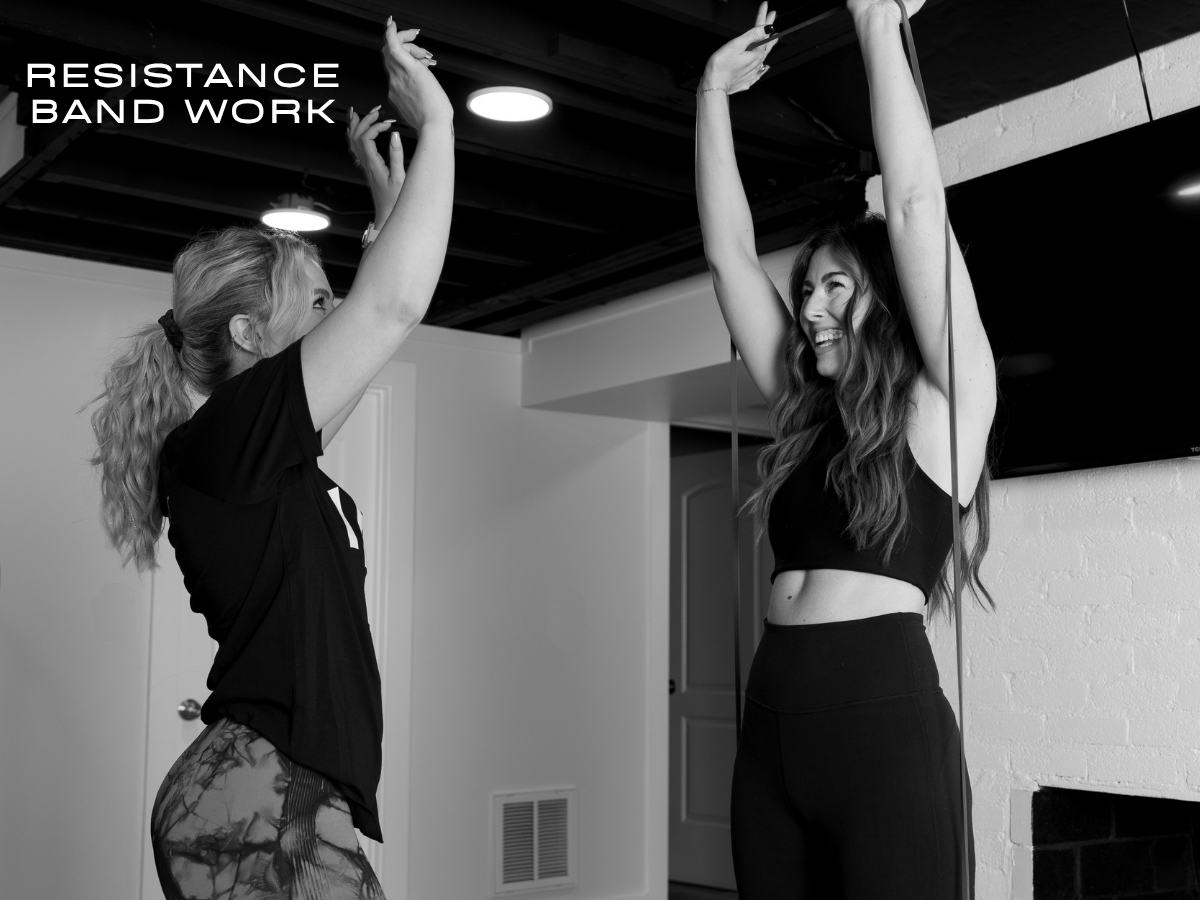
Resistance bands allow the trainer to introduce strength gradually. The resistance increases as the band stretches, which makes it easy to shorten the movement or reduce tension when a client needs a gentler option.
An arthritis-friendly resistance band routine might include seated rows for posture and upper-back strength, assisted overhead reaches for shoulder mobility, light band pull-aparts, seated leg extensions, supported hip extensions, side steps with a loop band, or gentle biceps curls.
For clients with hand or wrist discomfort, the trainer can use resistance tubing with padded handles, place the band around the forearms, or select an exercise that does not require a tight grip. Tubes with handles may be easier to hold than flat bands for some people with arthritis in their hands.
The goal is not to see how far the band can stretch. It is to create enough resistance for the muscles to work while keeping the movement smooth, controlled, and comfortable.
4. Mobility Flows: Connecting Movement With Breathing
Pain can change more than the way someone moves. It can also lead to bracing, shallow breathing, and a sense that the body must remain guarded.
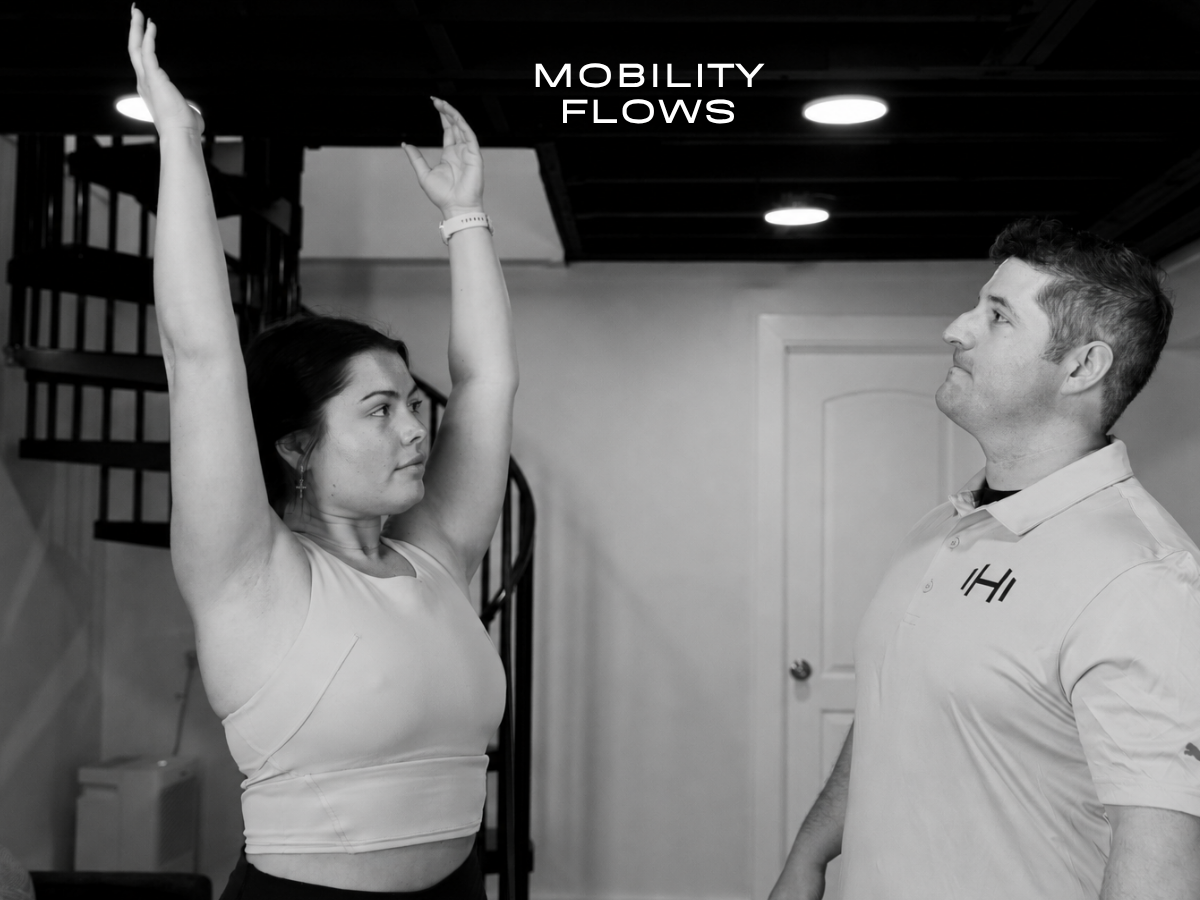
A mobility flow combines several gentle movements into one continuous sequence. A client might inhale while reaching the arms upward, exhale while lowering them, move into a supported side bend, return to the center, and finish with a slow torso rotation. Another sequence could combine shoulder rolls, seated cat-cow movements, ankle rocking, and relaxed breathing.
These flows are not about achieving an advanced yoga pose. They are designed to reduce unnecessary tension, improve movement awareness, and help the client move with less fear.
Mindful movement activities such as tai chi and yoga can support posture, balance, and movement quality. The American College of Rheumatology also recommends adjusting resistance and taking longer breaks if arthritis symptoms worsen.
For clients who have spent months avoiding certain movements, a calm mobility flow can also rebuild trust. The body learns that movement does not always have to be aggressive, exhausting, or painful.
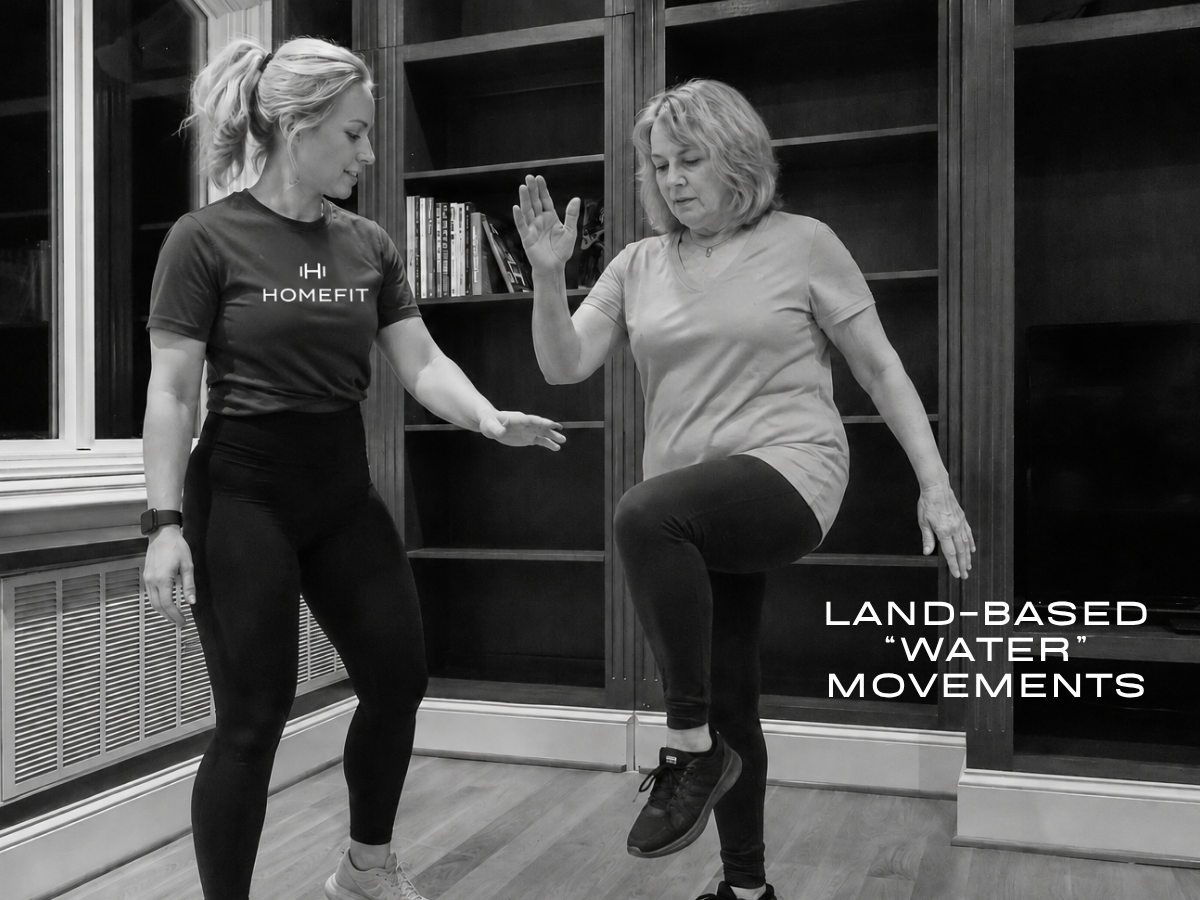
5. Land-Based “Water” Movements: Borrowing the Rhythm of Aquatic Exercise
Water exercise is frequently recommended for people with arthritis because the water supports body weight and reduces stress on the joints. A living-room workout cannot reproduce that buoyancy, but it can borrow some of the gentle pacing and continuous movement patterns used in water aerobics.
A trainer might guide the client through slow supported marching, side-to-side steps, alternating heel kicks, arm sweeps, controlled knee lifts, or gentle cross-country skiing motions. The client can hold the back of a chair or kitchen counter for additional stability.
These exercises can raise the heart rate without jumping or fast changes of direction. They can also be shortened into manageable intervals for clients who fatigue quickly.
The emphasis remains on fluid movement. Instead of stomping, rushing, or forcing the knees upward, the client moves at a pace that allows them to maintain balance and breathe comfortably.
PHOTO 6: Supported Sit-to-Stand
Photo setup: Place the client on the edge of a sturdy chair or couch with the trainer positioned slightly to one side. Capture the client halfway between sitting and standing while the trainer monitors knee alignment and balance.
6. Functional Strength: Training for Real Life
Arthritis-friendly exercise should make everyday life feel more manageable. That is why HOMEFIT trainers can include movements that resemble tasks clients perform throughout the day.
A supported sit-to-stand strengthens the hips and legs for getting up from a chair. Counter-supported heel raises work the calves and ankles used during walking. Low step taps prepare the body for stairs and curbs. Standing hip abductions strengthen muscles that support balance and knee alignment.
A sturdy chair, wall, countertop, or bottom stair can become part of a personalized workout. There is no need to fill the living room with complicated equipment.
Sit-to-stands, heel raises, hip extensions, and side leg raises are examples of home-based strength exercises that can support lower-body function.
The trainer can also modify each exercise. A client may begin a sit-to-stand using both hands for support, progress to one hand, and eventually complete the movement without using the chair arms. Progress may be gradual, but gradual progress still matters.
What Happens When Symptoms Change?
Rheumatoid arthritis and osteoarthritis do not feel exactly the same every day. A workout that feels comfortable on Monday may need to be adjusted on Friday.
On a higher-stiffness day, the session might include more seated mobility, breathing, and range-of-motion work. On a stronger day, the trainer may add resistance bands, balance exercises, or functional strength movements. If a joint is unusually swollen, warm, or painful, the trainer should avoid aggressively loading it and encourage the client to follow guidance from their physician, rheumatologist, or physical therapist.
Sharp pain, new swelling, dizziness, chest pain, or symptoms that continue to worsen are not signals to “push through.” A qualified trainer respects the difference between normal muscular effort and a symptom that requires stopping or seeking medical guidance.
Why In-Home Personal Training Can Feel More Accessible
For someone living with arthritis, the workout does not begin when they pick up a resistance band. It begins when they get dressed, gather their belongings, walk to the car, drive across town, cross the parking lot, and navigate the gym.
An in-home personal trainer removes many of those barriers. The client can exercise in a familiar temperature, wear what feels comfortable, take breaks without feeling observed, and use furniture that already fits their daily life.
The trainer also sees the client’s real environment. They can practice standing from the chair the client uses every morning, improve balance near the hallway where the client feels unsteady, or create a short movement routine that fits beside the kitchen counter.
HOMEFIT currently lists service areas across Alabama, Tennessee, Texas, Florida, Oregon, and additional communities, including Birmingham, Vestavia Hills, Mountain Brook, Hoover, Huntsville, Murfreesboro, Brentwood, Franklin, Nashville, Chattanooga, Georgetown, and 30A/Santa Rosa Beach. Virtual training is also available nationwide for clients outside a local service area.
What an Arthritis-Friendly HOMEFIT Session Might Look Like
A session may begin with seated ankle circles, shoulder rolls, and heel-to-toe rocking to see how the body feels that day. The trainer may then introduce an isometric thigh contraction or pillow squeeze before moving into seated resistance band rows and supported sit-to-stands.
The client might finish with slow standing marches, a supported side-to-side weight shift, an overhead breathing sequence, and a few minutes of gentle stretching.
Another day may look completely different. That is the benefit of working with an in-home fitness trainer instead of following a one-size-fits-all routine. The workout can respond to the person standing in the room, not the version of them described in a generic program.
You Do Not Need a Gym Full of Equipment
A resistance band, a sturdy chair, a clear section of floor, and a knowledgeable trainer can create a meaningful session.
HOMEFIT trainers can bring equipment when appropriate, but they can also teach clients how to move using the environment they already have. A wall can provide balance support. A chair can assist with squats and mobility work. A countertop can support heel raises and standing leg exercises.
The most important part of an arthritis-friendly workout is not the equipment. It is choosing movements that match the client’s current abilities and adjusting them before discomfort becomes discouraging.
Ready to Move With More Confidence?
HOMEFIT brings personalized, arthritis-conscious movement directly to your home. Whether you are searching for an in-home personal trainer in Vestavia Hills, Mountain Brook, Huntsville, Brentwood, or a personal trainer in Murfreesboro, TN, your program can begin with your current mobility, your goals, and your comfort level.
This article is for general educational purposes and is not a substitute for medical care. People with rheumatoid arthritis, osteoarthritis, recent surgery, significant balance concerns, or active joint symptoms should speak with a qualified healthcare provider before beginning a new exercise program.