Prehab Is the New Rehab: Why Training for Movement Before Pain Starts Matters

Most people don't think seriously about mobility, joint stability, or functional strength until something starts feeling uncomfortable. Maybe it's lower-back stiffness after sitting at a desk, knees that feel challenged when climbing stairs, or difficulty keeping up with activities that used to feel effortless.
But what if you started preparing your body for those everyday physical demands before limitations developed?
That's the idea behind prehab, an approach to exercise focused on developing strength, stability, mobility, and physical capacity before a major setback occurs.
While prehabilitation is commonly associated with preparing patients for surgery, many of its underlying principles also apply to preventive fitness and functional strength training.
At HOMEFIT, our in-home personal training and physical therapy services help clients work toward better movement, improved strength, and greater confidence in their everyday activities.
What Is Prehab, and How Is It Different From Rehab?
Rehabilitation typically focuses on restoring movement and function after an injury, surgery, or physical limitation.
Prehabilitation takes a more proactive approach by preparing the body for an upcoming physical challenge.
In medical settings, prehab may involve supervised exercise before surgery to help patients improve their physical condition before a procedure.
In everyday fitness conversations, people often use the term to describe strengthening muscles, improving mobility, and practicing movement patterns that support physical performance and resilience.
For example, someone who enjoys hiking might focus on strengthening their legs and improving balance. An adult who spends most of the day sitting might prioritize hip mobility, upper-body strength, and overall conditioning.
The purpose isn't to guarantee that injuries will never happen. It's to build physical capabilities that help you handle everyday demands more comfortably and confidently.
Why Movement Quality Matters More Than You Think
It's easy to measure fitness through weight lifted, miles walked, or calories burned.
But the way your body moves also matters.
Everyday activities require muscles and joints to work together. Getting out of a chair, stepping off a curb, lifting a suitcase, or carrying groceries all involve strength, coordination, balance, and mobility.
When certain movements become difficult, people sometimes compensate by changing how they move.
For example, limited ankle mobility can affect how someone performs a squat, while inadequate lower-body strength may make stairs more challenging.
A personalized fitness program can help identify areas that need additional attention and build the physical skills required for daily life.
Through HOMEFIT's in-home personal training, clients can receive instruction on exercise technique, appropriate resistance, and gradual progression without needing to travel to a gym.
The Four Building Blocks of Better Movement
A thoughtful prehab-inspired workout routine often focuses on four important areas: strength, mobility, stability, and balance.
1. Strength: Building the Foundation
Strength training isn't just about increasing muscle size. It also helps you manage the physical demands of everyday activities.
Exercises such as squats, rows, step-ups, and resistance-band movements can strengthen muscle groups involved in walking, lifting, carrying, and climbing stairs.
Progressive strength training can also support healthy aging and help maintain physical independence over time.
2. Mobility: Making Everyday Movement Easier
Mobility refers to the ability to move a joint through an appropriate range of motion with control.
Exercises that challenge hip, shoulder, ankle, and spinal mobility can help improve movement options during daily activities and workouts.
Mobility training should focus on controlled, comfortable movement rather than forcing joints beyond their current abilities.
3. Stability: Learning to Control Movement
Stability involves maintaining control while your body moves or resists external forces.
Core exercises, resistance training, and controlled single-leg movements can help develop strength and coordination.
For example, strengthening the muscles around the hips can contribute to better control during activities involving the lower body.
4. Balance: Preparing for Real Life
Balance matters at every age, whether you're stepping over uneven ground, navigating stairs, or participating in recreational activities.
Exercises like supported single-leg stands, step-ups, and controlled weight shifts can challenge balance and coordination.
The right difficulty depends on your current abilities, and a qualified trainer can help you progress appropriately.
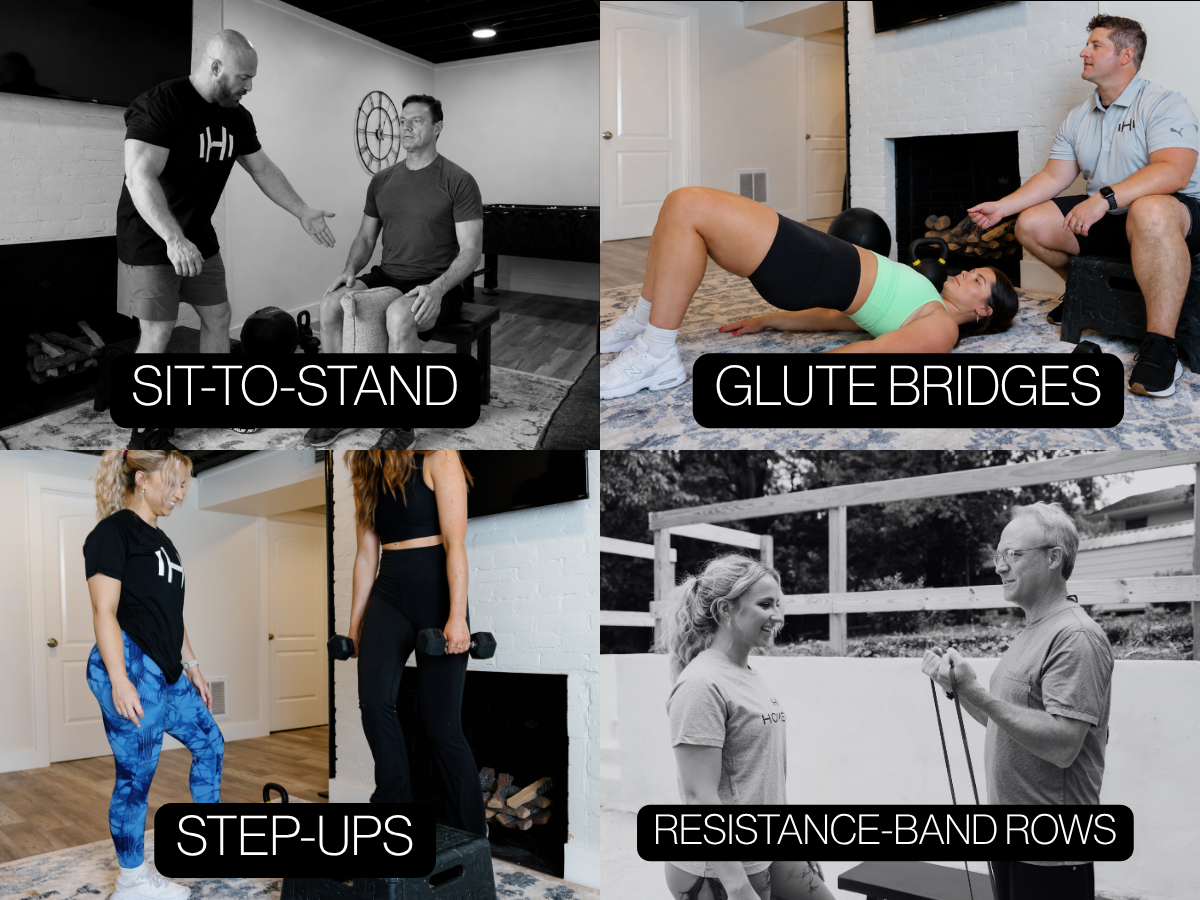
Five Exercises That Can Support Functional Strength
You don't need an elaborate home gym to develop a useful strength and mobility routine.
Many exercises that support everyday movement can be performed with bodyweight, resistance bands, or a few basic pieces of equipment.
1. Sit-to-stands: Practice standing from a chair with control. This movement strengthens the lower body while reinforcing an activity used throughout the day.
2. Glute bridges: Strengthen the hips and posterior chain while practicing controlled hip extension.
3. Step-ups: Challenge leg strength, coordination, and balance using a stable, appropriately sized step.
4. Resistance-band rows: Strengthen the upper back and arms while practicing a pulling movement useful in everyday life.
These exercises are examples rather than a universal prescription. Individuals with injuries, medical conditions, or significant pain may need evaluation before beginning a new program.
HOMEFIT personal trainers can help design customized strength workouts suited to individual fitness levels and goals.
Why Your City and Lifestyle Should Influence Your Training
Not everyone needs the same fitness routine.
Someone who enjoys mountain hiking may benefit from different training priorities than someone who spends their weekends gardening, traveling, or participating in recreational sports.
In Huntsville, Alabama, residents who enjoy hiking around Monte Sano State Park or exploring nearby trails may want to prioritize lower-body endurance, balance, and strength for uneven terrain. For busy professionals and families across Huntsville and Madison, in-home personal training can provide a convenient way to prepare for those activities without adding another commute.
In Chattanooga, Tennessee, destinations like Lookout Mountain, the Tennessee Riverwalk, and Coolidge Park offer countless opportunities to stay active. Strengthening your legs, improving cardiovascular endurance, and developing mobility can help prepare you for outdoor activities around the Scenic City.
Across Medford, Oregon, outdoor recreation is a major part of life in the Rogue Valley. From exploring Lithia Park in Ashland to enjoying nearby hiking areas, functional strength training can support the balance, endurance, and physical capacity needed for an active lifestyle.
In Georgetown, Texas, residents who enjoy San Gabriel Park, walking trails, and outdoor activities throughout the Texas Hill Country can benefit from fitness programs focused on strength, mobility, and everyday movement.
Your exercise routine should reflect what you enjoy doing, the challenges you face, and the physical abilities you want to maintain.
Can Prehab Help You Avoid Injuries?
This is one of the most important questions surrounding preventive fitness.
Strength and conditioning programs can help reduce the risk of certain injuries, particularly when exercises are designed around the demands of a sport or activity.
However, there is no workout that can prevent every injury.
Risk depends on many factors, including physical conditioning, activity demands, previous injuries, fatigue, training progression, and circumstances beyond your control.
What prehab-inspired exercise can do is help develop strength, coordination, and physical capacity.
A well-designed program gradually introduces physical challenges rather than asking the body to handle more than it's prepared for.
For example, someone preparing for a hiking vacation might progressively increase leg strength, walking endurance, and balance challenges before the trip.
The focus should be on becoming better prepared for movement, rather than assuming exercise makes someone injury-proof.
When Do You Need Physical Therapy Instead of Personal Training?
Although personal training and physical therapy can involve similar movements, they are not interchangeable services.
Personal training focuses on fitness goals such as strength, endurance, conditioning, mobility, and overall physical performance.
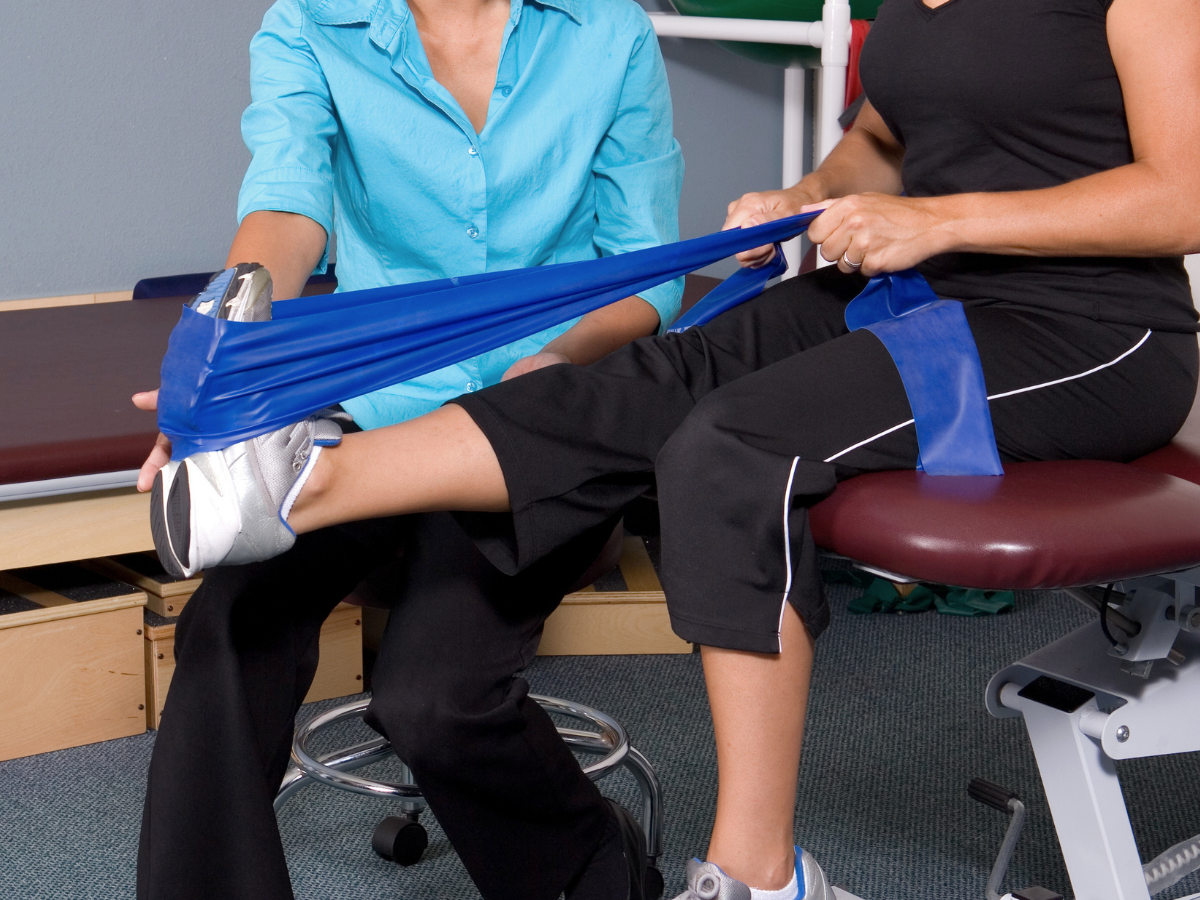
Physical therapy is a healthcare service provided by licensed professionals who evaluate and treat movement limitations, injuries, pain, and other conditions within their scope of practice.
If you're experiencing persistent pain, recovering from surgery, or struggling with unexplained mobility limitations, a physical therapy evaluation may be more appropriate than beginning a standard fitness program.
HOMEFIT offers in-home physical therapy services, helping eligible clients access professional rehabilitation care in a convenient setting.
Depending on the provider and treatment plan, physical therapy may involve therapeutic exercise, movement assessment, manual therapy, and individualized rehabilitation strategies.
Once someone is ready to return to more demanding exercise, personal training can provide a structured way to continue developing fitness.
The two services can complement each other when guided by the appropriate professionals.
Why In-Home Personal Training Makes Preventive Fitness More Realistic
One of the biggest obstacles to building better fitness habits is consistency.
You might have every intention of exercising three times a week, but long workdays, family commitments, and travel can make it difficult to maintain your plans.
HOMEFIT brings professional fitness coaching directly to your home, apartment gym, workplace, or another suitable training location.
Instead of spending additional time driving to a gym, clients can use that time for meaningful movement.
Our trainers create individualized workouts based on goals, experience, abilities, available equipment, and progress.
For clients who travel frequently or need additional flexibility, HOMEFIT also offers virtual personal training, making it possible to receive professional fitness guidance without depending entirely on in-person sessions.
Whether you're a working professional in Birmingham, an outdoor enthusiast in Medford, or an active adult in Georgetown, personalized training can help make strength and mobility part of your regular lifestyle.
The Real Goal: Staying Capable for the Things You Love
Most people don't necessarily want to become competitive athletes.
They want to feel strong carrying groceries, walk comfortably through the airport, keep up with their children, enjoy outdoor activities, or continue traveling and staying active as they age.
These everyday goals deserve just as much attention as traditional fitness milestones.
Prehab-inspired training encourages people to think beyond how exercise changes their appearance and consider how it supports their ability to move.
The best fitness routine isn't necessarily the hardest or most complicated. It's one that consistently challenges your body at an appropriate level while helping you develop the strength and skills needed for your life.
Start Building a Stronger Future With HOMEFIT
You don't have to wait until everyday movement becomes difficult to begin prioritizing strength, mobility, and physical fitness.
A personalized exercise program can help you improve movement quality, build strength, challenge your balance, and develop habits that support long-term physical performance.
HOMEFIT makes that process more convenient by bringing professional fitness services directly to you.
Whether you're interested in in-home personal training, exploring our physical therapy services, or looking for the flexibility of virtual training, our team can help you explore the services that fit your goals.
Ready to invest in how you move? Contact us to find your nearest service location, schedule a complimentary consultation, and learn more about your free first personal training or yoga session.