You wake up, get ready for work, sit in the car, spend eight hours at a desk, drive home, and finally settle onto the couch for the evening.
Before you know it, you've spent most of your waking hours sitting.
Sound familiar?
For many busy professionals, working parents, and remote employees, prolonged sitting has become an unavoidable part of everyday life. You might even exercise a few times a week and still experience stiff hips, tight shoulders, lower back discomfort, or a noticeable decline in your energy throughout the day.
The problem isn't necessarily that you're sitting. It's how long you're sitting without giving your body opportunities to move in different ways.
Over time, a sedentary lifestyle can affect muscular strength, mobility, cardiovascular health, and your ability to perform everyday activities comfortably.
The good news? Your work schedule doesn't have to change for your fitness to improve. A combination of intentional movement, strength training, and personalized exercise can help counteract many of the effects of prolonged sitting.
What Happens to Your Body When You Sit All Day?
Your body adapts to the physical demands you place on it. When most of your day involves sitting in relatively the same position, certain muscles experience fewer opportunities to work through their full range of motion.
Over time, this can contribute to changes in how you move, feel, and perform everyday activities.
Some common effects of prolonged sitting include:
Reduced hip mobility and feelings of tightness
Decreased muscular strength from inactivity
Neck and shoulder tension
Lower back stiffness and discomfort
Reduced cardiovascular fitness
Decreased energy throughout the day
Difficulty maintaining comfortable positions for extended periods
Prolonged sedentary behavior is also associated with an increased risk of cardiovascular disease and type 2 diabetes.
These changes don't necessarily happen overnight. You may gradually notice that getting up from your desk feels more uncomfortable, bending down requires more effort, or activities you once enjoyed leave you feeling unusually tired.
These are some of the reasons regular physical activity and strength training become especially important when your career requires extended periods of sitting.
Why Your Hips and Lower Back Feel Tight After a Long Workday
Think about the position your body maintains while working at a computer.
Your hips and knees are bent, your arms are positioned in front of you, and your spine may remain relatively still for hours at a time.
While none of these positions are inherently harmful, spending too much time in any one position can contribute to stiffness and discomfort.
Your glutes, abdominal muscles, and other muscles that support everyday movement may also receive less stimulation throughout a sedentary workday.
When you finally stand up, your body may need time to adjust to moving through positions it hasn't experienced in several hours.
This is why stretching alone isn't always the solution.
Although mobility exercises and stretching can help improve your range of motion and temporarily relieve feelings of tightness, strength training helps develop the muscular capacity needed to support your body during everyday activities.
A well-designed exercise program addresses both mobility and strength rather than focusing exclusively on one or the other.

Can Working Out for 45 Minutes Make Up for Sitting All Day?
It's a common scenario: you spend eight hours working at a desk, complete a workout after work, and assume you've balanced out the effects of sitting.
That workout is absolutely beneficial. However, regular exercise and reducing sedentary time are two related but distinct aspects of maintaining your health.
According to the Centers for Disease Control and Prevention, adults should aim for at least 150 minutes of moderate-intensity aerobic activity each week, along with muscle-strengthening activities on at least two days.
In addition to structured exercise, finding opportunities to move throughout the day can help reduce the amount of uninterrupted time you spend sitting.
That might look like:
Taking a short walk between meetings
Standing up and moving every 30–60 minutes
Walking while taking phone calls
Taking the stairs whenever possible
Spending part of your lunch break outside
Completing a few simple mobility exercises at your desk
You don't need to turn every movement break into a workout. The goal is to introduce more variety into the positions and movements your body experiences throughout the day.
Combining these small changes with consistent personal training can create a more sustainable approach to fitness for busy professionals.
How Strength Training Helps Counteract the Effects of Sitting
Strength training does more than build muscle or change your physical appearance. It helps develop the physical capacity you need to navigate everyday life.
For individuals who spend much of their day sitting, resistance training can be particularly valuable in several ways.
Building Lower-Body Strength
Exercises that target your glutes, quadriceps, and hamstrings help strengthen muscles involved in standing, walking, climbing stairs, and lifting objects.
Developing lower-body strength can help everyday activities feel more manageable, especially after extended periods of inactivity.
Improving Core Strength and Stability
Your core plays an important role in supporting your torso and transferring force throughout your body.
A personalized strength training program can help improve core strength and stability, supporting more comfortable and controlled movement during daily activities.
Strengthening Your Upper Back and Shoulders
Hours spent typing, driving, and looking at screens can leave your upper body feeling fatigued or stiff.
Resistance exercises that target the upper back and shoulders can help improve muscular endurance and your ability to maintain a variety of comfortable positions throughout the day.
Improving Mobility Through Resistance Training
Strength training performed through an appropriate range of motion can also help improve flexibility and mobility.
Exercises such as squats, lunges, and controlled resistance movements allow your body to explore positions that may be missing from your typical workday.
Supporting Long-Term Health
Consistent resistance training helps maintain muscle mass, supports bone health, and improves physical function as you age.
The benefits extend far beyond how you feel when you stand up from your desk. You're investing in your ability to stay active, independent, and physically capable for years to come.
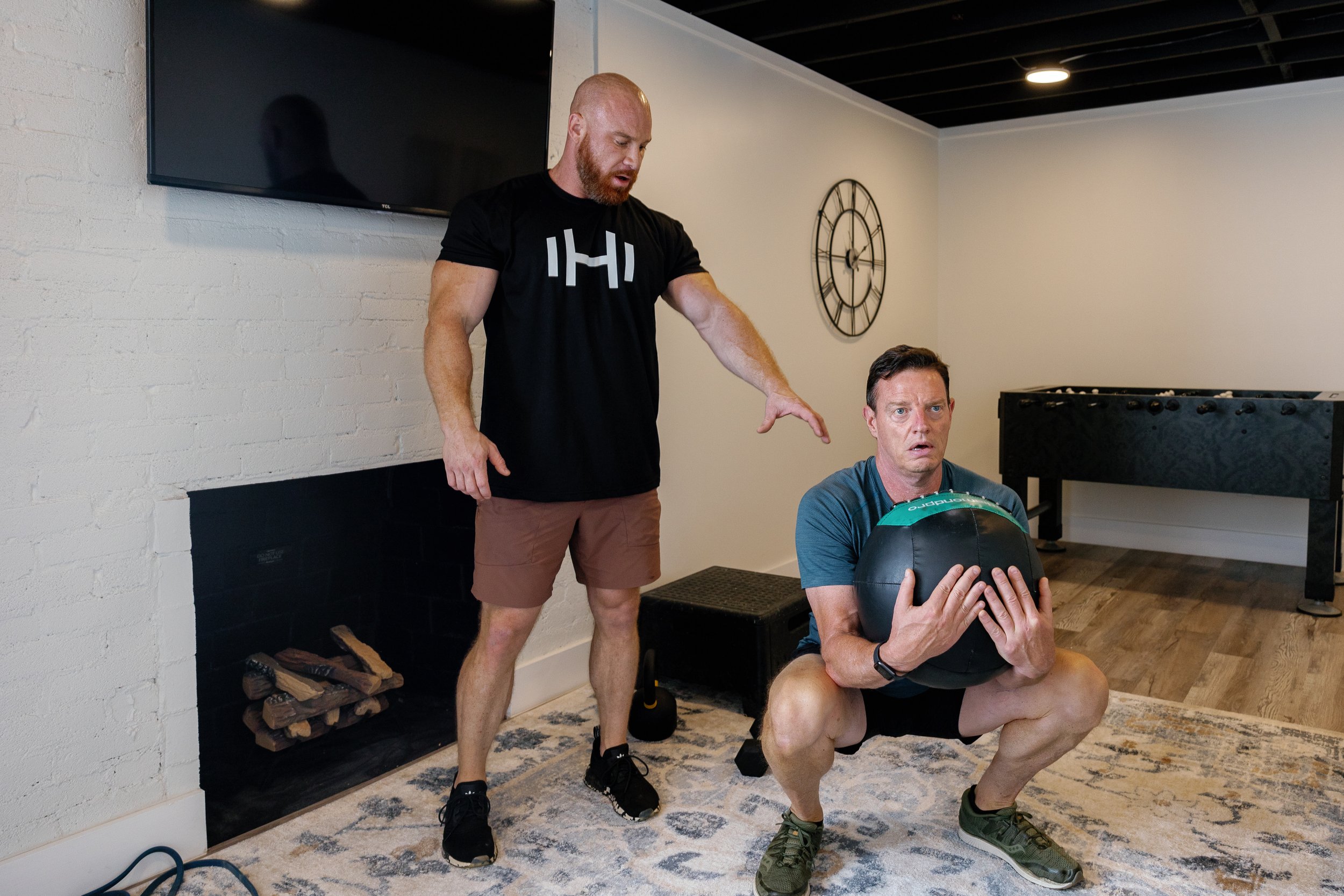
5 Strength Training Exercises for People Who Sit All Day
If you spend most of your workday at a desk, incorporating exercises that target multiple muscle groups is a great place to start.
1. Glute Bridges
Glute bridges strengthen your glutes and develop hip extension strength, encouraging movement in a different direction from the seated position you maintain throughout the day.
2. Dumbbell or Resistance Band Rows
Rows strengthen your upper back, shoulders, and arms. They're particularly useful for individuals whose daily activities involve working with their arms positioned in front of their bodies.
3. Squats
Squats develop lower-body strength while reinforcing a movement pattern you use every day, from standing up from your office chair to getting in and out of your car.
4. Romanian Deadlifts
Romanian deadlifts strengthen your hamstrings and glutes while developing proper hip-hinge mechanics, an important movement pattern for lifting and bending during everyday activities.
5. Bird Dogs
Bird dogs help develop core stability, coordination, and controlled movement through your arms and legs.
The appropriate resistance, repetitions, and exercise modifications depend on your current fitness level, exercise experience, and physical abilities.
Working with a HOMEFIT personal trainer can help you determine which movements are appropriate for your body and how to perform them safely and effectively.
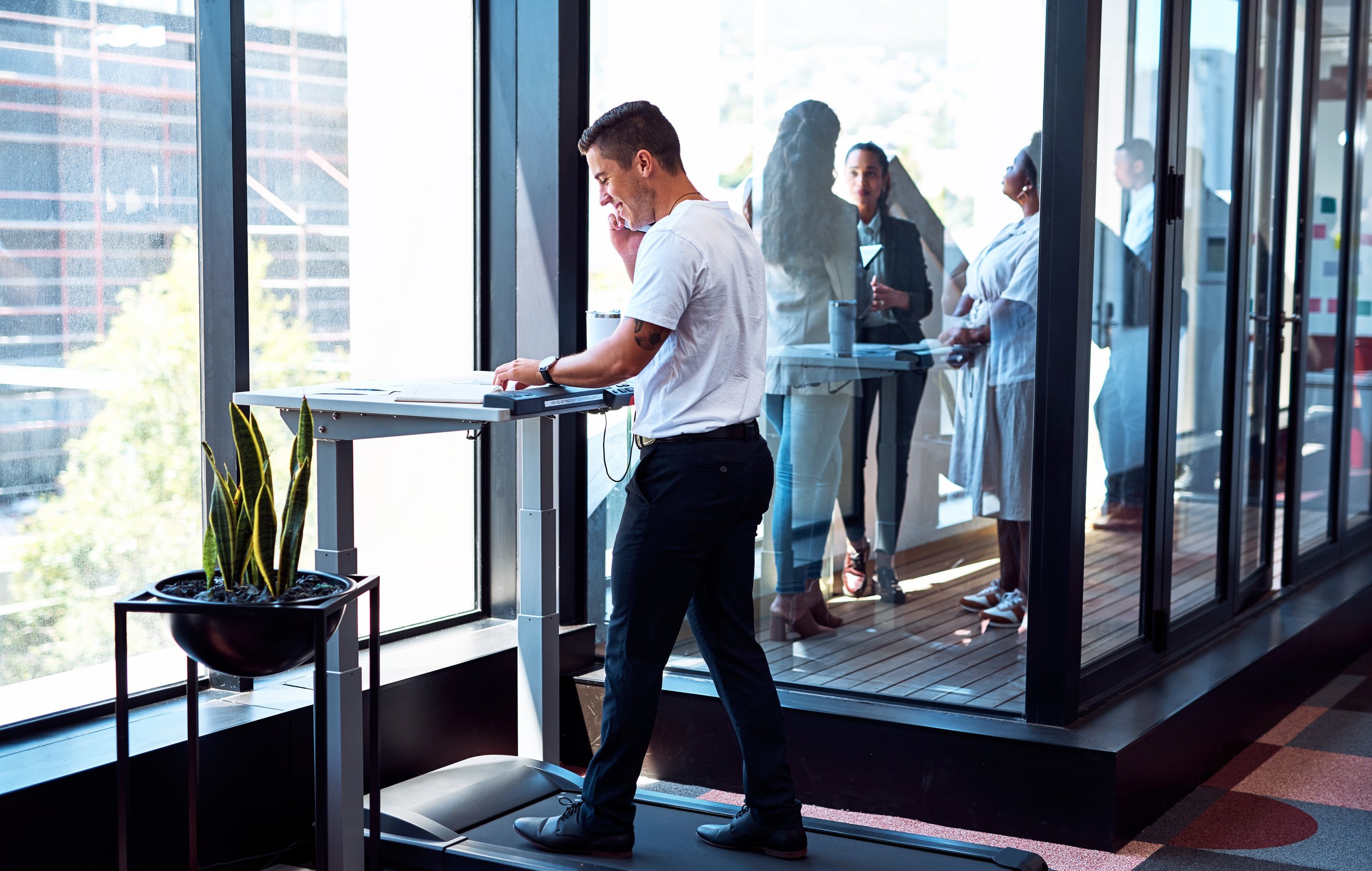
Is a Standing Desk Enough to Improve Your Health?
Standing desks have become increasingly popular among remote employees and office professionals, but simply replacing sitting with standing isn't necessarily the answer.
Standing for extended periods without movement can also contribute to fatigue, stiffness, and discomfort.
Instead of searching for the perfect working position, focus on changing positions regularly.
Alternate between sitting and standing, incorporate short walks into your schedule, and prioritize strength training outside of working hours.
Your body benefits from variety. Giving your muscles and joints different opportunities to move throughout the day can be more valuable than maintaining any single position for hours at a time.
Creating a Realistic Fitness Routine Around Your Work Schedule
One of the biggest challenges for busy professionals isn't understanding the importance of exercise. It's finding the time to do it.
Between meetings, deadlines, commuting, and family responsibilities, driving to a gym can feel like another obligation on an already overwhelming schedule.
But improving your fitness doesn't require spending two hours at the gym every evening.
A realistic weekly fitness routine might include:
Monday: Full-body strength training
Tuesday: Walking and light mobility exercises
Wednesday: Strength training focused on functional movement
Thursday: Walking or yoga
Friday: Full-body strength training
Saturday: Recreational activity with family or friends
Sunday: Rest and recovery
Your routine doesn't need to look exactly like this. What's important is finding a balance between strength training, cardiovascular activity, mobility, and adequate recovery that fits your lifestyle.
Consistency becomes much easier when your fitness routine works around your responsibilities rather than competing with them.
Not sure how quickly you can expect to notice improvements? Read our related blog, How Long Does It Take to See Results From Personal Training?
Why In-Home Personal Training Is Ideal for Busy Professionals
After spending an entire day working, the last thing you may want to do is sit in traffic on your way to the gym.
That's where HOMEFIT comes in.
Our in-home personal training services are designed to eliminate common barriers to exercise by bringing professional fitness guidance directly to you.
Whether you work remotely, commute to an office, manage your own business, or balance a demanding career with family responsibilities, your fitness routine should complement your lifestyle.
At HOMEFIT, our personal trainers can help you:
Develop a customized strength training program
Improve mobility, balance, and functional strength
Build confidence in proper exercise technique
Establish a consistent fitness routine
Progress at a pace appropriate for your abilities
Make better use of your available time
Stay accountable to your long-term health and fitness goals
We bring the trainer, necessary equipment, and personalized workout programming directly to your preferred training location.
Your living room, backyard, home gym, or another convenient space can become the place where you invest in your health.
Don't Let Your Desk Job Determine Your Long-Term Health
Your career may require you to spend several hours a day sitting, but it doesn't have to define how your body feels or functions for the rest of your life.
Think beyond the immediate benefits of exercise.
Imagine finishing your workday with enough energy to play with your children, enjoy an evening walk, work in your garden, or participate in activities you've slowly stopped doing because of stiffness, fatigue, or a lack of strength.
That's what functional fitness is about.
It's not simply about lifting heavier weights or achieving a certain appearance. It's about developing the strength, mobility, and endurance to enjoy your life outside of work.
You don't need to completely restructure your schedule to get started. Small movement breaks, consistent strength training, and a personalized fitness plan can make a meaningful difference over time.
Ready to Feel Stronger, Move Better, and Take Back Your Workday?
Your work schedule shouldn't stand between you and a healthier, stronger body.
At HOMEFIT, we make fitness personal, convenient, and accessible. No crowded gyms, unnecessary commutes, or guessing which exercises are right for you. Just professional guidance, personalized workouts, and a fitness routine designed around your life.
It's time to spend less of your life feeling stiff, tired, and limited by your desk job.
Explore HOMEFIT's In-Home Personal Training Services, Meet Our Team of Personal Trainers, or Contact HOMEFIT to schedule your complimentary consultation and enjoy your FIRST personal training or yoga session FREE!
855-934-3834