The Busy Professional's Guide to Luxury Fitness at Home in 2026
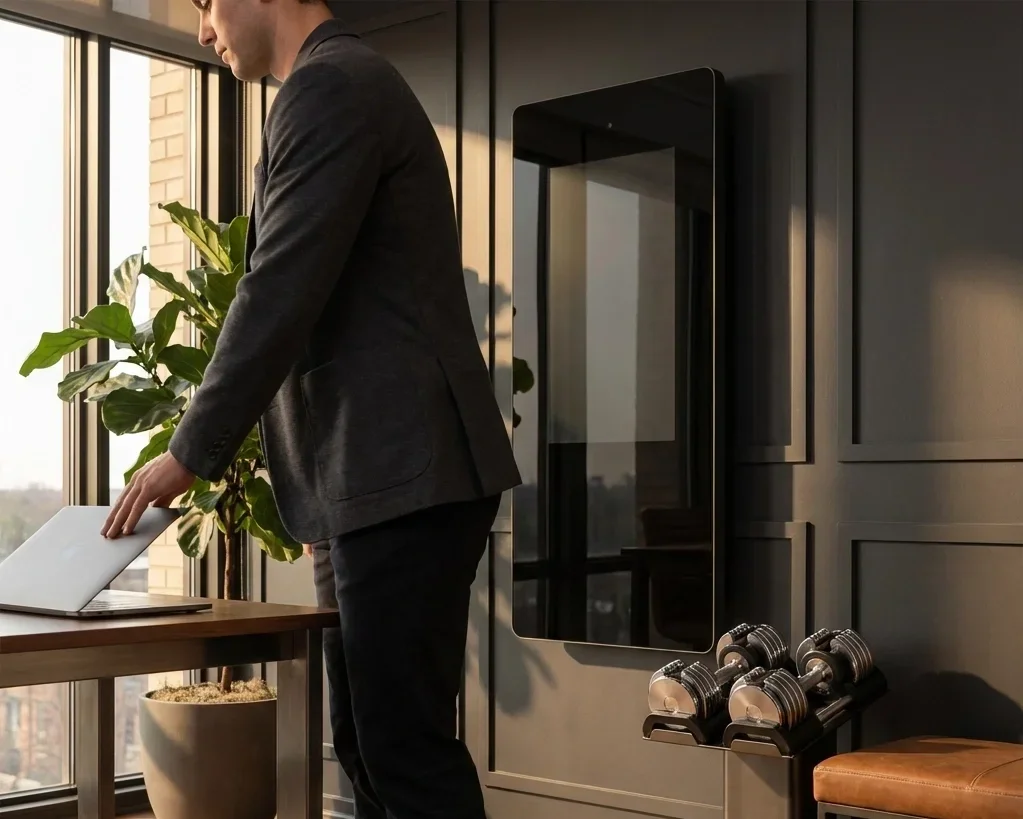
You're juggling client calls, board meetings, and that never-ending inbox while trying to maintain some semblance of a fitness routine. Sound familiar? If you're like most high-achieving professionals, you've probably abandoned more gym memberships than you care to count, simply because finding time to actually get there feels impossible.
Here's what I've learned after working with hundreds of busy executives: the problem isn't your discipline or commitment: it's your approach. In 2026, luxury home fitness has evolved far beyond dusty treadmills gathering clothes in spare bedrooms. We're talking about sophisticated, space-efficient systems that deliver better results than most commercial gyms, right in your own space.
Why Luxury At-Home Fitness Finally Makes Sense
The fitness industry caught up to what busy professionals have known for years: time is your most valuable asset. When you factor in commute time, parking, waiting for equipment, and post-workout cleanup, a "quick" gym session easily becomes a 2-hour commitment.
Multiply that by 4-5 sessions per week, and you're looking at 8-10 hours: time you simply don't have.
But here's the insider perspective: luxury home fitness isn't about convenience alone. It's about results beyond the reps. When you remove every friction point between you and your workout, consistency becomes automatic. And consistency, not intensity, determines your long-term success.
The Essential Categories: What Actually Matters
Let me cut through the marketing noise and focus on what works for professionals who demand efficiency:
1. Multi-Functional Strength Systems
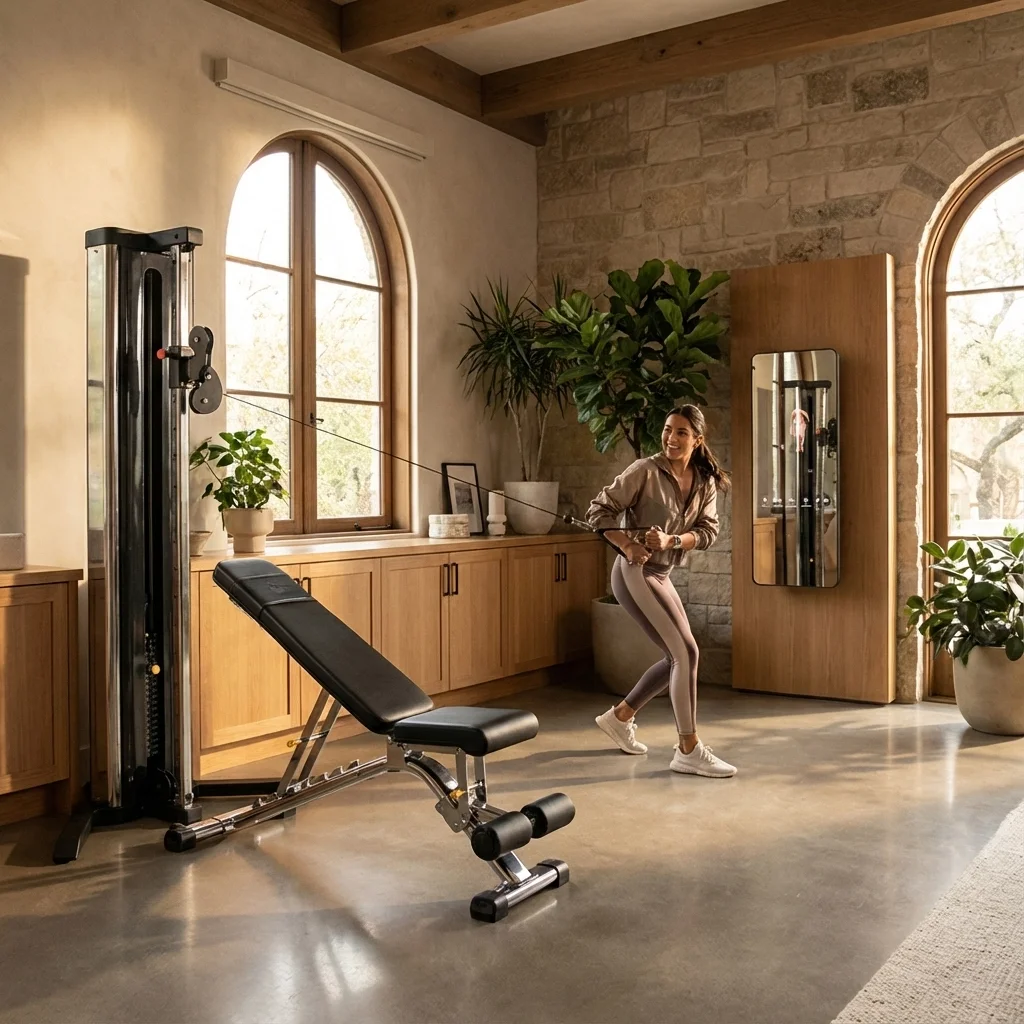
Forget the idea that you need a warehouse-sized home gym. Modern luxury systems like the Freak Athlete Hyper Pro convert into 11 different machines while storing vertically. You're getting everything from squats to pulldowns in the footprint of a small desk.
Premium options like the REP Fitness Ares 2.0 and Tonal 2 deliver full-body training with smart resistance that adapts in real-time. No more guessing whether you're pushing hard enough: the system knows.
2. Premium Cardio with Purpose
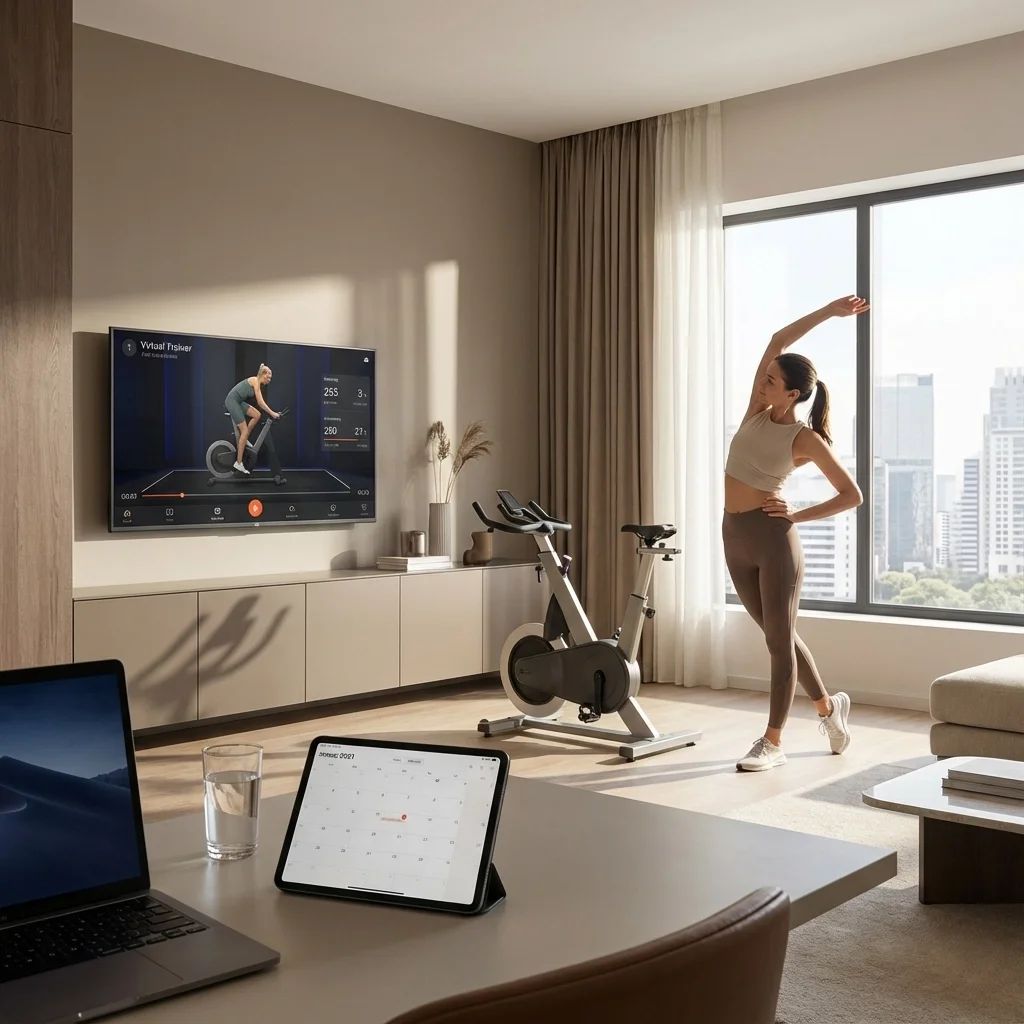
This isn't about buying the most expensive treadmill available. It's about investing in cardio equipment that integrates with your workflow. Technogym's premium treadmills at $9,999 come with integrated wellness apps that sync with your calendar, automatically adjusting workout intensity based on your stress levels and schedule demands.
Life Fitness offers professional-grade options starting at $4,299 that rival what you'll find in exclusive private clubs. The difference? No membership fees, no waiting, no excuses.
3. Space-Efficient Strength Accessories
Quality adjustable dumbbells in the $1,500-$2,500 range eliminate the need for entire weight racks. Premium adjustable benches and specialty attachments round out your setup without overwhelming your space.
Investment Ranges That Make Sense
Here's what I tell clients about budgeting for luxury home fitness:
Starter Luxury Setup: $8,000-$13,000
One premium multi-functional trainer ($2,500-$5,000)
Quality adjustable dumbbells ($1,500-$2,500)
High-end cardio equipment ($4,000-$6,000)
Executive Level: $15,000-$25,000
Multiple premium stations
Commercial-grade cardio
Smart integration systems
Professional installation and setup
No-Compromise Setup: $25,000+
Custom-designed spaces
Multiple Technogym or Cybex stations
Dedicated recovery and mobility areas
Ongoing maintenance and support
The key insight most professionals miss: this isn't an expense: it's infrastructure. You're building a system that works for you long-term, not just buying equipment.
The Brands That Matter (And Why)
After evaluating dozens of manufacturers, three stand out for discerning professionals:
Technogym leads in sophisticated integration. Their equipment isn't just functional: it's designed to blend seamlessly into upscale homes. Price range: $2,500-$15,000 depending on complexity.
Cybex brings unique biomechanical innovations like the Arc Trainer ($6,999), which provides joint-friendly cardio that actually feels good during long sessions. Their strength equipment ranges from $2,500-$10,000.
Life Fitness and Precor offer commercial durability in home-appropriate designs. These are the systems you'll recognize from high-end hotels and executive fitness centers.
Setting Up Your Space: Beyond Just Buying Equipment
The difference between a luxury home gym and an expensive equipment collection comes down to intentional design. Here's what matters:
Location Strategy
Your gym needs to be accessible, not hidden. The basement might seem logical, but if accessing it requires mental energy, you won't use it consistently. Main floor, good ventilation, natural light: these details determine usage rates.
Technology Integration
Smart systems that sync with your existing devices eliminate decision fatigue. When your calendar shows a 30-minute gap, your gym system should already know what workout makes sense based on your recent activity and energy levels.
Professional Installation
This isn't a DIY project. Companies like Cassoni provide white-glove installation that ensures everything works perfectly from day one. The time you save not troubleshooting equipment issues pays for itself immediately.
Making It Work With Your Real Schedule
The biggest objection I hear: "I don't have time for long workouts." Good news: you don't need them.
The 20-Minute Rule: High-intensity, focused sessions deliver better results than hour-long gym wandering. Premium equipment makes every minute count through precise resistance curves and optimized biomechanics.
Morning Integration: When your gym is 30 seconds from your bedroom, morning workouts become realistic. No packing bags, no driving, no excuses.
Meeting Break Maximization: That gap between calls? Perfect for a quick strength circuit. Your Zoom background stays professional while you maintain your fitness momentum.
Addressing the Real Concerns
"Will I actually use it?"
Fair question. The data shows 89% utilization rates for properly planned home gyms versus 67% for commercial gym memberships among professionals. Removing barriers increases consistency.
"What about motivation without other people around?"
Modern luxury systems provide virtual coaching and progress tracking that surpasses most trainers. Plus, you avoid the intimidation factor that keeps many professionals from pushing themselves in public gyms.
"Is the quality really comparable to commercial equipment?"
Often better. Commercial gyms buy for durability across hundreds of users. Home luxury equipment is engineered for performance with a single user: you get precision that commercial settings can't match.
Your Next Steps: From Interest to Implementation
Ready to reclaim your time while upgrading your fitness results? Here's your action plan:
Assess Your Space: Measure your available area and consider traffic flow. Most luxury setups work beautifully in 150-300 square feet.
Define Your Priorities: Are you primarily interested in strength training, cardio, or balanced programming? This determines your equipment focus.
Schedule Consultations: Connect with luxury fitness specialists who understand professional demands. At HOMEFIT, we specialize in creating systems that work with your lifestyle, not against it.
Plan Your Timeline: Quality installation typically takes 2-4 weeks from order to completion. Factor this into your decision-making.
The busy professional's fitness challenge isn't about finding more time: it's about using the time you have more effectively. Luxury home fitness in 2026 finally delivers on the promise of maximum results with minimum friction.
Your future self, looking back from a position of sustained health and energy, will recognize this as one of your smartest professional investments. The question isn't whether you can afford to set up a luxury home gym( it's whether you can afford not to.)