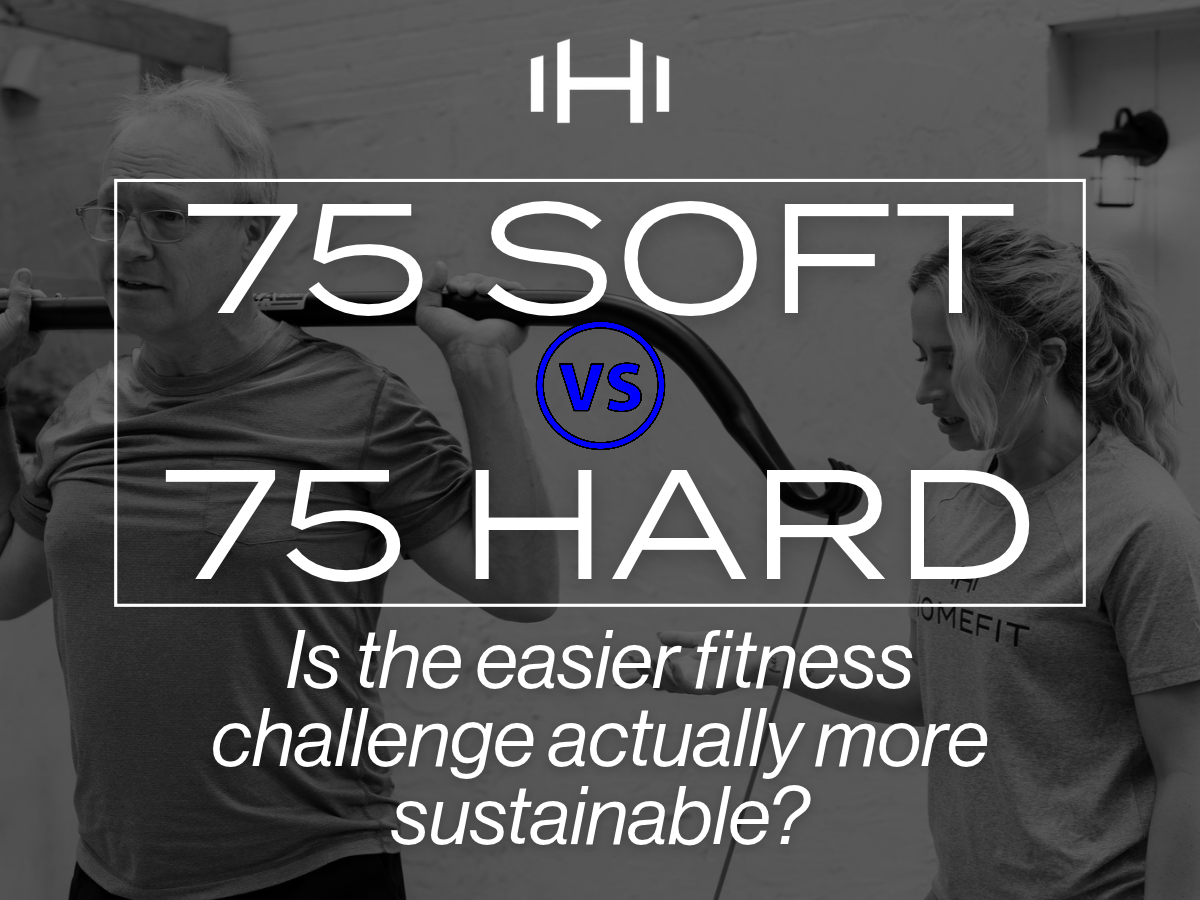
75 Soft vs. 75 Hard: Is the Easier Fitness Challenge Actually More Sustainable?
Two workouts a day. A gallon of water. No cheat meals. No excuses.
For years, the 75 Hard Challenge has dominated fitness conversations on social media, encouraging participants to push their limits through 75 consecutive days of strict rules and daily commitments. From early morning workouts to carefully tracked nutrition, the challenge promises to test your discipline and mental toughness.
But what happens when the pressure to follow a fitness routine perfectly becomes harder than the workouts themselves?
That's where the 75 Soft Challenge comes in.
This more flexible alternative is gaining attention among people who want to improve their health, build consistent workout habits, and prioritize their wellness without making fitness feel like another full-time job.
While both challenges encourage discipline and accountability, they raise an important question: Is an intense fitness challenge really the best way to create lasting change, or could a more sustainable approach lead to better long-term results?
Let's explore the differences between 75 Soft and 75 Hard, what makes a fitness routine sustainable, and how personalized training can help you build healthy habits that continue long after the challenge ends.
What Is the 75 Soft Challenge?
The 75 Soft Challenge is a 75-day fitness and wellness challenge designed to encourage healthier daily habits through movement, balanced nutrition, hydration, and personal development.
Unlike the highly structured 75 Hard program, 75 Soft places greater emphasis on consistency and flexibility.
The commonly followed 75 Soft rules include:
Eat well and focus on balanced nutrition, generally limiting alcohol to social occasions.
Complete 45 minutes of daily exercise, with one active recovery day each week.
Drink approximately three liters of water per day.
Read 10 pages of a book each day.
Instead of following an extremely rigid exercise schedule, participants can incorporate activities such as walking, strength training, cycling, swimming, yoga, or mobility exercises.
One of the most appealing aspects of 75 Soft is the freedom to adjust your approach. For example, someone who completes a challenging strength training session on Monday might choose a lighter walk or stretching session on Tuesday.
The goal is to develop a routine that promotes regular movement while allowing time for recovery.
It's important to recognize that 75 Soft is a popular wellness challenge, not a medically designed fitness program. The commonly shared rules may not be appropriate for everyone, particularly individuals with certain medical conditions, injuries, or different hydration needs.

75 Soft vs. 75 Hard: What's the Difference?
Although both challenges last 75 days, their expectations are significantly different.
The original 75 Hard program requires two 45-minute workouts each day, with at least one completed outdoors. Participants must also follow a diet without cheat meals or alcohol, drink one gallon of water, read 10 pages of nonfiction or personal development material, and take a daily progress photo.
Missing any requirement means starting the entire challenge over.
The 75 Soft Challenge takes a less restrictive approach.
Rather than completing 90 minutes of exercise every day, participants generally aim for 45 minutes of daily movement with a weekly active recovery day. Nutrition guidelines are more flexible, and missing a requirement doesn't necessarily mean losing all previous progress.
For someone balancing work, family responsibilities, travel, and other commitments, that difference can be significant.
However, there's an important distinction between a program that is less demanding and one that is automatically healthier.
Even 45 minutes of daily exercise may be too much for someone who is just beginning their fitness journey. Similarly, highly active individuals may need more specialized programming than a general wellness challenge provides.
The best approach depends on your experience, goals, physical condition, and ability to recover.
Why Do So Many Fitness Challenges Fail After the First Few Weeks?
The beginning of a fitness challenge is often the easiest part.
You've purchased a new water bottle, organized your workout schedule, prepared nutritious meals, and downloaded an app to track your progress.
Everything feels exciting because you're starting something new.
But what happens when the excitement fades?
A demanding workweek, unexpected family responsibility, poor night's sleep, or change in schedule can quickly disrupt even the most carefully planned routine.
This is where many people begin to struggle with all-or-nothing thinking.
Missing one workout starts to feel like failure. Eating something outside your original meal plan creates guilt. Suddenly, a challenge designed to improve your well-being becomes another source of stress.
Sustainable fitness requires a different mindset.
Instead of viewing one missed workout as a reason to abandon your goals, consider how you can return to your routine the following day. Rather than expecting every meal to be perfect, focus on building balanced eating habits over time.
Consistency doesn't require perfection. It requires finding ways to continue making progress even when your schedule, motivation, or circumstances change.
The Science Behind Sustainable Fitness Habits
One of the reasons consistency matters so much in fitness is that physical improvements develop through repeated effort over time.
Strength training gradually challenges your muscles, cardiovascular exercise helps improve endurance, and regular movement supports overall health and mobility.
But these benefits don't happen simply because you complete a certain number of consecutive workout days.
They develop through appropriate exercise intensity, sufficient recovery, progressive training, and long-term participation.
For most adults, the Centers for Disease Control and Prevention recommends at least 150 minutes of moderate-intensity aerobic activity each week, along with muscle-strengthening activities on at least two days.
Those recommendations provide a foundation for general health, but individual exercise programs should still reflect personal fitness levels and goals.
Someone interested in increasing muscle strength might benefit from several weekly resistance training sessions. Another person focused on cardiovascular health may prioritize walking, cycling, or swimming.
Rather than attempting to complete every possible type of exercise each day, combining different forms of movement throughout the week can help create a more balanced routine.
With HOMEFIT's in-home personal training, clients can work with a personal trainer to develop customized fitness programs that match their abilities, schedules, and long-term goals.

Can You Build Muscle and Lose Weight With the 75 Soft Challenge?
The 75 Soft Challenge can help establish habits that support improvements in strength, endurance, and body composition.
However, the challenge itself doesn't guarantee weight loss, muscle growth, or a particular physical transformation.
Your results depend on several factors, including the types of exercises you perform, workout intensity, nutrition, sleep, and consistency.
If your goal is building muscle, resistance training and progressive overload are important. Progressive overload involves gradually increasing the demands placed on your muscles as you become stronger.
For example, a beginner might start with bodyweight squats before progressing to weighted squats as their technique and strength improve.
Similarly, someone working toward weight loss may benefit from combining regular movement with realistic nutrition habits that support their energy needs and overall health.
Completing 45 minutes of random exercise each day is not necessarily more effective than following a structured training program tailored to your goals.
The real advantage comes from making each workout purposeful.
HOMEFIT's online coaching programs provide personalized workouts, nutrition guidance, habit tracking, and ongoing communication to help clients develop routines that support their individual fitness goals.
Don't Forget About Recovery: Why More Exercise Isn't Always Better
One of the most overlooked parts of any fitness challenge is recovery.
When you're motivated to improve your health, it can be tempting to believe that exercising more frequently will always produce better results.
But your body needs time to recover from physical activity, particularly after challenging strength training sessions.
Adequate rest allows muscles and other tissues to adapt to exercise. Without appropriate recovery, excessive training can contribute to persistent soreness, fatigue, reduced performance, and an increased risk of injury.
This doesn't necessarily mean you need to remain completely inactive on days when you're not strength training.
Active recovery can include gentle walking, stretching, mobility exercises, or low-intensity cycling.
For someone participating in 75 Soft, alternating more demanding workouts with lighter movement may make the challenge more manageable.
It's also important to recognize when your body needs complete rest rather than another workout.
A personalized fitness program considers these recovery needs instead of treating every day as an opportunity to push harder.
What Could a Realistic 75 Soft Workout Schedule Look Like?
One of the biggest advantages of a flexible fitness challenge is the ability to organize your weekly workouts around your lifestyle.
Rather than attempting the same exercise routine every day, you can create a balanced schedule that incorporates strength training, cardiovascular exercise, and recovery.
For example, an established exerciser participating in 75 Soft might structure their week around three strength training sessions, two moderate-intensity cardio workouts, one mobility-focused day, and one active recovery day.
Monday could focus on a full-body strength workout using dumbbells, resistance bands, or bodyweight movements.
Tuesday might include a brisk walk, stationary cycling, or another form of cardiovascular activity.
Wednesday could introduce another strength session, while Thursday emphasizes mobility, flexibility, and lighter movement.
Friday might include additional resistance training, followed by a weekend walk, recreational activity, or recovery session.
The important part is that your workout schedule matches your current abilities.
If you're new to exercise, you may need to begin with shorter sessions and gradually increase your activity. Not every day needs to reach 45 minutes immediately.
And if you already follow a consistent training program, you may not need to change your schedule simply to meet the requirements of a social media challenge.

Why Nutrition Shouldn't Feel Like Another Fitness Challenge
Nutrition is another area where rigid fitness rules can become difficult to maintain.
Highly restrictive meal plans may create the impression that certain foods are completely off-limits or that one indulgent meal can undo several days of progress.
In reality, building healthier eating habits is usually more sustainable when you focus on overall dietary patterns rather than perfection at every meal.
A balanced approach can include nutrient-dense foods, adequate protein, fruits, vegetables, whole grains, healthy fats, and enough energy to support daily activities and workouts.
It can also make room for meals with friends, celebrations, and favorite foods.
For people following a strength training program, protein intake and overall nutrition play important roles in muscle maintenance, recovery, and performance.
But nutritional needs vary based on factors such as body size, activity level, age, and fitness goals.
Instead of following a generic meal plan from social media, individualized nutrition guidance can help you make informed choices that support your training without creating unnecessary restrictions.
HOMEFIT incorporates nutrition coaching into its online training approach, helping clients work toward better habits alongside their exercise programs.
The Missing Piece in Most Fitness Challenges: Accountability
Motivation can help you begin a fitness challenge, but maintaining your progress often requires additional structure.
This is especially true when you're trying to introduce several new habits at once.
Workouts, hydration, meal planning, and daily movement can quickly feel overwhelming if you're responsible for planning and tracking everything independently.
Having access to a personal trainer can provide guidance when you're unsure how to structure a workout, adjust your routine, or overcome a temporary setback.
Through HOMEFIT's online coaching services, clients can access personalized training programs, daily habit tracking, in-app messaging, and regular check-ins with their trainer.
Instead of wondering whether your workout plan is appropriate or how to modify an exercise, you can communicate with someone who understands your goals.
For example, if a busy week makes your usual workout schedule unrealistic, your trainer can help modify your plan while keeping your long-term progress in mind.
Accountability isn't about having someone constantly remind you what you haven't accomplished.
It's about having support, encouragement, and professional guidance as you develop habits you can realistically maintain.
Building Healthy Habits Wherever You Live
One of the biggest challenges with consistency is finding a fitness routine that works within your actual schedule.
Commuting to a gym, managing family responsibilities, and fitting workouts between meetings can make even a simple exercise plan difficult to maintain.
That's why convenience can play such an important role in long-term fitness.
HOMEFIT provides personalized in-home personal training in communities across the country, helping clients incorporate professional fitness coaching into their everyday routines.
Whether you're building a strength training routine in Birmingham, Alabama, balancing work and wellness in Austin, Texas, or looking for convenient personal training in Medford, Oregon, having a trainer come to you can help eliminate the need for an additional gym commute.
For individuals who travel frequently, have unpredictable schedules, or simply prefer training independently, online coaching offers another flexible option.
The objective is the same regardless of location: make exercise more accessible, manageable, and sustainable.
What Happens After Day 75?
This might be the most important question of the entire challenge.
Completing 75 consecutive days of healthier habits can feel like a major accomplishment. But what happens when the countdown ends?
Do you continue your workouts? Maintain your nutrition habits? Keep tracking your progress?
Or does the structure disappear once the challenge is complete?
The real success of a fitness challenge shouldn't be measured only by whether you followed every rule.
It should also be measured by what you learned and which habits you can realistically continue.
Maybe you discovered that morning walks improve your mood or that strength training twice a week fits perfectly into your schedule.
Perhaps you learned that planning meals ahead of time makes your workweek easier, or that having a personal trainer helps you stay consistent.
Those discoveries may be far more valuable than reaching day 75 with a perfect checklist.
Instead of treating the challenge as a finish line, consider it an opportunity to build a foundation for your long-term health.
So, Is 75 Soft Actually Better Than 75 Hard?
The answer depends on your goals, preferences, fitness experience, and lifestyle.
Some people enjoy structured challenges with demanding rules. Others may find that a more flexible approach helps them remain active without unnecessary stress or pressure.
The 75 Soft Challenge offers an approachable alternative for people interested in improving their daily habits while maintaining more flexibility.
However, neither challenge replaces an individualized fitness program designed around your specific needs.
You don't have to exercise every single day to become stronger. You don't have to eliminate every favorite food to improve your nutrition. And you certainly don't have to restart your entire fitness journey because you missed a workout.
The most effective routine is one that provides appropriate challenges, room for recovery, and enough flexibility to remain part of your life over time.
Fitness should enhance your lifestyle, not make it harder to manage.
Build a Fitness Routine That Lasts With HOMEFIT
The 75 Soft Challenge is a reminder that healthier habits don't have to come from extreme rules or unrealistic expectations.
Whether your goal is building strength, improving endurance, losing weight, or simply becoming more active, long-term progress starts with a plan that works for you.
Ready to stop starting over and start building a fitness routine that actually lasts?
HOMEFIT makes personalized fitness more convenient through expert in-home personal training and flexible online coaching. Our trainers help you create realistic workout routines, develop healthier habits, and stay accountable with professional guidance designed around your goals.
Explore Our Personal Training Services, Discover HOMEFIT Online Coaching, or Contact HOMEFIT to take the first step. Don't just commit to 75 days. Commit to a healthier, stronger future.