ChatGPT Can Build Your Workout. Here’s Why You May Still Need a Trainer.
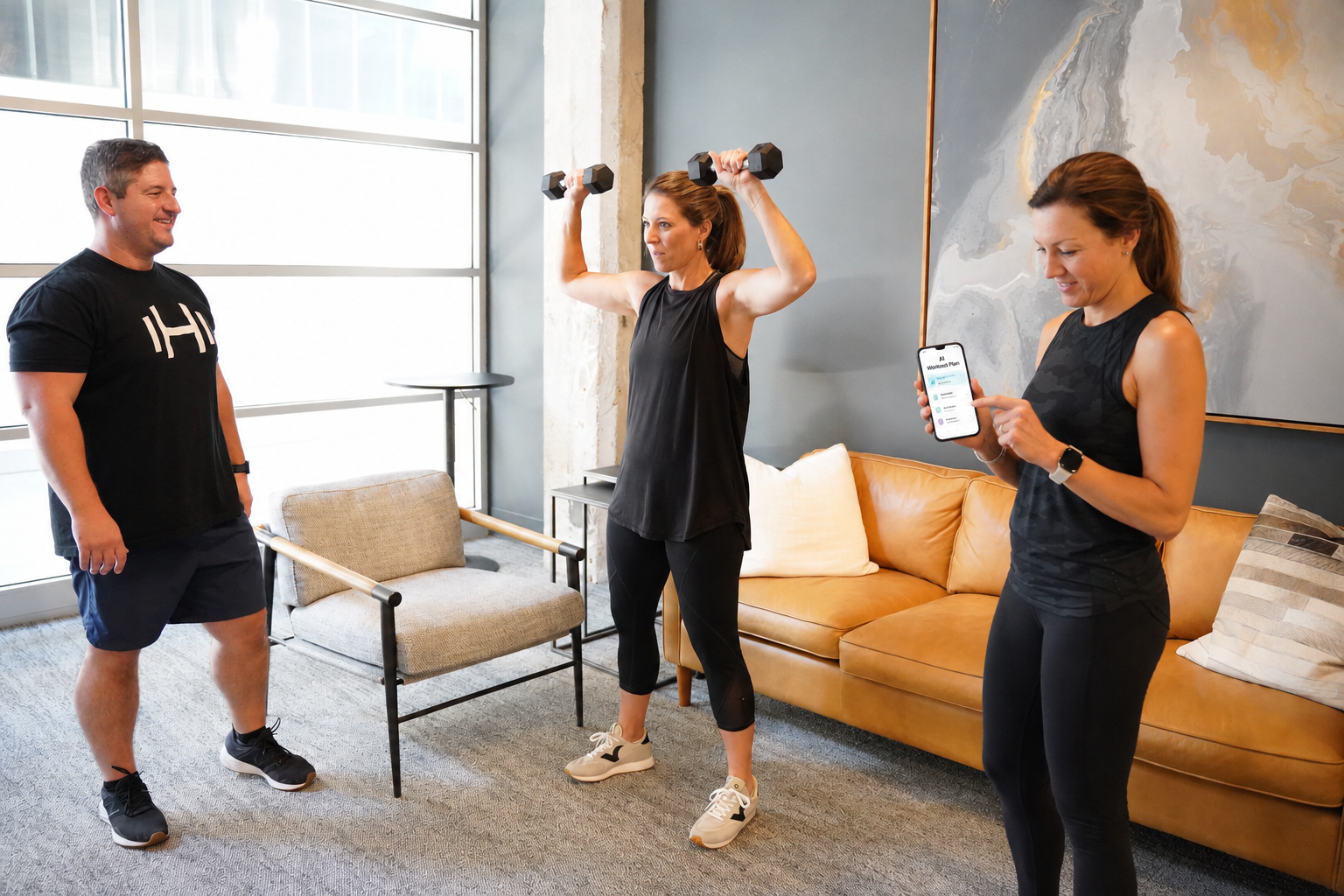
Ask ChatGPT to write you a workout and you can have one before you finish tying your shoes.
Tell it you have 30 minutes, a pair of dumbbells, three workout days per week, and a goal of getting stronger, and it can produce a detailed strength training routine complete with sets, reps, rest periods, warm-ups, and progression ideas. For someone who used to spend an hour scrolling through workout videos trying to decide what to do, that is pretty impressive, and people are absolutely using it.
OpenAI reported in July 2026 that more than 300 million people turn to ChatGPT with health-related questions each week. At the same time, technology continues to reshape the fitness industry. The American College of Sports Medicine ranked wearable technology No. 1 among its 2026 fitness trends, mobile exercise apps No. 4, and data-driven technology No. 8.
AI fitness is no longer some futuristic idea. It is already sitting in your pocket.
Which raises an uncomfortable question for the fitness industry:
If ChatGPT can build your workout plan for you, why would you still hire a personal trainer?
The answer is more interesting than “AI doesn’t work.”because sometimes, it works surprisingly well.
First, Let’s Give ChatGPT Some Credit
Here is something you might not expect to read on a personal training website: ChatGPT can be really good at answering fitness questions.
A 2026 study published in the Journal of Sports Science & Medicine compared ChatGPT’s responses with responses from active personal trainers to common exercise questions. The answers were evaluated by personal trainers and topic experts for scientific correctness, actionability, and comprehensibility.
ChatGPT received higher overall scores on six of the nine questions studied. The human trainers did not score significantly higher on any of them. That does NOT mean ChatGPT is a better personal trainer.
It means ChatGPT can be a very good source of fitness information, and there is an important difference between information and coaching.
What ChatGPT Is Actually Good at for Fitness
If you have ever stared at your home gym equipment thinking, “What am I supposed to do with all of this today?” ChatGPT can be incredibly helpful.
Give it enough information and it can organize a workout around your available time, equipment, training frequency, experience level, and general fitness goals. OpenAI itself highlights uses such as creating customized workout plans, analyzing a run, adjusting a routine for travel, and reviewing exercise form from an uploaded photo.
That makes AI particularly useful as a workout planning tool.
Maybe you usually train for 45 minutes but only have 20 minutes today. ChatGPT can shorten the routine. Maybe you are traveling and your hotel gym only has dumbbells and a treadmill. It can suggest alternatives. Maybe you have no idea what “progressive overload” means. It can explain the concept in plain English and show you several ways to apply it. Maybe your current home workout has become painfully repetitive. AI can give you new exercise ideas without requiring another hour of scrolling through social media.
It can also be useful for organizing information. If you track workouts, running times, or other fitness data, ChatGPT can help you look for patterns and make sense of what you have recorded. OpenAI has even begun integrating health and activity information into ChatGPT Health, allowing eligible users to connect sources such as Apple Health and discuss patterns involving sleep, activity, and workouts.
In other words, dismissing AI as useless for fitness would be ridiculous, but there is a catch.
A Workout Plan Is Not the Same Thing as Personal Training
Imagine ChatGPT gives you this instruction:
3 sets of 10 Romanian deadlifts.
Perfectly reasonable, but what happens when you actually start doing them?
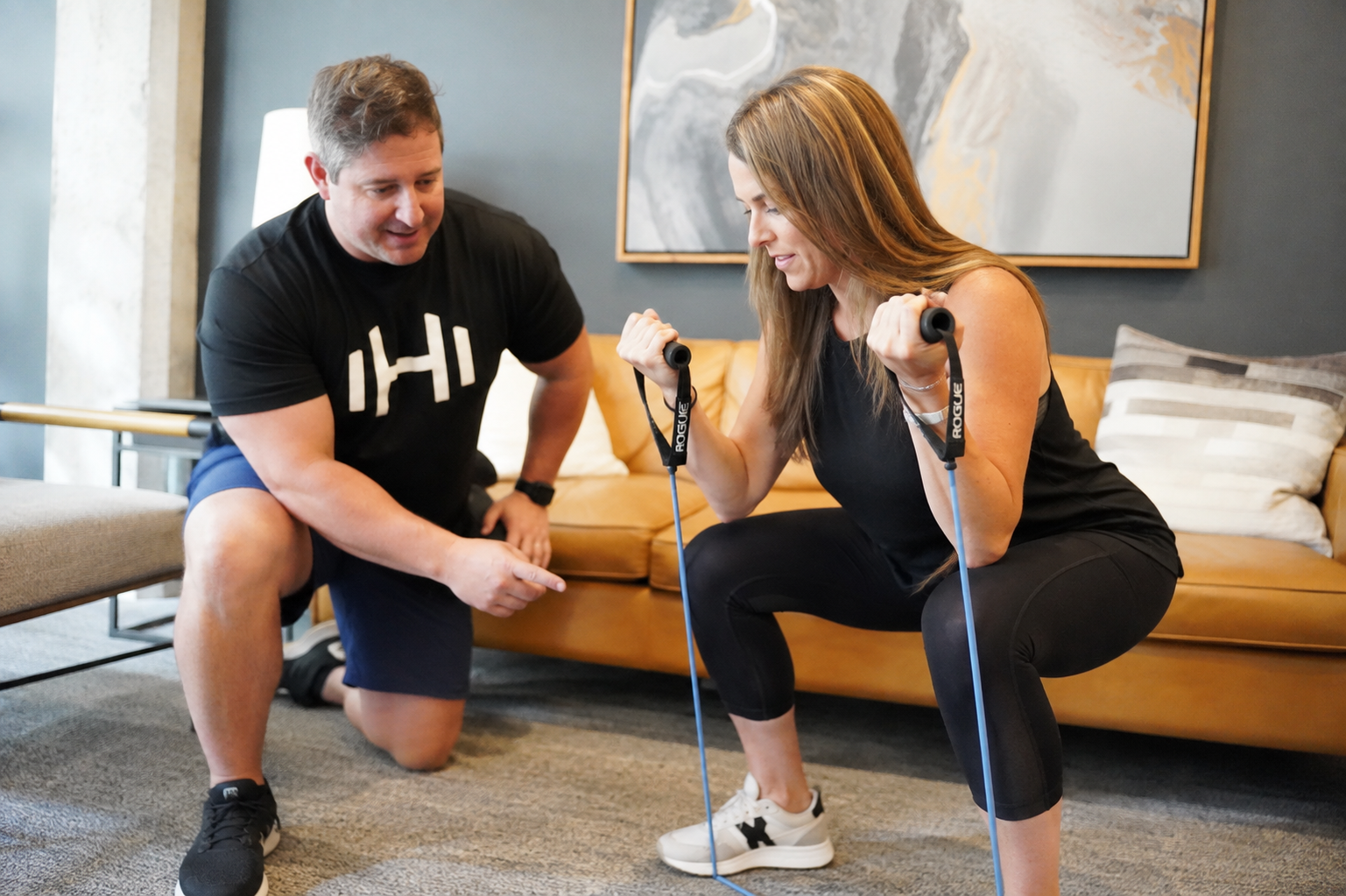
Maybe your first eight reps look great, but your back begins rounding on rep nine. Maybe you are bending your knees too much and turning the movement into something closer to a squat. Maybe the dumbbells you chose are clearly too light. Maybe they are clearly too heavy. Maybe your hamstrings feel exactly how they should, or maybe something feels wrong.
The words “3 sets of 10” cannot make that distinction. A trainer standing in front of you can.
That is where the difference between workout programming and personalized fitness coaching becomes obvious.
ChatGPT can tell you what a Romanian deadlift is supposed to look like. Depending on the feature being used, it may even provide feedback on an uploaded image or other visual input, but a personal trainer can watch how you move through the workout as it is happening, cue the movement, change the load, modify the exercise, extend a rest period, shorten a set, or decide that a different movement makes more sense that day.
Fitness does not happen on paper. It happens rep by rep.
ChatGPT Only Knows What You Tell It
This may be the biggest weakness of an AI workout plan.
Suppose you type:
“Create a three-day strength training program for me.”
ChatGPT can do it, but what did you leave out?
How long have you been training? What equipment do you actually own? How much time do you have? What exercises do you hate? What movements are unfamiliar to you? What did you do yesterday? Are you training for a race on the weekends? How consistently have you been exercising recently?
A good trainer does not simply wait for you to volunteer every piece of relevant information.
They ask questions.
That difference showed up in a recent August 2026 fitness test in which TechRadar asked ChatGPT to create a home strength-training program and then had a professional trainer review it. The trainer considered ChatGPT’s program more sophisticated than a competing AI-generated program, but pointed out that neither AI had automatically asked enough follow-up questions to fully customize the workout.
That is an important limitation.
AI personalization is only as good as the context it receives. Real personal training involves discovering some of that context together.
The Research on AI Workouts Is Promising—and Complicated
This is where the conversation gets especially interesting.
In addition to the 2026 study showing that ChatGPT performed well when answering common fitness questions, a 2025 BMC Public Health case study compared a 16-week GPT-4-generated fitness plan with plans developed by three professional coaches.
The researchers found comparable performance in the areas they evaluated, with no statistically significant differences between GPT-4 and the coaches in personalization, effectiveness, safety, or comprehensiveness. The researchers still concluded that AI could not fully replace human coaches and highlighted the potential value of combining AI with professional coaching.
Sounds like AI personal trainers are ready to take over, right? Not quite.
Another study examining AI-generated exercise recommendations across 26 clinical populations found that the recommendations were about 91% accurate in the information they did provide—but only about 41% comprehensive compared with the gold-standard exercise guidance used by the researchers. Important exercise-prescription details were sometimes missing.
A broader review of research into large language models and exercise recommendations similarly concluded that the technology has considerable potential, but the field is still developing and requires further research.
So the research is not telling us, “ChatGPT is bad at fitness.”It is telling us something much more useful: ChatGPT can be an excellent fitness tool. But a good tool and a complete coaching relationship are not the same thing.

AI Can Give You the Plan. It Cannot Make Tuesday Go According to Plan.
Here is where fitness gets painfully human. Your workout plan says Tuesday is lower body day. Tuesday arrives.
You slept badly. Your first meeting ran long. Your kid has practice at 5:30. You have 35 minutes instead of an hour. You are mentally exhausted and the workout you were excited about on Sunday suddenly sounds terrible.
ChatGPT can certainly rewrite the workout if you open the app, explain everything that happened, describe how you feel, and ask it what to change, but first, you have to open it. You have to remember, you have to explain , and you have to decide to do the workout in the first place.
That is where accountability becomes a very different product from information.
When your HOMEFIT trainer is arriving at your home in Mountain Brook, meeting you after work in Franklin, or training you in Madison, the decision-making burden changes. There is an appointment, there is a person and there is someone who already knows the plan and can immediately adjust it when real life gets in the way.
For busy professionals and parents, that may be considerably more valuable than having another perfectly designed workout saved somewhere on a phone.
Your Body Does Not Always Follow the Algorithm
Good training requires progression, but progression is not always linear. Some weeks you increase the weight, you add repetitions, and your trainer notices that a movement has become significantly easier and progresses it. Other weeks, maintaining where you are may make more sense.
A written AI workout can explain concepts such as progressive overload, training volume, rest periods, strength training frequency, and exercise substitutions extremely well. What it does not automatically possess is the continuous stream of observations a trainer collects while working with you.
-How did today's weight move compared with last week?
-Did your form change as you became tired?
-Are you rushing the eccentric portion of the movement?
-Do you look ready for another set?
-Is the workout technically appropriate but something you absolutely hate doing?
-Would you be more consistent if the entire plan were changed?
Those tiny pieces of information accumulate. Over time, they become personalization that is difficult to capture in a single AI prompt.
There Is Another Problem: AI Can Be Wrong
ChatGPT has become extraordinarily capable, but it is still capable of producing inaccurate information.
OpenAI explicitly advises users that ChatGPT can sometimes provide incorrect or misleading answers and may occasionally sound confident even when the information is wrong. OpenAI recommends verifying important information rather than treating ChatGPT as a final authority.
That matters more when a fitness question begins moving into pain, injuries, medical conditions, pregnancy, rehabilitation, medications, or other health concerns. There is a big difference between asking: “What are some alternatives to jumping jacks?” and asking an AI system to independently make decisions about a complex medical or physical condition.
ChatGPT can be useful for education and for helping you prepare better questions, but health decisions may require a qualified medical professional, and exercise programming may require appropriate professional oversight.
Even OpenAI describes its health tools as supporting—not replacing—the judgment of qualified professionals.
So Should You Use ChatGPT for Your Workouts?
Absolutely. If you use it for what it is good at.
Use it to learn, to brainstorm, when you need a hotel-room workout, when you need it to understand a fitness term your trainer mentioned, reorganize an existing workout when your schedule changes, and explore exercise variations and make fitness feel less intimidating.
AI fitness tools can make high-quality fitness information dramatically easier to access, and that is a good thing, but do not confuse access to information with a coaching relationship.
The strongest future for fitness may not be AI versus personal trainers at all. It may be AI plus personal trainers.
Let technology handle what technology does well: organizing information, analyzing data, generating ideas, answering questions, and making knowledge more accessible. Then let a human do what humans do exceptionally well: observe, communicate, adapt, motivate, challenge, simplify, and show up.
The Hardest Part of Fitness Was Never Writing the Workout
This may be the piece that gets lost in the excitement around AI-generated workout plans.
There are millions of workouts available for free already.
People can download programs, watch exercise videos, follow fitness creators, buy smartwatches, subscribe to apps, ask ChatGPT for a personalized workout plan, and collect more health data than any previous generation, and yet many people still struggle with consistency.
The missing ingredient was never simply access to exercises. It was figuring out which exercises make sense for you, doing them correctly, progressing them appropriately, fitting them into an unpredictable life, and continuing long enough to make fitness part of that life.
That is the difference between receiving a workout and actually being trained.
Whether you are trying to build strength at home in Birmingham, fit exercise around a packed schedule in Nashville or Panama City, stay consistent in Huntsville or Birmingham, or simply stop guessing every time you pick up a pair of dumbbells, technology can absolutely be part of the solution.
But sometimes the smartest upgrade to your fitness routine is not another app.
ChatGPT can build your workout. HOMEFIT can help you actually live it.
Contact us today to book a complimentary consultation and get a FREE yoga session or workout on us!