The Fourth Trimester: Why Personal Training at Home Can Be Essential for New Mom Mental Health
The Fourth Trimester: Why Personal Training at Home Can Be Essential for New Mom Mental Health
The baby is finally asleep.
There are bottles drying by the sink, laundry waiting somewhere between the washer and the couch, and a cup of coffee that has been reheated twice. You have twenty quiet minutes, but leaving the house would take at least forty-five. By the time you locate your shoes, pack the diaper bag, load the stroller, and get everyone into the car, the nap may already be over.
This is the reality of the fourth trimester. It is tender, exhausting, physically demanding, and often nothing like the polished version of postpartum life shown online.
New moms are frequently told to rest, recover, bond, exercise, sleep when the baby sleeps, accept help, and enjoy every minute. These expectations can become another invisible checklist hanging over a period that already includes hormonal changes, interrupted sleep, physical healing, feeding decisions, identity shifts, and the relentless mental load of keeping another human alive.
Postpartum fitness should not add more pressure. It should create support.
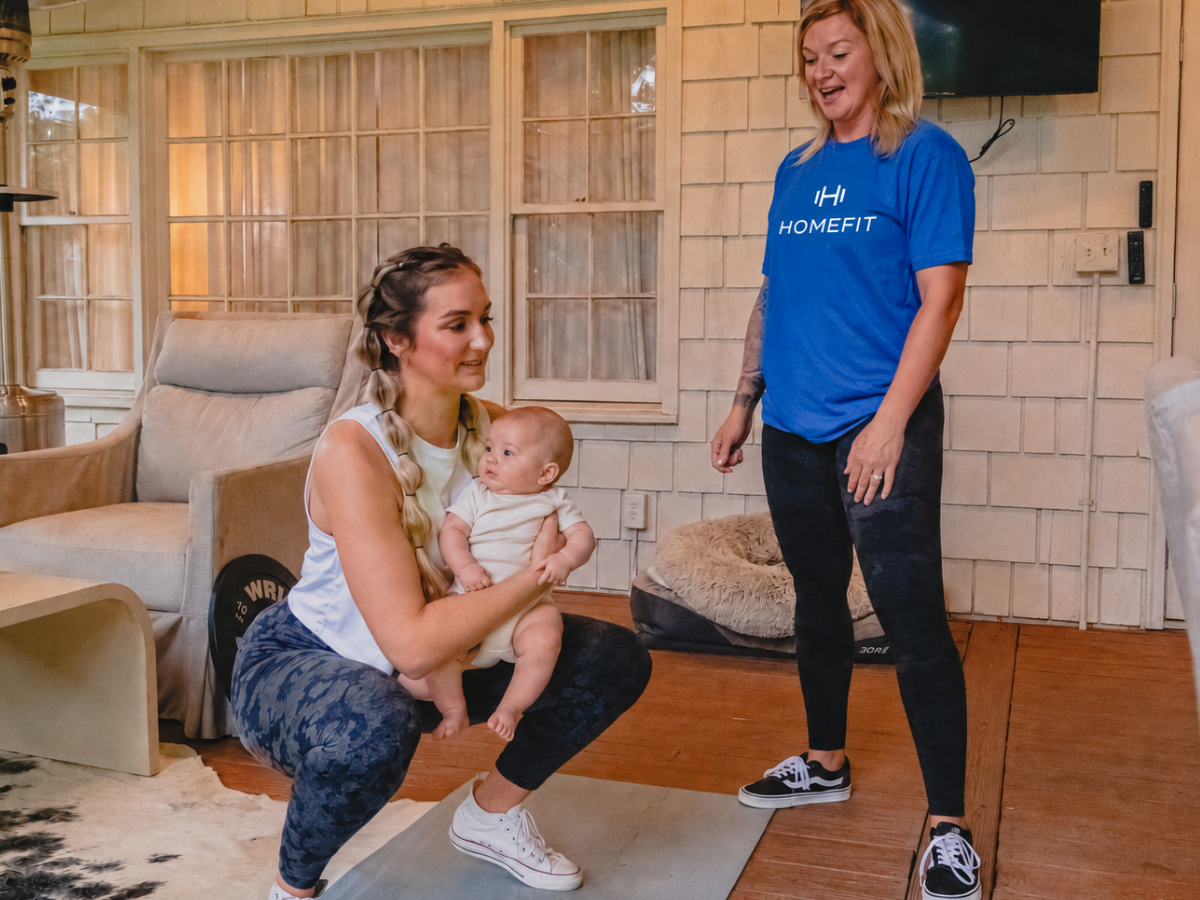
That is why postpartum in-home personal training can be so valuable. Instead of asking a new mother to reorganize her entire day around a gym, HOMEFIT brings a customized workout into the living room, bedroom, garage, patio, or any space where she feels comfortable. The baby can nap nearby, feeding supplies can remain within reach, and the session can respond to the body and energy level she has that day.
HOMEFIT’s prenatal and postnatal fitness programs are tailored to the client’s stage, goals, and individual needs, with trainers providing exercise modifications and form guidance in the location that works best for the client.
This is not about getting your “pre-baby body” back. It is about helping your current body feel supported again.
The Fourth Trimester Is Not a Six-Week Deadline
The phrase fourth trimester is generally used to describe the first three months after childbirth, but recovery does not follow a precise twelve-week schedule.
Some women feel ready for gentle movement relatively early. Others are managing a cesarean incision, significant tearing, pelvic pain, feeding complications, high blood pressure, sleep deprivation, or a difficult birth experience. Many feel physically stronger before they feel emotionally grounded. Others experience the opposite.
There is no universal postpartum reset date.
The American College of Obstetricians and Gynecologists emphasizes that postpartum care should be an ongoing process tailored to each woman’s needs rather than one isolated appointment. After an uncomplicated vaginal delivery, some women may gradually resume movement within days or whenever they feel ready. Recovery after a cesarean birth or pregnancy complication may require additional time and specific guidance from an obstetric provider.
The familiar six-week checkup is not a starting gun that suddenly means every new mom should begin running, lifting heavily, or returning to her old program.
It is simply one point in a much longer recovery.
A qualified postpartum personal trainer should begin by asking questions. How was the birth? How is the incision or perineum healing? Is there pain, pressure, bleeding, leaking, dizziness, or unusual fatigue? Has the client received guidance from her medical provider? What movements feel comfortable today?
The workout starts with listening.
The “Baby Blues” Deserve Attention Too
The emotional side of the fourth trimester can be difficult to explain, especially when a mother feels grateful for her baby and overwhelmed by motherhood at the same time.
The “baby blues” can include crying, worry, sadness, irritability, and exhaustion during the days following childbirth. These feelings often improve within several days. Postpartum depression is more intense, may last longer, and can interfere with daily functioning, bonding, sleep, appetite, and the ability to care for oneself or the baby. Feelings that persist for more than two weeks should be discussed with a healthcare professional.
Mental health symptoms do not always begin immediately after delivery. CDC research found that among women who reported depressive symptoms nine to ten months postpartum, more than half had not reported those symptoms earlier at two to six months. The postpartum mental health conversation therefore needs to continue well beyond the newborn stage.
Exercise is not a replacement for therapy, medication, medical treatment, or social support. A trainer should never position a workout as a cure for postpartum depression.
However, appropriately selected physical activity may be a helpful part of a broader mental health care plan. Recent research has found that postpartum exercise interventions may reduce the severity of depressive and anxiety symptoms for some women.
Sometimes the value of the session is not that it produces a dramatic transformation. It is that someone arrives, checks in, creates structure, and helps a new mother spend thirty minutes reconnecting with herself as a person.
Movement That Gives Something Back
A traditional workout often asks, “How much can you do?”
A good postpartum workout asks, “What would help you feel better afterward?”
That distinction matters.
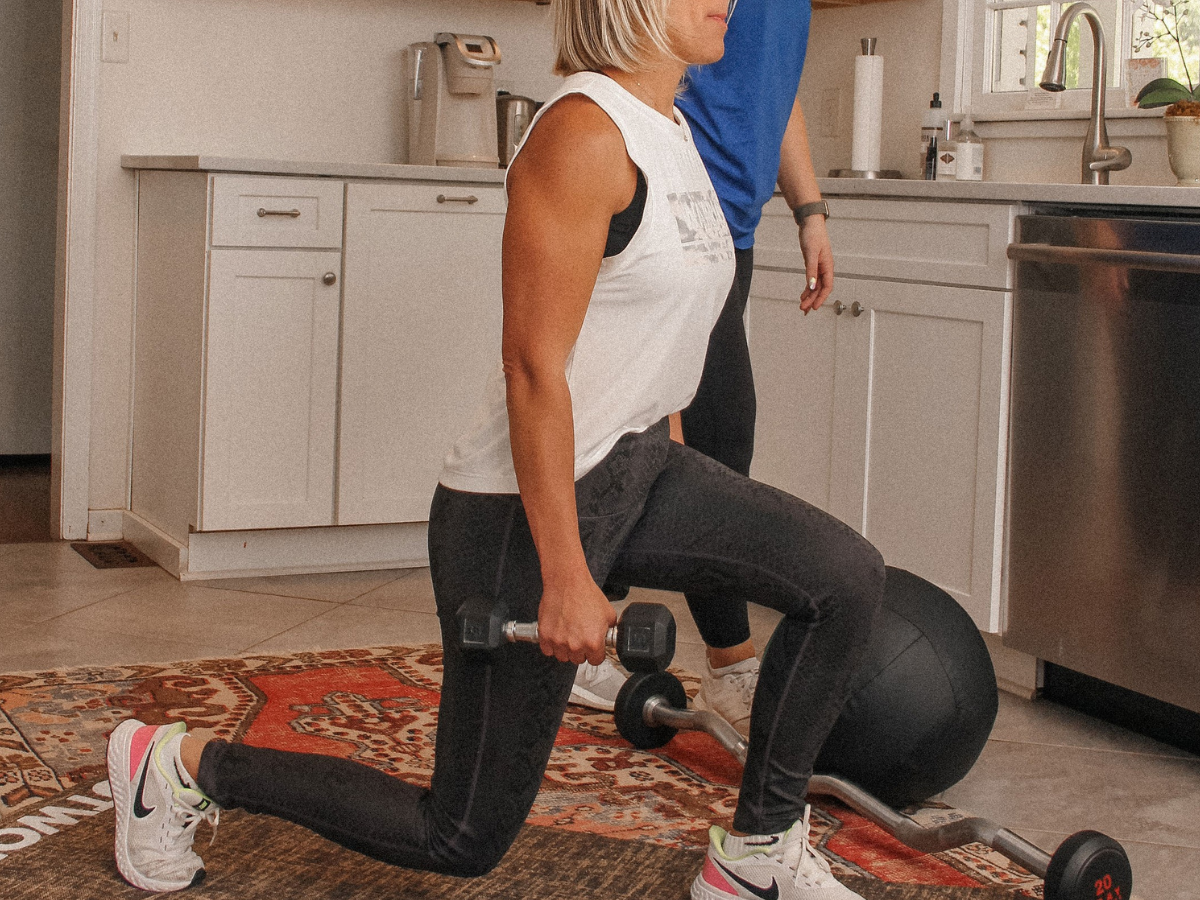
During the fourth trimester, the most productive session may involve breathing, mobility, posture work, and a short walk. Another day may include resistance bands, supported squats, rows, and gentle core strengthening. A particularly difficult day may call for ten minutes of movement followed by stretching and a conversation about recovery.
The session should not leave the client depleted before the next feeding, diaper change, or nighttime wake-up.
For many new moms, the goal is to finish feeling more awake, more stable, and more connected to their body than when the session began.
The Pelvic Floor Is More Than a Set of Kegels
Pelvic floor recovery has become a major part of the postpartum fitness conversation, which is an important shift. Unfortunately, much of the advice still gets reduced to one instruction: “Do your Kegels.”
The pelvic floor is part of a larger pressure-management system that works with the diaphragm, deep abdominal muscles, hips, back, and breathing patterns. Postpartum recovery may involve strengthening, but it may also involve learning to relax, coordinate, and breathe without excessive pressure.
This is why endlessly squeezing the pelvic floor is not automatically the right answer for every new mother.
Pelvic floor symptoms can include urinary leakage, pelvic pressure or fullness, difficulty emptying the bladder, pain, or the feeling of a bulge. These concerns should be discussed with an obstetric provider or pelvic floor physical therapist.
A personal trainer does not diagnose pelvic floor dysfunction or replace pelvic floor physical therapy. Instead, the trainer can work within the client’s medical guidance and reinforce pelvic floor friendly movement patterns.
A postpartum session may begin with 360-degree breathing, allowing the ribs, abdomen, back, and pelvic floor to respond together. From there, the trainer might introduce heel slides, supported marches, sit-to-stands, glute bridges, resistance band rows, or light carrying patterns while watching how the client manages pressure.
If a movement causes leaking, pelvic heaviness, bulging, increased pain, or a dragging sensation, that is not a sign that the client needs to work harder. It is information that the exercise needs to be reduced, modified, or paused while the client seeks appropriate medical guidance.
Rebuilding the Core Without “Flatten Your Stomach” Pressure
The postpartum core has done extraordinary work. It accommodated a growing baby, adapted to changing posture, participated in childbirth, and now supports repetitive feeding, lifting, carrying, rocking, and bending.
It does not need to be punished.
Early postpartum core training should focus less on appearance and more on coordination. Can the client exhale during effort? Can she stand from the couch without holding her breath? Can she lift the baby carrier while keeping the movement controlled? Can she rotate, reach, and carry without pain?
These are meaningful markers of progress.
A postnatal fitness program may include breathing with gentle abdominal engagement, heel slides, bent-knee fallouts, supported bird-dog variations, elevated wall planks, band rows, bridges, and controlled sit-to-stands. The exact progression depends on healing, delivery history, symptoms, strength, and provider recommendations.
The goal is not to chase the most intense ab exercise available online. It is to restore the connection between breathing, movement, and everyday demands.
The Nap-Window Workout
One of the most talked-about trends in fitness is the exercise snack, a short period of intentional movement that fits into the day rather than requiring a traditional hour-long workout.
For new moms, this concept is not a trend. It is survival.
A baby’s nap may last ninety minutes, or it may last fourteen. A feeding may take longer than expected. A contact nap can turn both arms into essential equipment. A carefully planned morning can change completely by 9:05.
Postpartum fitness needs to work within that unpredictability.
With a personal trainer that comes to your home, there is no commute, locker room, parking lot, childcare handoff, or race to make a class time. The trainer can prepare the space while the mother settles the baby. If the baby wakes, the session can pause. If the baby needs to remain nearby, the trainer can adapt.
A thirty-minute session might include five minutes of breathing and mobility, ten minutes of strength work, a short low-impact circuit, and a cooldown. On another day, three ten-minute movement blocks may be more realistic than one continuous workout.
The American College of Obstetricians and Gynecologists recommends that postpartum women eventually work toward at least 150 minutes of moderate aerobic activity per week, but those minutes can be divided into smaller sessions. That number is a long-term guideline, not a demand that a newly postpartum mother immediately complete five polished thirty-minute workouts.
Consistency can be built from smaller pieces.
What a Postpartum HOMEFIT Session Could Look Like
A trainer arrives at the client’s home and begins with a check-in rather than a stopwatch.
How was sleep? Is there unusual soreness? Has bleeding increased? Is the pelvic floor feeling heavy? Is the client emotionally drained, energized, or somewhere in between?
The warm-up may include rib breathing, neck and shoulder mobility, ankle circles, gentle thoracic rotation, and hip movements to relieve stiffness from feeding and holding the baby.
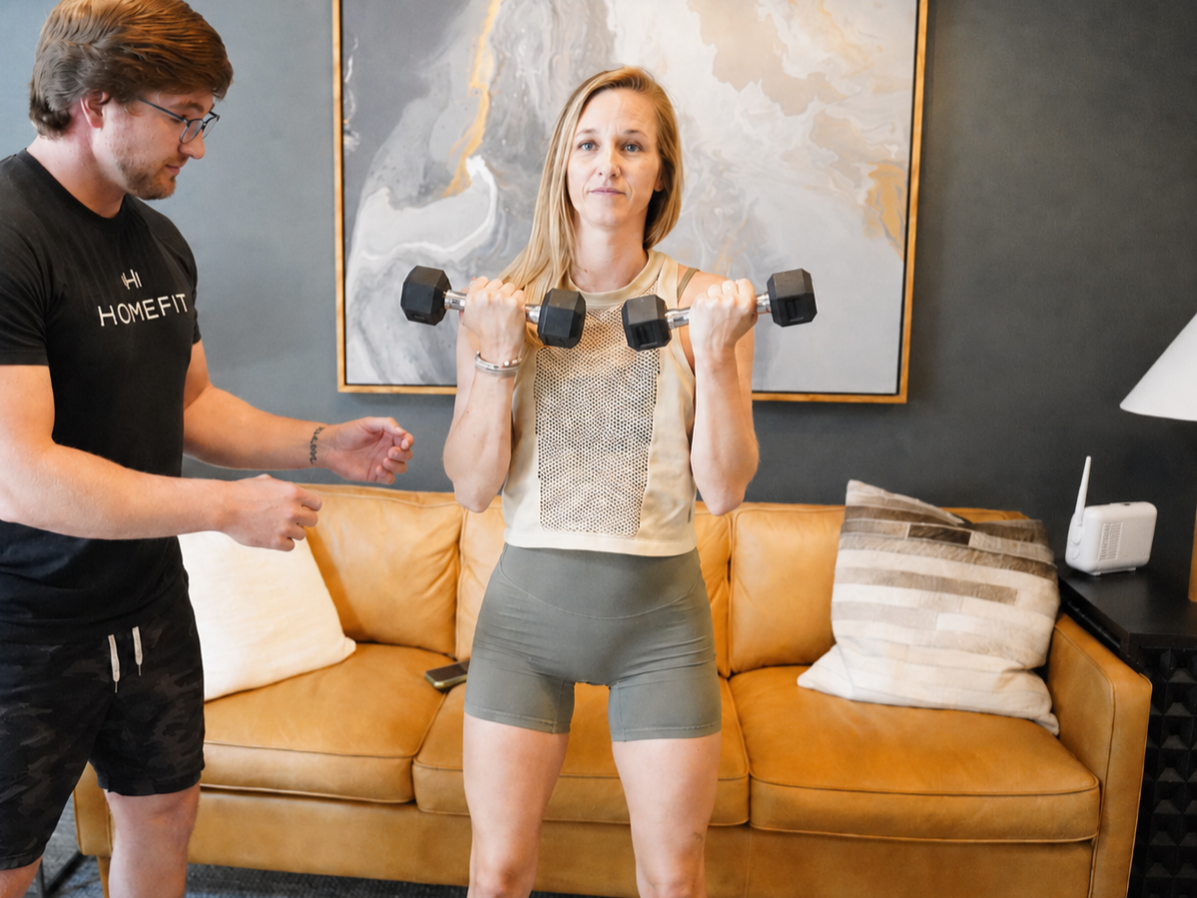
The strength portion could include chair-supported squats, resistance band rows, elevated wall push-ups, glute bridges, supported split-stance work, heel raises, or light carries. The trainer can adjust the range of motion, resistance, repetitions, and rest periods throughout the session.
The workout might conclude with a short walk down the driveway, through the neighborhood, or around the living room. The baby may remain asleep in the bassinet. The client may hold the monitor. The trainer may quietly move equipment so the session does not disturb the nap.
It may not resemble the loud, high-intensity postpartum transformations promoted on social media.
That is exactly the point.
Postpartum Strength Is Everyday Strength
New motherhood is already physically demanding.
There are hours spent feeding in rounded positions, repeated transfers in and out of a crib, awkward car-seat lifts, stroller loading, floor play, baby wearing, and pacing the hallway at 2 a.m.
Postpartum training should prepare the body for that real workload.
A trainer can help a mother practice hinging at the hips before lifting the car seat, using her legs when standing from the floor, changing positions while feeding, and distributing weight more comfortably when carrying the baby.
This type of functional strength may eventually support the experiences she wants to return to outside the house, whether that means taking a stroller walk around Railroad Park in Birmingham, exploring the greenway near Old Fort Park in Murfreesboro, walking at Crockett Park in Brentwood, or spending an afternoon near Big Spring Park in Huntsville.
The objective is not simply to finish a workout. It is to make daily life feel more manageable.
Why the Home Environment Changes Everything
A new mom living in Mountain Brook, Vestavia Hills, Homewood, Hoover, Brentwood, Franklin, Murfreesboro, Nashville, Huntsville, or Madison does not necessarily need another place to be.
She may need expert support in the place where she already is.
In-home personal training allows the program to be built around the client’s real environment. The trainer can see the stairs she climbs while holding the baby, the couch she struggles to rise from, the counter where she prepares bottles, and the corner where there is enough room for a resistance band.
That makes the workout immediately relevant.
It also creates privacy. A mother does not have to worry about leaking during an exercise, nursing before a session, wearing clothing that accommodates her changing body, or being compared with anyone else in a gym.
The home becomes a place for recovery rather than another performance space.
HOMEFIT offers customized in-home prenatal and postnatal fitness, with trainers modifying exercises according to the client’s needs and bringing the session to the client’s chosen location.
The Mental Load of Leaving the House Is Still a Load
The phrase “just go to the gym” ignores how many tasks are hidden inside the word “go.”
For a new mother, leaving may require timing a feeding, pumping, changing the baby, packing diapers, finding clean clothes, loading equipment, driving, parking, unloading, and hoping the baby remains settled long enough to exercise.
Even when childcare is available, the process may feel like another project to manage.
In-home training removes much of that friction. The appointment still provides accountability, but the mother does not have to spend her limited energy transporting herself to the support.
The trainer comes to her.
That difference can transform exercise from an unrealistic intention into a routine that is actually compatible with postpartum life.
This Is Not “Bounce Back” Fitness
The postpartum body does not need to bounce backward.
It needs time, nourishment, sleep, medical care, emotional support, gradual movement, and permission to become something new.
A responsible postpartum trainer will not shame weight changes, promise rapid fat loss, prescribe punishing workouts, or treat pain and leakage as normal consequences of motherhood. The focus should remain on strength, energy, stability, mobility, confidence, and the client’s personal goals.
Some mothers want to return to running. Some want to lift weights again. Some want enough stamina to take the stroller around the block without feeling depleted. Some simply want their back to hurt less while feeding the baby.
All of those goals count.
When Exercise Is Not Enough
Movement can be supportive, but it cannot carry the entire weight of postpartum mental health.
A trainer should encourage the client to speak with a qualified healthcare or mental health professional when sadness, anxiety, anger, hopelessness, detachment, intrusive thoughts, or difficulty functioning feel intense or persist beyond the expected baby blues.
Postpartum depression is treatable, and seeking help is not a failure of strength, gratitude, or motherhood.
The National Maternal Mental Health Hotline provides free, confidential support around the clock in English and Spanish. Pregnant and postpartum individuals can call or text 1-833-TLC-MAMA, or 1-833-852-6262. Anyone experiencing a suicidal crisis or immediate emotional danger can call or text 988.
A personal trainer can be part of the support team. They should never be the entire support team.
Your Body Is Not Behind
There will be interrupted sessions.
There will be days when the baby refuses to nap, nights when no one sleeps, and weeks when progress feels difficult to measure. There may be moments when a ten-minute mobility session is all that fits.
That does not mean the program is failing.
Postpartum progress may look like standing with less back pain, feeling more stable while carrying the baby, breathing through a difficult movement, taking a walk without pelvic pressure, or realizing that exercise has started to feel like personal time rather than another obligation.
HOMEFIT brings postpartum personal training at home so new mothers do not have to wait for life to become perfectly organized before receiving support.
The workout meets the mother in the fourth trimester exactly as she is: healing, adapting, learning, and stronger than she may currently feel.
Begin Your Postpartum Fitness Journey at Home
Whether you are looking for an in-home personal trainer for new moms in Birmingham, Mountain Brook, Vestavia Hills, Murfreesboro, Nashville, Brentwood, Franklin, Huntsville, Madison, or another HOMEFIT community, your program should begin with your recovery, your goals, and your current capacity.
No crowded fitness center. No complicated childcare logistics. No pressure to “bounce back.”
Just thoughtful, personalized movement delivered to the place where you and your baby already feel at home.