From Couch to Kickoff: Get Stadium Ready with homefit
From Couch to Kickoff: Get Stadium Ready
Football season has a way of turning an ordinary weekend into an all-day event. There is the walk from the parking lot, the tailgate setup, the trek to the stadium, the stairs to your section, hours of standing, and then the walk back out when the game is over. None of those things sound especially difficult on their own, but together they can make game day feel surprisingly physical.
That is where stadium ready fitness comes in. You do not need to train like the athletes on the field to feel better on game day. Building a little more strength, cardiovascular endurance, balance, and mobility can make the entire experience more enjoyable. Instead of focusing on whether your legs can survive the upper deck, you can focus on the game, the people you are with, and everything that makes football season fun.
For fans throughout communities such as Auburn, Birmingham, Huntsville, Nashville, Chattanooga, and Murfreesboro, fall weekends often come with packed schedules and plenty of time on your feet. A functional fitness routine can help prepare your body for all of it.
Game Day Requires More Fitness Than You Think
Most people think about fitness in terms of scheduled workouts, but everyday activities often reveal just as much about strength and endurance. A typical game day may involve walking a mile or more before you even reach your seat, climbing several flights of stairs, carrying chairs or coolers, standing for long stretches, and repeatedly sitting down and getting back up.
These movements rely heavily on your legs, core, cardiovascular system, and balance. If any of those areas are undertrained, you may notice fatigue sooner than expected. That does not mean you need an extreme workout program. It simply means your training can be more useful when it prepares you for the activities you actually enjoy.
Functional strength training is especially valuable for this reason. Rather than training only for appearance or gym performance, functional fitness focuses on movements that support daily life. When your body is stronger and more conditioned, stairs feel easier, long walks feel more manageable, and carrying what you need becomes less exhausting.
Start With Stronger Legs
Lower body strength is one of the biggest pieces of stadium ready fitness. Your glutes, quadriceps, hamstrings, and calves all work together when you climb stairs, walk uphill, stand for long periods, and get in and out of your seat.
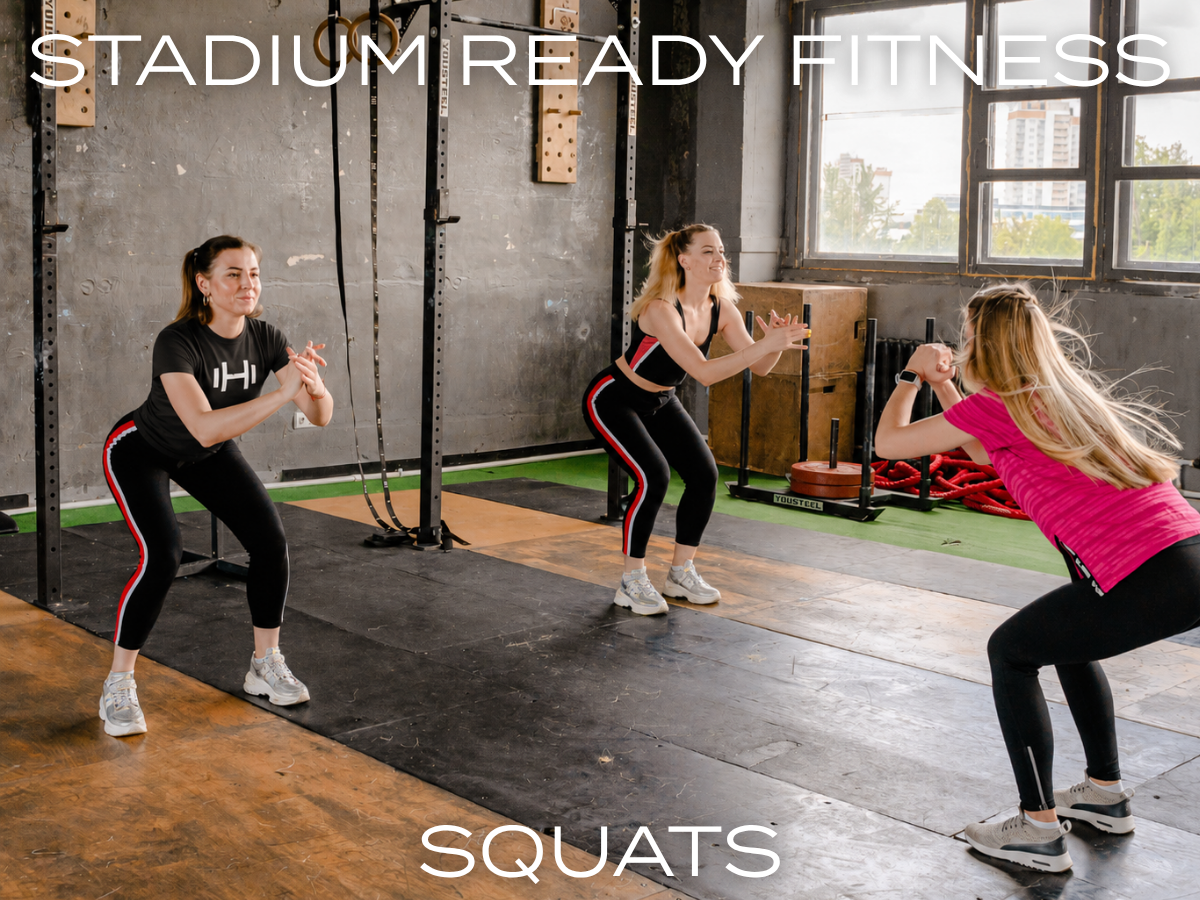
Squats are one of the most effective exercises for building that foundation. The movement pattern is familiar because you use it constantly throughout the day. Every time you sit down and stand back up, your body is performing a version of a squat. Adding squats to your workout can help strengthen the muscles that support those movements and make them feel easier over time.
Bodyweight squats are a good place to start, while weighted squats can add more resistance as your strength improves. Goblet squats, where a dumbbell or kettlebell is held near the chest, are another practical option that can be done in a relatively small space.
The goal is not to lift the heaviest weight possible. It is to gradually develop strength that carries over into everyday life.
Step-Ups Might Be the Most Stadium-Specific Exercise
If there is one exercise that closely resembles what you will encounter inside a stadium, it is the step-up. Step-ups strengthen the legs while also challenging balance and coordination, making them especially useful for preparing for stairs and bleachers.
The exercise can be performed using a stable step, bench, or platform. As strength improves, the movement can be progressed by increasing the height, adding weight, or adjusting the pace. Because each leg works individually, step-ups can also help develop stability and address differences in strength from one side to the other.
For someone preparing for football season in Auburn or spending weekends at games in Birmingham or Nashville, this is the kind of exercise that has a very obvious purpose. You are strengthening the exact movement pattern you are likely to repeat dozens of times before the game is over.
Lunges Build Strength for Walking, Stairs, and Balance
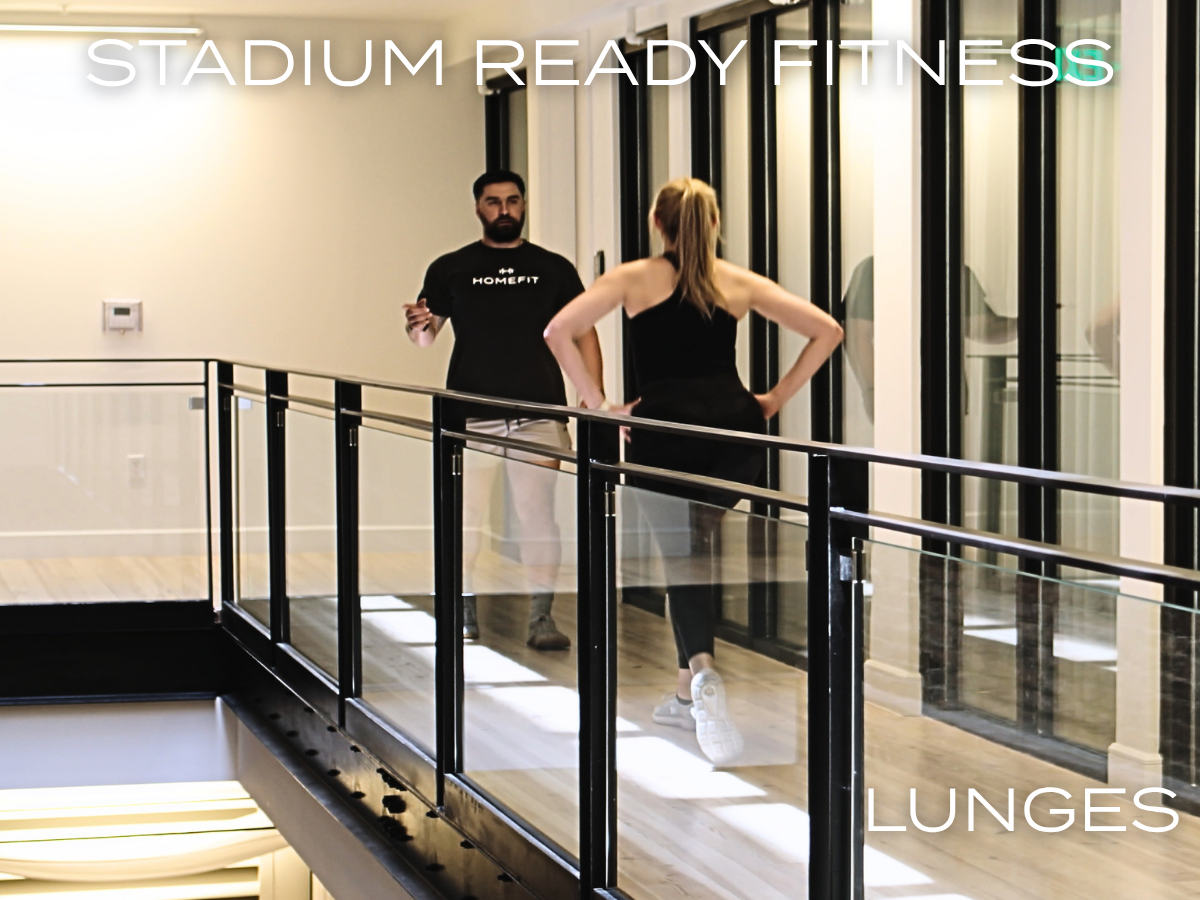
Lunges are another valuable addition to a stadium ready workout because they challenge the lower body one side at a time. Walking lunges and reverse lunges can improve strength, stability, and control while helping prepare the body for uneven steps, curbs, hills, and long distances on foot.
Real life does not always happen in perfectly symmetrical movements. You step over something, shift your weight, climb onto a curb, turn around someone in a crowd, or catch your balance when you are carrying something. Exercises that train one side at a time can help your body become more comfortable managing those situations.
For HOMEFIT clients throughout Birmingham, Homewood, Hoover, Mountain Brook, Vestavia Hills, and Southeast Birmingham, functional exercises like lunges can easily be incorporated into a personalized in-home training program without requiring access to a traditional gym.
Do Not Forget About Carrying Strength
Tailgating often involves a workout before the workout. Coolers, folding chairs, bags, drinks, food, and other supplies all have to make it from the car to wherever the day begins. That makes carrying strength another important piece of functional fitness.
Farmer carries are one of the simplest ways to train for this. Holding a weight in each hand and walking with control challenges your grip, shoulders, back, legs, and core at the same time. It is a straightforward exercise, but the benefits translate well into daily life.
Single-arm carries can also be useful because they require your core to work harder to keep your body upright and stable. These movements may not look complicated, but they are highly practical and can help make carrying everyday items feel easier.
Build Endurance Without Feeling Like You Have to Become a Runner
Cardiovascular endurance matters on game day, especially when walking long distances or climbing multiple flights of stairs. The good news is that running is not the only way to improve it.
Brisk walking, incline walking, cycling, step-ups, low-impact intervals, and strength circuits can all support cardiovascular fitness. The best choice is usually the one that fits your current ability and that you are willing to do consistently.
Someone just getting back into exercise may benefit from regular walking combined with short strength sessions. Someone with an established fitness routine might add intervals or perform strength movements in a circuit to increase the cardiovascular challenge.
There is no single stadium ready workout that works for everyone. Your starting point, health history, goals, and schedule all matter, which is one reason personalized training can be so effective.
A Simple Stadium Ready Workout
A stadium inspired workout does not need to be overly complicated. A trainer might combine squats, step-ups, reverse lunges, farmer carries, marching or high knees, and upper body strength work into one session. These exercises target the legs, core, balance, and endurance needed for many of the physical demands that come with a long game day.
For example, weighted squats can build lower body strength, while step-ups prepare the legs for stairs. Reverse lunges add stability and single-leg strength, and farmer carries prepare the body for hauling bags, chairs, or coolers. A short period of brisk marching or high knees can raise the heart rate, while shoulder presses can add upper body strength for carrying and lifting.
The goal should not be to finish one workout completely exhausted. A better goal is to train consistently enough that your strength and endurance gradually improve. When everyday activities begin to feel easier, that is real progress.
Your Calves Deserve Some Attention Too
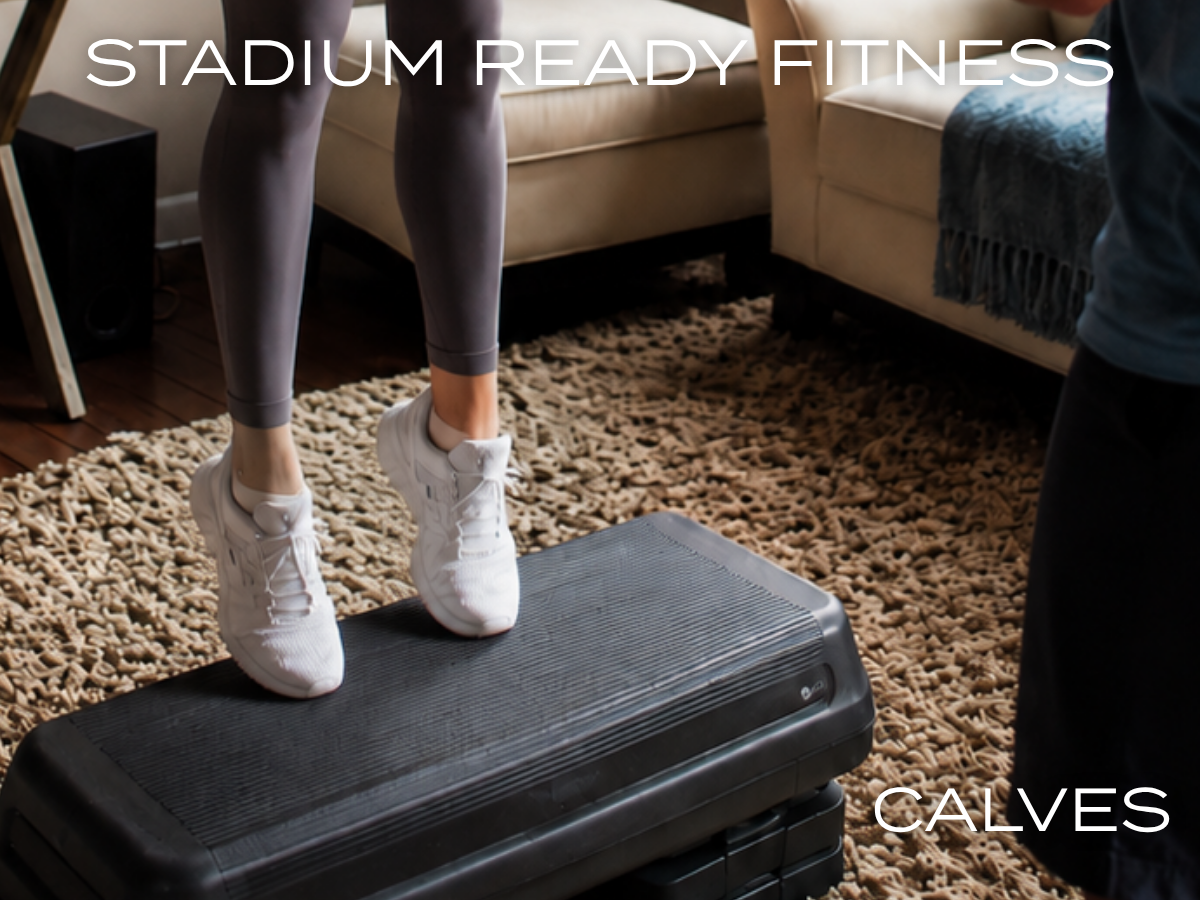
Calves are easy to overlook until you spend a day walking, standing, and climbing stairs. They play an important role in ankle stability, walking mechanics, and pushing the body upward with every step.
Simple calf raises can strengthen these muscles without requiring much equipment. They can begin with bodyweight and progress to weighted variations as strength improves. Adding calf work to a regular strength routine may help prepare the lower legs for the repeated demands of stadium stairs and long periods on your feet.
It is a small addition to a workout that can have a practical benefit when game day arrives.
Balance and Stability Matter in a Crowded Stadium
A stadium is not a controlled environment. You may be navigating narrow rows, uneven steps, crowded concourses, or someone suddenly stopping in front of you. Improving balance and stability can make those situations feel more manageable.
Exercises such as split squats, lunges, step-ups, single-leg movements, carries, and core training can all contribute to better stability. You do not need complicated balance equipment to work on this area of fitness. Many traditional strength exercises already challenge the body to maintain control while moving.
A personalized training program can also adjust these movements based on your current balance, mobility, and confidence. The goal is to challenge your body appropriately without making the exercise feel unsafe or unnecessarily difficult.
A Little Mobility Can Make Game Day Feel Better
Strength and endurance are important, but mobility also deserves attention. Spending time in the car, sitting at a tailgate, standing for hours, and then sitting in a stadium seat can leave the hips, ankles, and lower back feeling tight.
A brief warm-up before a long day can help your body transition from sitting to movement. Comfortable squats, marching in place, ankle circles, hip movements, and a few minutes of walking can help increase blood flow and prepare the body for activity.
This can be especially helpful if you are traveling to a game from Franklin, Brentwood, Murfreesboro, Madison, Georgetown, or 30A/Santa Rosa Beach. After sitting in the car for an extended period, going immediately into a long walk and several flights of stairs may feel much harder than expected.
You do not need a lengthy stretching routine. A few intentional minutes of movement can be enough to help you feel more prepared.
Your Fitness Routine Should Fit Into Your Life
One of the biggest challenges with exercise is not always the workout itself. It is everything required to make the workout happen. Driving to the gym, changing clothes, waiting for equipment, completing the workout, and driving home can turn a relatively short session into a much larger time commitment.
That becomes even more noticeable during football season when weekends are already filled with games, travel, family plans, and social events. For many people, consistency becomes much easier when exercise requires fewer logistical steps.
That is where in-home personal training can be especially valuable. HOMEFIT trainers bring personalized workouts directly to clients, allowing training to happen in a living room, garage, patio, apartment fitness center, office gym, or another appropriate space.
Instead of trying to fit your life around a gym schedule, your fitness routine can be designed around the life you already have.
For busy adults throughout Nashville, Downtown Nashville, East Nashville, Franklin, Brentwood, Chattanooga, and Murfreesboro, removing the commute to and from the gym can make regular exercise much more realistic.
Stadium Ready Fitness Is Really About Everyday Life
Football season gives us a fun reason to talk about functional fitness, but the benefits extend far beyond the stadium. The same strength that helps you climb bleachers can help you carry groceries. The endurance that makes a long walk to the stadium easier can make travel more enjoyable. The balance you develop through training can help you move more confidently in everyday situations.
You may notice progress when stairs stop feeling intimidating, when carrying luggage feels easier, when you can keep up with your family without becoming exhausted, or when you finish a busy day with more energy than you used to have.
Those changes may not come with a scoreboard, but they are meaningful signs that your fitness is improving.
The goal of functional fitness is not simply to perform better during a workout. It is to make the activities outside of your workouts feel more manageable.
Start Before Kickoff
You do not need to wait until football season is in full swing to start building strength and endurance. You also do not need to get in shape before working with a personal trainer. Personalized training is designed to meet you where you are and help you progress from there.
Maybe your goal is to feel better climbing stadium stairs. Maybe you want stronger legs, better endurance, improved balance, or more energy throughout the day. Your reason for starting does not have to be complicated.
A HOMEFIT personal trainer can create a program based on your goals, current fitness level, schedule, preferences, and available space. That may include strength training, functional fitness, mobility work, conditioning, or a combination of each.
Whether you are headed to a college football Saturday in Auburn, a packed game day in Birmingham, a weekend in Nashville, or simply watching from home with friends and family, stronger movement can make the entire season more enjoyable.
Contact HOMEFIT today to set up a complimentary consultation and get a FREE yoga session or workout session on us!