From Soccer Practice to Squat Rack: Why In-Home Training Is the Only Workout That Fits Your Family's Schedule during back to school season
September can change the rhythm of a household almost overnight. Lazy summer mornings are replaced by alarm clocks, packed lunches, permission slips, uniform laundry, carpool lines, after-school activities, and a family calendar that suddenly resembles an air traffic control map.
For parents, the back-to-school season often means managing everyone else’s needs before considering their own. You may be coordinating soccer practice in Murfreesboro, navigating afternoon traffic in Nashville, driving to tutoring in Birmingham, or trying to fit dinner between homework and bedtime. By the time the backpacks are packed for tomorrow and the house finally becomes quiet, you are running on fumes.
Unfortunately, your workout is often the first thing removed from the schedule.
Busy parents regularly say, “I just don’t have time to go to the gym.” But the problem may not be your motivation or your ability to manage time. The problem may be that the traditional gym model was never designed for the reality of modern family life.
Driving across town, finding parking, changing clothes, waiting for equipment, completing a workout, and driving home can turn a 45-minute training session into a two-hour commitment. During the back-to-school season, that is time many families simply do not have.
In-home personal training removes those barriers. Instead of reorganizing your entire day around fitness, your trainer brings a customized workout directly to your home, workplace, apartment gym, or outdoor space. It is personal training designed to fit into your family’s routine rather than compete with it.
The Back-to-School Schedule Is Not the Problem
When life becomes busy, many people assume they need more discipline. They tell themselves they should wake up earlier, become more organized, or somehow find additional hours in the day.
But motivation is rarely the real issue. Friction is.
Every extra step between you and your workout creates another opportunity for the plan to fall apart. A long commute, crowded gym, forgotten headphones, delayed carpool, sick child, unexpected homework assignment, or last-minute schedule change can make skipping the gym feel unavoidable.
In-home fitness reduces that friction. Your trainer arrives at a planned time with the structure, equipment, and workout already prepared. You do not have to decide what exercises to perform, search for an open machine, or spend the drive home wondering whether you used your limited time effectively.
For parents in communities such as Franklin, Brentwood, Homewood, Hoover, and Vestavia Hills, this approach makes fitness more realistic during one of the busiest seasons of the year.
1. Eliminate the Commute Penalty
A traditional gym workout costs more time than the session itself.
Consider the full process:
You gather your clothes and equipment, drive to the gym, park, check in, find a locker, wait for equipment, complete your workout, clean up, and drive home. A 45-minute workout can easily consume 90 minutes or more.
With an in-home personal trainer, your workout begins when the trainer arrives. Your living room, garage, patio, spare bedroom, driveway, or apartment fitness center becomes your private training space.
That saved time can be used to answer emails, prepare dinner, review spelling words, help with homework, or simply breathe before the next responsibility begins. More importantly, removing the commute makes it easier to stay consistent when the family schedule becomes unpredictable.
Consistency does not always require longer workouts. It requires workouts that are easier to complete.
A focused 30- or 45-minute strength training session at home can be far more valuable than an ambitious gym routine you rarely have time to follow.
2. Build Workouts Around the Natural Openings in Your Day
Most parents do not have several uninterrupted hours available for exercise. What they do have are smaller windows that appear throughout the day.
In-home personal training helps you use those windows intentionally.
The School Drop-Off Window
Once the kids leave for school, you may have 30 to 60 minutes before your first meeting, appointment, or household responsibility. Instead of spending that time driving to and from a gym, you can complete an efficient full-body strength workout at home.
The Homework Window
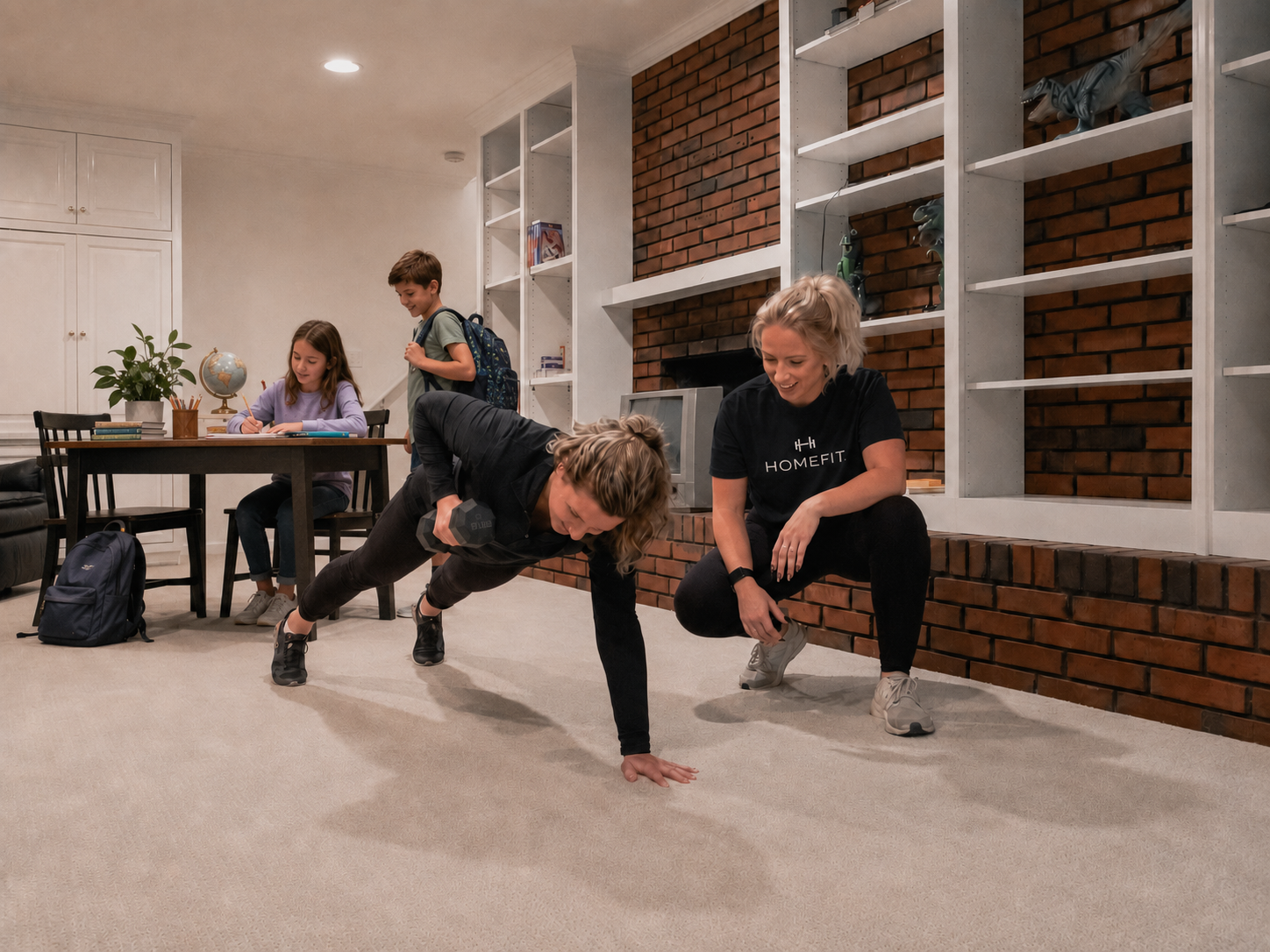
Older children may be able to complete homework independently at the kitchen table while you train nearby. You remain available if they need help, but you are not required to postpone your workout until the entire evening routine is finished.
The Practice Window
One parent may handle soccer, dance, choir, or football practice while the other completes an in-home training session. On different days, the schedule can be adjusted based on who is available and where the family needs to be.
The Work-From-Home Break
For remote and hybrid professionals, a workout between meetings can provide a productive transition in the middle of the day. There is no gym commute, no locker room, and no need to disappear from work for two hours.
The Evening Reset
Some parents prefer to train after the after-school rush while dinner is cooking or before bedtime routines begin. A trainer can build a session that matches your available time and energy instead of forcing you into a rigid class schedule.
Whether you live in Huntsville, Madison, Chattanooga, Georgetown, or Medford, the goal is the same: make fitness work within the schedule you already have.
3. Shorter Workouts Can Still Produce Meaningful Results
One of the most common fitness myths is that a workout only counts if it lasts an hour.
For busy parents, this all-or-nothing mindset can become a major obstacle. If you cannot complete the “perfect” workout, you may feel as though there is no point in doing anything.
But effective training is not measured only by duration. It is shaped by exercise selection, intensity, progression, recovery, and consistency.
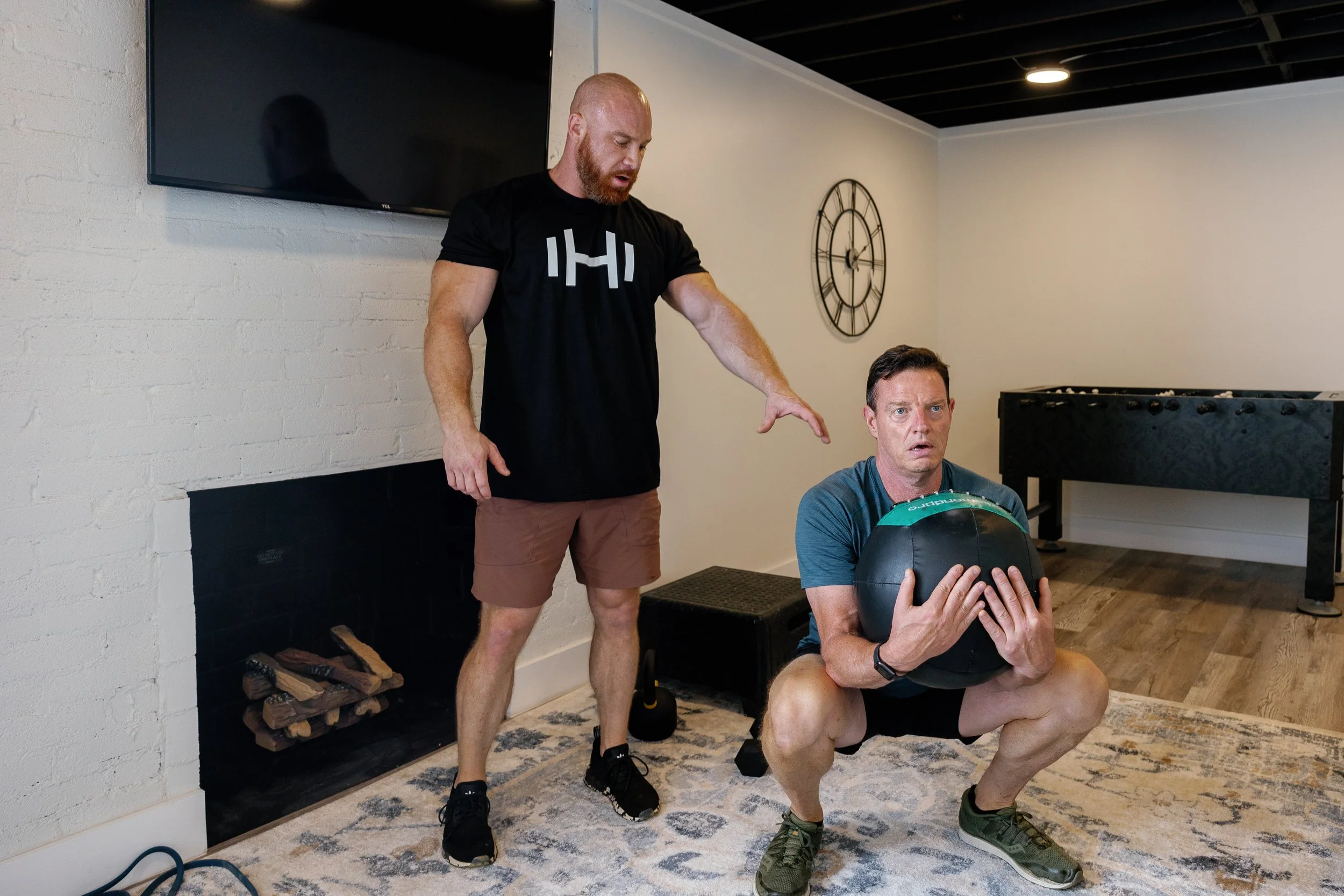
A well-designed 30-minute session may include:
A brief dynamic warm-up
Squats, lunges, or step-ups
Rows, presses, or modified push-ups
Core stability exercises
Mobility work
A short conditioning finisher
When exercises are selected strategically, you can train several major muscle groups without spending the entire evening working out.
This is especially useful during the back-to-school season, when schedules can change quickly. Some weeks may allow three longer sessions. Other weeks may require shorter workouts built around school events, travel, or family responsibilities.
Your fitness routine should be adaptable enough to survive real life.
4. Strength Training Supports the Demands of Parenthood
Parenting is physical.
You carry groceries, lift children, load vehicles, move sports equipment, climb stairs, sit on the floor, stand back up, and spend long periods driving or working at a desk. Yet many parents approach exercise as something separate from everyday life.
A personalized strength training program can help you feel more capable during the activities your family already requires.
Your trainer may focus on:
Lower-body strength for stairs, lifting, and everyday movement
Core stability for improved control and support
Upper-body strength for carrying bags, children, and household items
Balance and mobility for moving with greater confidence
Posture-focused exercises for parents who spend hours driving or working at a computer
Conditioning that supports energy and endurance
The goal is not simply to complete random exercises or burn as many calories as possible. The goal is to build a stronger body that supports your work, family, health, and long-term independence.
5. Remove the Pressure and Distraction of a Crowded Gym
After a long day of managing work, school pickups, meals, appointments, and household responsibilities, a crowded commercial gym may feel like another stressful environment to navigate.
You may have to wait for equipment, adjust your workout around strangers, deal with loud music, or wonder whether you are performing an exercise correctly. For beginners or people returning to fitness after a long break, this can feel especially intimidating.
Personal training at home creates a private setting where the session is centered entirely on you.
There is no waiting for equipment. There is no pressure to keep up with a group. There is no need to compare yourself with the person using the machine beside you.
Your trainer can explain each movement, modify exercises when needed, and provide immediate feedback on technique. This level of attention can help you feel more confident and make each workout more productive.
Your home becomes a place where you can focus on progress rather than performance.
6. You Do Not Need a Home Gym
Many parents assume that in-home personal training requires a finished garage gym, expensive machines, or an entire room dedicated to fitness.
It does not.
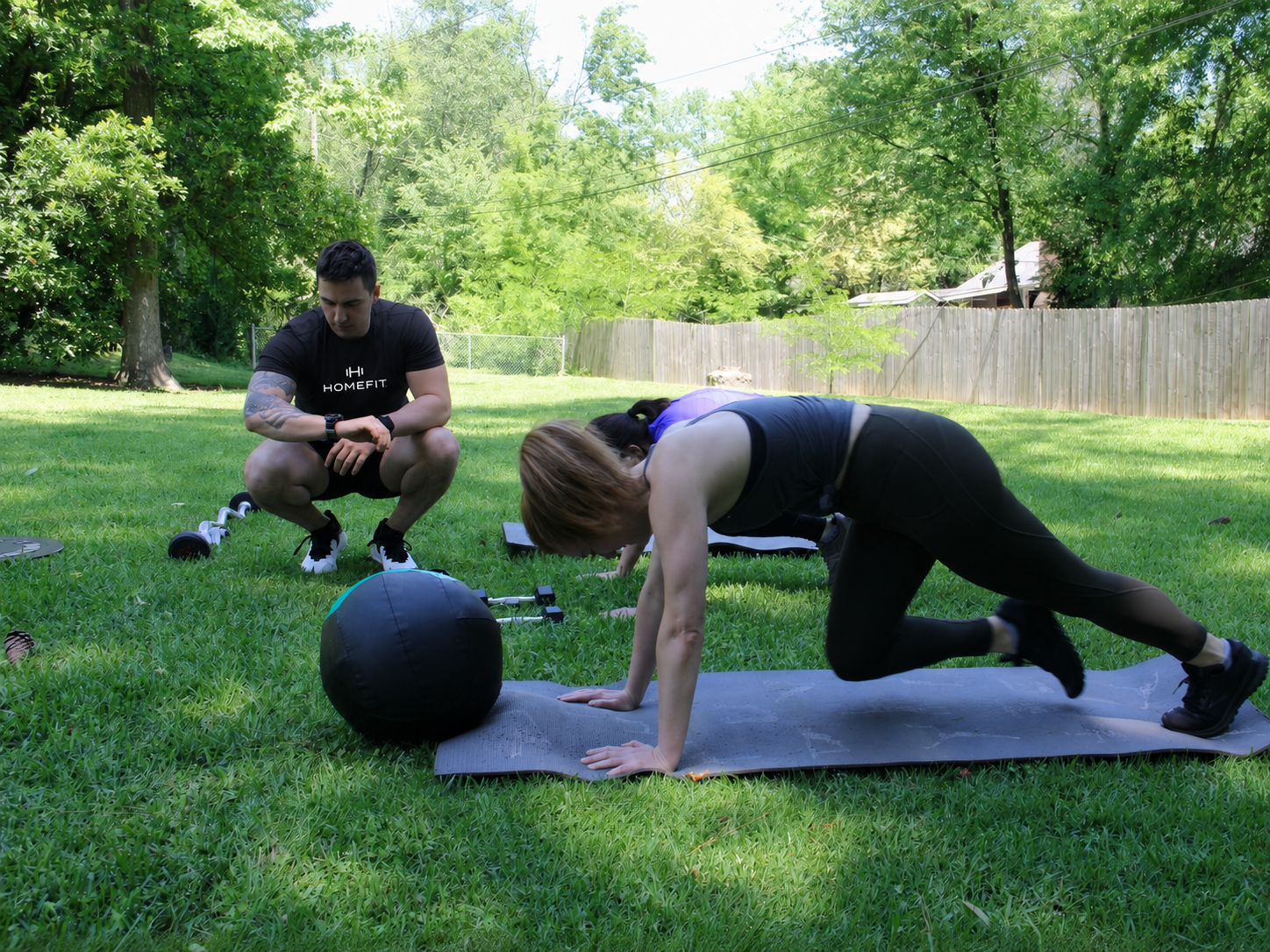
A small area of open floor space is often enough to complete an effective workout. Trainers can incorporate portable equipment such as resistance bands, dumbbells, suspension trainers, stability tools, and other compact training options.
Your program may also use bodyweight movements, household steps, a sturdy chair, an outdoor area, or equipment you already own.
A knowledgeable in-home personal trainer can create an effective plan based on your space, goals, fitness level, and available equipment. The workout should adapt to your home, not require your home to adapt to the workout.
This makes in-home training an especially practical option for families living in apartments, townhomes, downtown residences, or homes without a designated exercise room.
7. Your Program Is Built for Your Actual Life
Generic workout plans often assume that every week will look the same. Family life rarely works that way.
One week may include a normal school schedule. The next may bring a tournament, parent-teacher conference, work trip, sick child, holiday weekend, or unexpected change in childcare.
A personal trainer can adjust your program rather than treating every disruption as a failure.
If you slept poorly, your trainer may reduce the intensity and focus on mobility or technique. If you only have 30 minutes, the session can prioritize the most important exercises. If your back, knees, or shoulders need additional support, movements can be modified.
Your program can also evolve as your goals change. You may begin by rebuilding consistency and later focus on strength, mobility, body composition, athletic performance, or preparation for a specific event.
Personalized fitness should not force you into a rigid template. It should grow with you.
8. Accountability Becomes Easier When the Trainer Comes to You
It is easy to cancel a workout that requires you to pack a bag, leave home, sit in traffic, and navigate a crowded gym.
It is harder to forget about a session when your trainer is scheduled to arrive at your door.
That accountability can be especially valuable during the first several weeks of the school year, when new routines are still forming. You do not have to rely entirely on motivation or make a fresh decision every day about whether exercise will happen.
The appointment is already part of the calendar.
Over time, that consistency helps fitness become a normal part of family life rather than something you attempt only when everything else is completed.
9. Children Learn From the Routines They See
There is another benefit to exercising at home: your children can see that taking care of your health is part of everyday life.
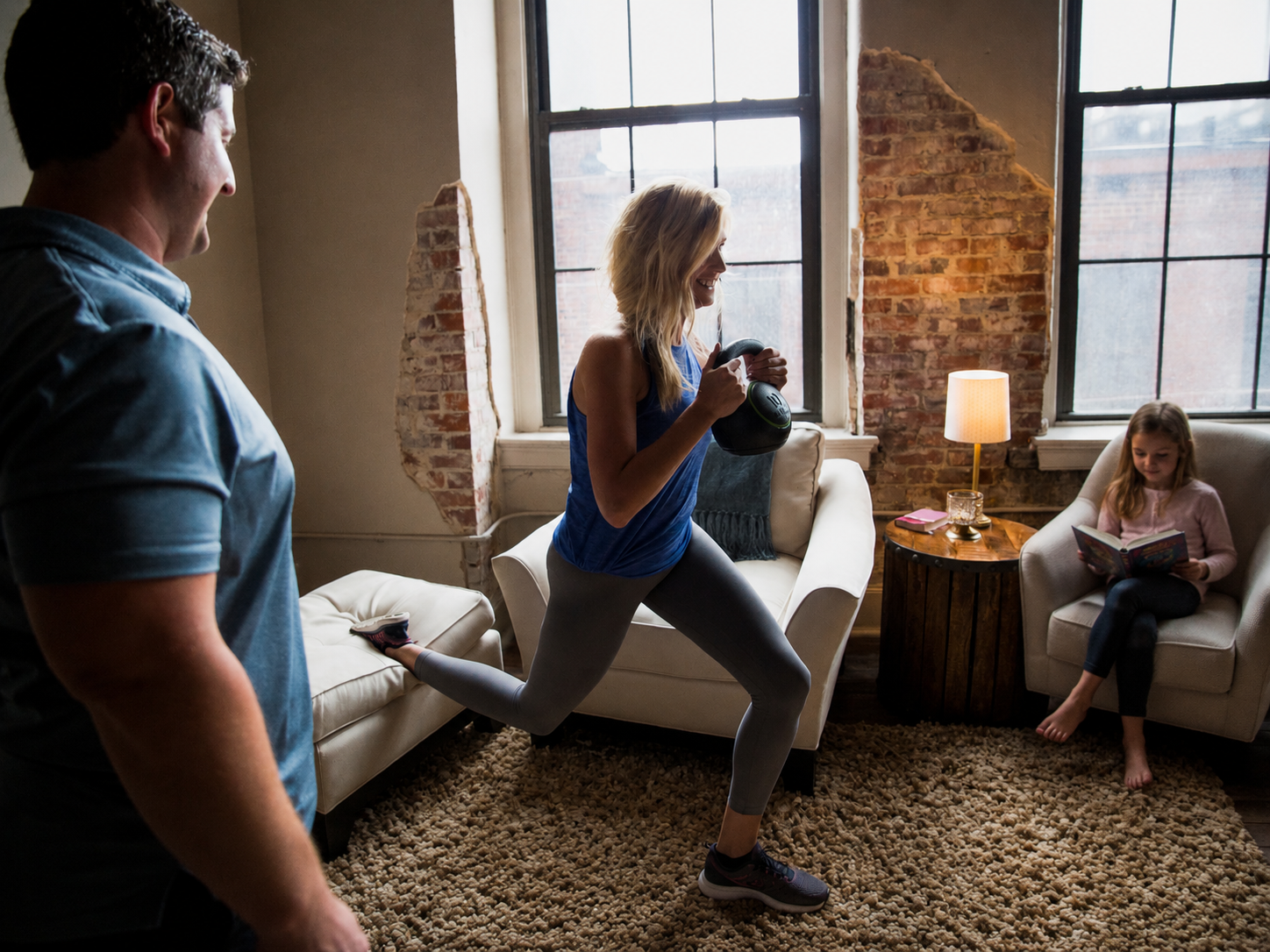
They do not have to participate in every workout. They may be doing homework, playing nearby, reading, or preparing for practice. But they see you making time for movement even when the schedule is busy.
That example can help shape a healthier family culture.
Exercise becomes less about punishment, appearance, or “making up” for food. Instead, it becomes a regular way to build strength, manage stress, improve energy, and care for your body.
When children see a parent train consistently, they learn that wellness does not require perfection. It requires making space for yourself alongside the people and responsibilities you care about.
10. Your Health Is Part of the Family Schedule
Parents often postpone their health by saying, “Maybe when things calm down.”
The challenge is that family life rarely stays calm for long. Back-to-school season leads into fall sports, holidays, winter breaks, spring activities, and summer travel. Waiting for the perfect schedule can mean waiting indefinitely.
Taking care of yourself is not separate from taking care of your family.
When you are consistently depleted, your patience, concentration, sleep, and energy may suffer. When you have a realistic routine that supports your body, you may feel better equipped to handle the demands of work and home.
That does not mean every workout will be perfect. It means your health is important enough to have a place on the calendar.
A personalized in-home fitness program can help make that possible without requiring you to sacrifice the moments that matter most.
The Back-to-School Fitness Reset
The beginning of a school year can be an ideal time to reassess your routine.
Rather than setting an extreme goal or attempting to overhaul your entire life, begin with a few practical questions:
When is your household naturally the least hectic?
Which days are consistently consumed by sports or activities?
Could you train after school drop-off, during homework, over lunch, or before the evening rush?
Would two or three structured sessions each week be more sustainable than trying to exercise every day?
What barriers have caused previous routines to fall apart?
The best fitness plan is not the most complicated one. It is the one that can continue through busy weeks, schedule changes, stressful days, and imperfect circumstances.
Ready to Reclaim Your Routine This Fall?
This school year does not have to become another season of putting your health on hold.
HOMEFIT provides personalized in-home personal training designed around your goals, schedule, fitness level, and available space. Our trainers bring professional guidance, accountability, and customized workouts directly to homes, workplaces, apartment gyms, and communities in service areas including Birmingham, Nashville, Murfreesboro, Franklin, Huntsville, Auburn, Fairhope, 30A/Santa Rosa Beach, Georgetown, Medford, and surrounding communities.
You take care of the calendar, the carpool, the homework, and the people who depend on you. Your workout should be one part of the day that feels simpler.