Two Hard Workouts Cannot Fix Five Sedentary Days: How In-Home Personal Training Builds a More Active Week
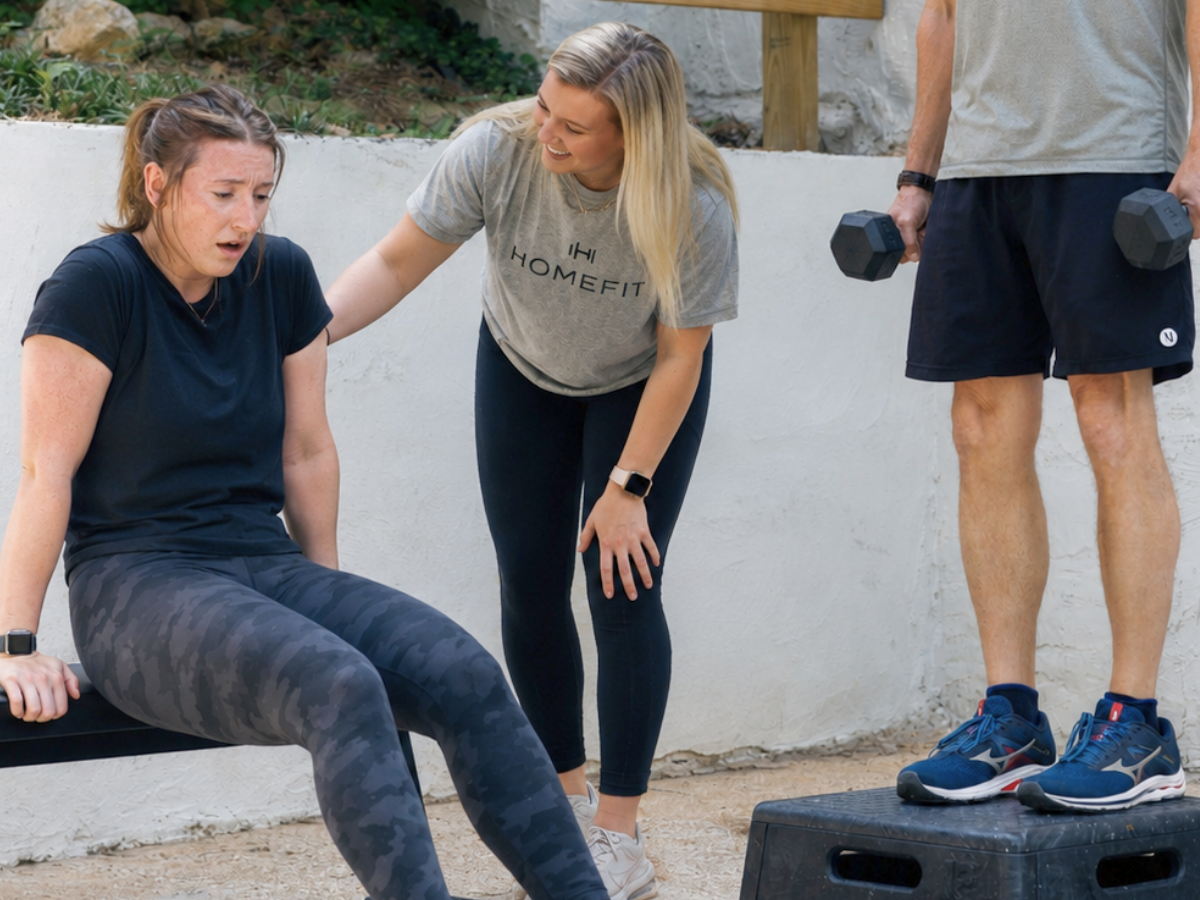
You make it through five packed workdays, promise yourself you will “make up for it” over the weekend, and then attempt to squeeze an entire week of fitness into one punishing Saturday workout.
By Sunday morning, your legs are sore, your energy is gone, and Monday’s workout already feels unlikely.
Welcome to the weekend warrior trap.
This pattern is especially common among busy professionals, parents, frequent travelers, and anyone whose weekdays are dominated by meetings, school pickups, deadlines, traffic, and household responsibilities. You may sit most of the week, train as hard as possible on Saturday and Sunday, and hope those two workouts balance everything out.
Weekend movement is still valuable. The problem begins when intense weekend exercise becomes your only strategy.
Your body does not need five inactive days followed by two days of punishment. It needs a realistic rhythm of strength training, walking, mobility, recovery, and intentional movement throughout the week.
That is where in-home personal training can change everything. Instead of depending on marathon gym sessions, HOMEFIT helps you build a repeatable fitness routine around the life you actually have.
Why the Weekend Warrior Routine Feels So Productive
A long Saturday workout can feel satisfying. You sweat, your watch records an impressive calorie estimate, and you leave feeling as though you finally did something significant for your health.
The workout may be challenging, but that does not automatically make the overall routine balanced.
Consider what the rest of the week may look like:
Long stretches at a desk
Hours spent commuting
Meetings stacked without breaks
Evenings on the couch after an exhausting day
Little or no strength training between weekends
Minimal mobility work
Inconsistent sleep and recovery
That single workout is being asked to do too much.
Adults are generally encouraged to accumulate at least 150 minutes of moderate-intensity aerobic activity each week and complete muscle-strengthening activity on at least two days. Those minutes can be divided across the week rather than completed all at once.
The goal is not to eliminate your favorite weekend workout. It is to stop treating Saturday like a fitness emergency.
Fitness Culture Is Moving Away From “Go Hard or Go Home”
For years, fitness messaging rewarded extremes.
Wake up before sunrise. Never miss a Monday. Push until you collapse. Turn every workout into a competition. If it did not last an hour, it did not count.
That mindset may look motivating on social media, but it often fails in real life.
Current fitness trends are shifting toward personalized training, wearable technology, mobile exercise support, sustainable strength training, and shorter workouts that fit into everyday schedules. Wearable technology continues to lead major industry trend reports, while “exercise snacks” and micro-workouts are gaining attention because they are repeatable and easier to integrate into busy days.
The emerging message is simple:
Consistency beats intensity that you cannot sustain.
A 20-minute workout on Tuesday, a walk on Wednesday, and a coached strength session on Thursday may not look as dramatic as a two-hour Saturday gym session. But that pattern may be far easier to repeat month after month.
1. The Weekend Workout Is Not the Problem
To be clear, there is nothing wrong with enjoying a longer workout on the weekend.
You may have more time to hike, cycle, run, lift weights, play a sport, or attend a group fitness class. In communities such as Medford and Chattanooga, the weekend may be your opportunity to train outdoors. In 30A or Fairhope, you may prefer a long walk, beach workout, or bike ride.
Those activities can be excellent additions to your routine.
The problem is the all-or-nothing structure around them.
When every weekday is inactive, the weekend workout often becomes unnecessarily aggressive. You may increase the weight too quickly, run farther than your body is prepared for, or choose intense exercises because you feel pressure to compensate for the previous five days.
A better approach is to use the weekend as one part of a larger plan.
Your Saturday session can still be challenging. It simply no longer has to carry the entire week.
2. Five Sedentary Days Still Matter
A structured workout does not erase every hour spent sitting.
Long stretches of inactivity can leave you feeling stiff, sluggish, and mentally drained. Even people who complete regular workouts may benefit from breaking up prolonged periods of sitting with brief movement throughout the day. Current public-health guidance emphasizes both being physically active and sitting less.
Think about a typical weekday.
You drive from Franklin into Nashville, sit through meetings, eat lunch at your desk, drive home, and collapse on the couch. Or perhaps you work remotely in Birmingham and barely leave your chair between the first video call and the last email.
A weekend workout is helpful, but it does not change the fact that your body had very few opportunities to move during the week.
This does not mean you need a full workout every few hours. It means movement should not be limited to one designated block on Saturday.
Small weekday actions can include:
Walking for several minutes between meetings
Taking stairs instead of the elevator
Completing a short mobility sequence after a long drive
Performing a few controlled squats while dinner cooks
Carrying groceries with intention
Walking during a phone call
Completing a brief resistance-band routine
Standing and stretching after a prolonged work session
These small actions are often called movement snacks or exercise snacks.
They are not a complete replacement for structured training, but they can reduce the amount of time you remain completely inactive and make movement feel more natural throughout the week. Short movement breaks have become a popular fitness topic precisely because they fit modern work and family schedules.
3. The Rise of the “Movement Snack”
A movement snack is a short burst of intentional activity performed during the day.
It may last two minutes, five minutes, or ten minutes. The purpose is not to complete an entire workout. The purpose is to interrupt inactivity and create more opportunities to move.
A movement snack might look like:
Ten bodyweight squats before your next meeting
A five-minute walk around the block
Wall push-ups between work tasks
Hip and shoulder mobility after school pickup
A short stair-climbing interval
Light resistance-band rows at your desk
A brief core routine before your shower
Calf raises while waiting for coffee
The concept is trending because it rejects the belief that exercise only matters when it happens inside a gym.
However, movement snacks should be treated as a supplement, not a magic solution. They can help you sit less and move more, but they may not provide enough progressive resistance to build significant strength on their own.
That is why the strongest weekly plan combines both:
Short daily movement + structured strength training.
4. Stop Measuring Every Workout by Calories Burned
Wearable fitness technology remains one of the biggest forces shaping the fitness industry. Smartwatches and fitness trackers can monitor steps, heart rate, workouts, sleep, and recovery data.
These tools can be helpful, but they can also encourage people to judge every session by one number: calories burned.
That creates a problem for weekend warriors.
A long, exhausting workout may produce a large calorie estimate, while a shorter strength session may appear less impressive on the screen. But calories are only one piece of the picture.
A productive workout may also improve:
Strength
Balance
Mobility
Movement quality
Muscular endurance
Coordination
Confidence
Training consistency
Daily energy
Your watch cannot fully measure whether you improved your squat technique, increased your stability, moved without pain, or built a routine you can maintain.
The goal should not be to create the biggest number on Saturday. It should be to create a healthier pattern across the entire week.
5. Strength Training Needs More Than Occasional Attention
Strength training is one of the most valuable parts of a balanced fitness routine, but it works best when it is practiced consistently.
Your body adapts to repeated, gradually progressing challenges. That may involve increasing resistance, improving control, completing more repetitions, or advancing to a more challenging variation.
When strength training happens only once every seven days, it can be harder to build momentum.
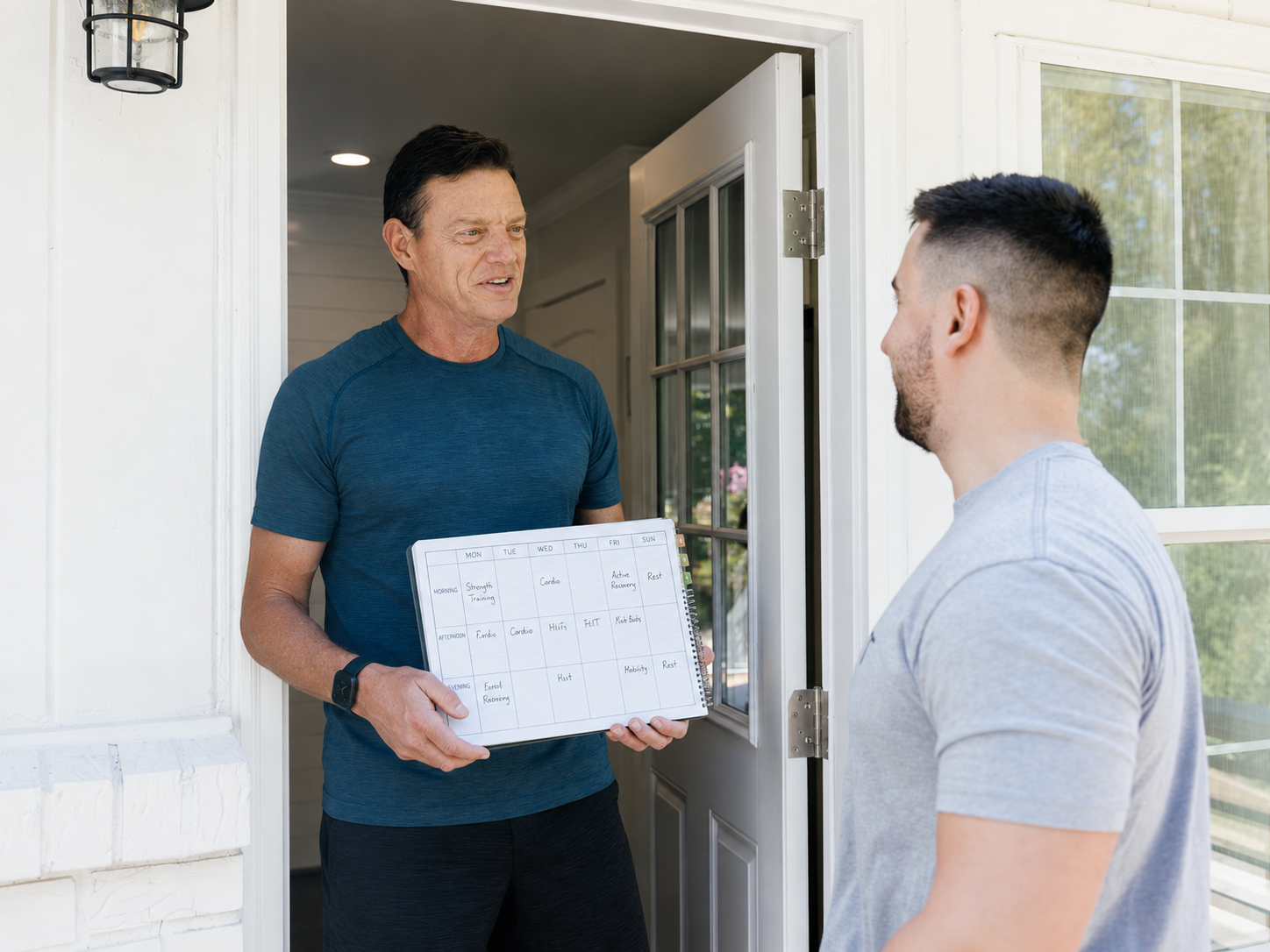
A HOMEFIT trainer may distribute your weekly training more strategically:
Monday: Full-Body Strength
A focused in-home session using squats, rows, presses, hinges, and core work.
Tuesday: Walking and Mobility
A moderate walk through your neighborhood followed by brief hip and shoulder mobility.
Wednesday: Movement Snacks
Several short breaks during the workday to interrupt sitting.
Thursday: Strength and Stability
A second coached session emphasizing different movement patterns, balance, and controlled resistance.
Friday: Recovery
Light mobility, stretching, or an easy walk.
Saturday: Longer Activity
A hike, bike ride, recreational sport, group workout, or more challenging strength session.
Sunday: Rest and Reset
Recovery, meal preparation, planning, and gentle movement.
This structure still leaves room for a strong weekend workout. It simply gives your body more consistent support throughout the week.
6. The Hybrid Training Trend Is Not Just for Athletes
Hybrid training has become one of the most talked-about areas of modern fitness.
On social media, the term often refers to people combining heavy strength training with endurance events, long-distance running, or competitions such as HYROX. But you do not need to train like a competitive athlete to benefit from the underlying idea.
At its simplest, hybrid training means developing more than one area of fitness.
For an everyday client, that could mean:
Two weekly strength sessions
Several brisk walks
One short conditioning workout
Mobility between workdays
A longer outdoor activity on the weekend
The purpose is not to become elite at everything. It is to build a body that is strong, mobile, capable, and conditioned for daily life.
Hybrid-style routines are gaining popularity because they blend resistance training and aerobic exercise in a flexible format. They can also be adapted for beginners using bodyweight movements and minimal equipment.
For a client in Murfreesboro, that might mean strength training at home during the week and walking the Stones River Greenway on Saturday. In Birmingham, it could mean two in-home sessions, short neighborhood walks, and a weekend hike at Red Mountain Park.
The plan should reflect your life, not someone else’s social media highlight reel.
7. “Training for Longevity” Is Replacing Punishment-Based Fitness
Another major shift in wellness culture is the growing interest in longevity-focused fitness.
Instead of asking only, “How can I burn the most calories today?” more people are asking:
How can I remain strong as I age?
How can I protect my mobility?
How can I keep doing the activities I enjoy?
How can I improve balance and stability?
How can I maintain muscle over time?
How can I feel capable in everyday life?
This is a healthier framework than trying to destroy yourself every weekend.
Longevity-focused training prioritizes movements that support real life: lifting, carrying, climbing, pushing, pulling, balancing, rotating, and getting up from the floor.
A trainer may still challenge you. But the challenge has a purpose.
The goal is not to make Monday painful. The goal is to make your life stronger.

8. Habit Stacking Can Turn Movement Into an Automatic Part of the Day
One reason weekday fitness routines fail is that they depend on finding a completely separate block of time.
Habit stacking offers another approach.
Instead of creating movement from scratch, connect it to something you already do.
For example:
After brushing your teeth, complete a short mobility sequence.
After your first meeting, walk for five minutes.
Before lunch, perform a set of squats and countertop push-ups.
After school pickup, walk around the block before going inside.
While dinner cooks, complete a resistance-band circuit.
After shutting down your laptop, perform a brief decompression stretch.
This turns movement into a cue-based habit rather than another item you hope to remember.
The routine does not need to be impressive. It needs to be repeatable.
A client working from home in Georgetown may complete mobility exercises between calls. A parent in Homewood may walk during soccer practice. A busy professional in Downtown Nashville may use a short strength session to break up the transition between work and evening responsibilities.
These are not consolation-prize workouts. They are pieces of a realistic system.
9. Recovery Is Part of the Plan
Many weekend warriors alternate between two extremes:
Doing almost nothing and doing far too much.
Recovery helps create the middle ground.
A sustainable training plan considers sleep, stress, nutrition, hydration, soreness, and previous activity. If Friday night included poor sleep and a stressful week, Saturday may not be the best time to attempt your hardest workout of the month.
That does not mean skipping movement entirely.
Your trainer may adjust the session by:
Reducing resistance
Lowering the total volume
Emphasizing mobility
Practicing technique
Choosing lower-impact conditioning
Extending the warm-up
Replacing intense intervals with controlled strength work
Modern fitness culture is increasingly recognizing recovery as part of performance rather than a sign of weakness. A smart program adapts to your readiness while preserving consistency.
10. In-Home Personal Training Makes Weekday Consistency More Realistic
Knowing what to do is rarely the biggest challenge.
The challenge is creating a routine that survives meetings, traffic, childcare, travel, fatigue, and unpredictable schedules.
Traditional gym routines add friction:
Packing a bag
Driving across town
Finding parking
Waiting for equipment
Navigating a crowded space
Driving home
Deciding what exercises to perform
In-home personal training removes many of those steps.
Your HOMEFIT trainer arrives with a plan and the equipment needed for the session. Your living room, garage, patio, office, apartment gym, or backyard becomes your training space.
That makes it easier to train on a Tuesday afternoon instead of waiting until Saturday.
It also allows your trainer to design sessions around your actual environment. A client in Vestavia Hills may train in the living room before school pickup. Someone in Brentwood may complete a strength session in a home office between meetings. A client in Medford may train outside when Rogue Valley weather allows.
The location changes. The goal does not:
Make consistent fitness easier to complete.
A Realistic Weekly Fitness Plan for Busy People
You do not need seven perfect workout days.
You need enough structure to prevent the entire week from disappearing.
Here is a realistic example:
Two Structured Strength Sessions
Complete two personalized sessions focused on major movement patterns and progressive resistance.
Two or Three Walking Days
Walk for 20 to 30 minutes or break the time into shorter segments.
Daily Movement Snacks
Add a few minutes of movement during long periods of sitting.
One Longer Weekend Activity
Enjoy hiking, cycling, running, recreational sports, yard work, or a longer training session.
One Recovery-Focused Day
Prioritize mobility, gentle walking, hydration, sleep, and preparation for the upcoming week.
This routine can be adjusted based on your experience, goals, health considerations, and schedule. The important part is that fitness appears throughout the week rather than arriving as a crisis every Saturday morning.
Signs You May Be Stuck in the Weekend Warrior Trap
You may need a more balanced routine if:
You rarely move Monday through Friday.
Every weekend workout leaves you extremely sore.
You repeatedly start over after missing one session.
You feel pressure to “burn off” the week.
Your workouts are intense but inconsistent.
You choose exercises based on exhaustion rather than progression.
You frequently experience avoidable aches after weekend training.
You rely on motivation instead of scheduled accountability.
Your fitness tracker controls whether a workout feels successful.
You believe anything under an hour does not count.
None of these patterns means you have failed.
They simply suggest that your current system may be asking too much from too few workouts.
Build a Week That Moves With You
HOMEFIT provides personalized in-home personal training designed around your schedule, available space, fitness level, and goals.
Our trainers bring professional guidance and customized workouts to homes, workplaces, apartment fitness centers, and communities across service areas including Birmingham, Nashville, Murfreesboro, Huntsville, Franklin, Auburn, Fairhope, Georgetown, Medford, and 30A/Santa Rosa Beach.
You do not need to wait for the weekend to take care of yourself.