Healthy Aging Month: Why Strength Training Matters More With Every Decade (Copy)
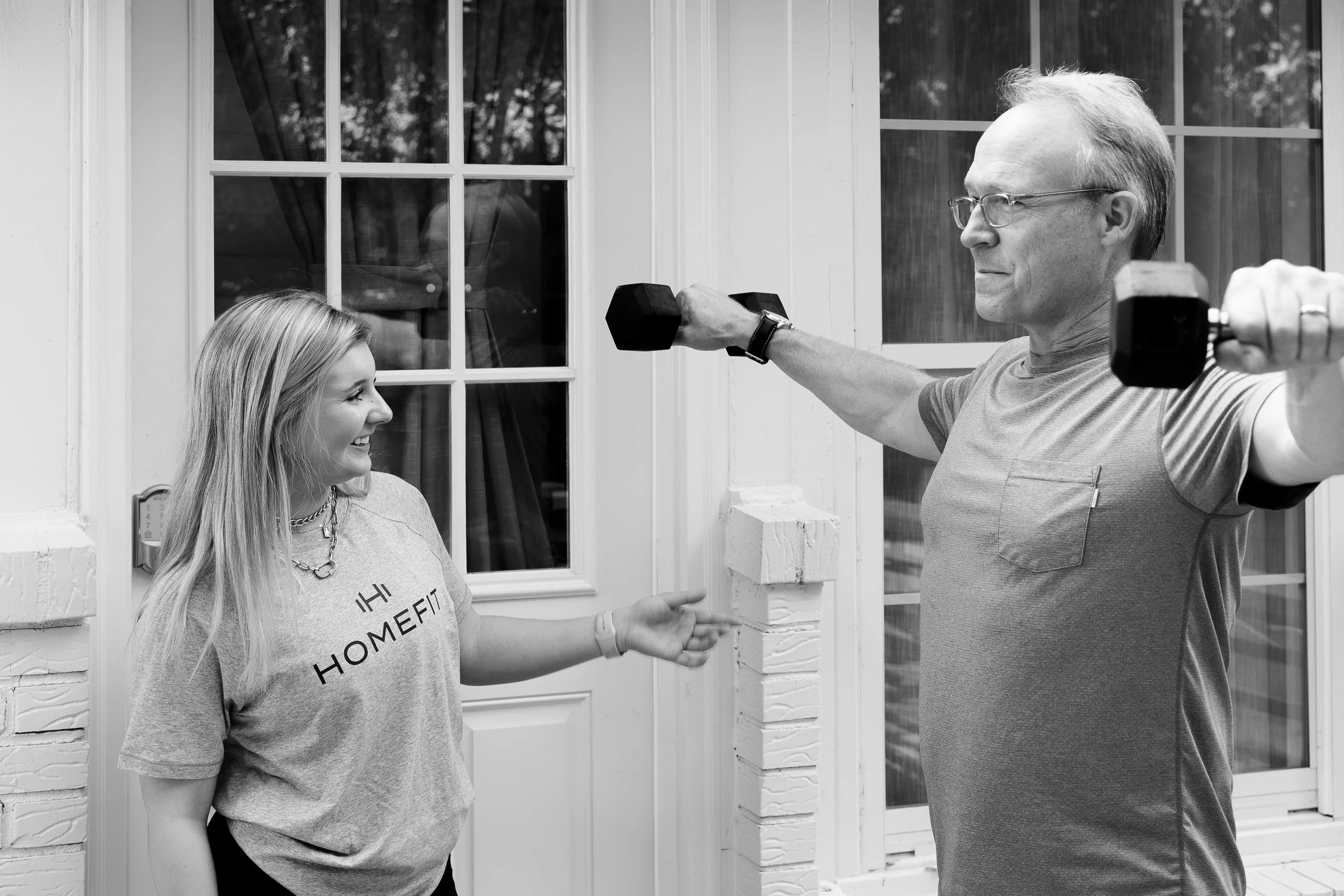
September marks Healthy Aging Month, a national opportunity to think about the habits that help people maintain their health, well-being, and independence over time. The Office of Disease Prevention and Health Promotion describes healthy aging as a lifelong process rather than something that suddenly begins at a certain birthday. Staying physically active, eating well, reducing fall risk, and taking an active role in your health can all contribute to how well you age.
That distinction matters because conversations about healthy aging often begin too late.
You do not need to be 65, retired, or experiencing limitations before thinking about the strength you want to have later in life. The ability to climb stairs comfortably at 70 is influenced by what happens in the decades before it. The same is true for carrying groceries, getting up from the floor, traveling independently, doing yard work, playing with grandchildren, or continuing the hobbies you enjoy.
For many adults, the goal of exercise eventually becomes much bigger than changing the way the body looks. It becomes about protecting what the body can do. Strength training is one of the most valuable tools available for doing exactly that.
Healthy Aging Is Really About Staying Capable
When people hear the phrase “healthy aging,” they may picture someone trying to avoid illness or simply live longer. Longevity matters, but there is another piece of the conversation that deserves just as much attention: physical capacity.
Can you comfortably get out of a chair without using your hands? Carry a suitcase through an airport? Pick something heavy up from the floor? Walk around a new city on vacation? Climb stairs without feeling completely exhausted? Catch yourself if you lose your balance?
These are ordinary movements, but they require a combination of muscular strength, balance, coordination, mobility, and endurance.
The National Institute on Aging notes that physical activity can improve physical function and make everyday tasks such as household chores, getting in and out of a chair, and moving around the neighborhood easier. Maintaining that functional ability can help support independence later in life.
This is one reason it can be helpful to stop viewing exercise solely through the lens of calories burned or pounds lost. A successful fitness program can also be measured by whether everyday life becomes easier.
Maybe you can carry all the groceries inside in one trip. Maybe stairs no longer feel intimidating. Maybe you can get down on the floor with your grandchild and stand back up comfortably. Maybe you feel steadier walking across uneven ground.
Those improvements may never show up on a scale, but they can have an enormous effect on quality of life.
We Naturally Lose Some Strength as We Age — but That Is Not the Whole Story
Our bodies change throughout adulthood, and skeletal muscle is no exception.
Research highlighted by the National Institute on Aging shows that muscle mass and strength generally reach their highest levels around ages 30 to 35. Muscle power and performance then tend to decline gradually, with declines becoming faster later in life. This age-related loss of muscle mass and strength is often referred to as sarcopenia.
That may sound discouraging, but there is a very important second half to the story.
Age-related decline does not mean becoming weak is inevitable. NIA researchers emphasize that maintaining an active lifestyle can substantially slow losses in strength and physical performance, and many older adults are capable of increasing muscular strength through exercise.
That is why strength training becomes increasingly valuable as we move through adulthood.
The goal is not to train at 65 exactly the way you trained at 25. A good fitness program should evolve with your body, health history, ability, goals, and experience. What remains important is continuing to give your muscles a reason to stay strong.
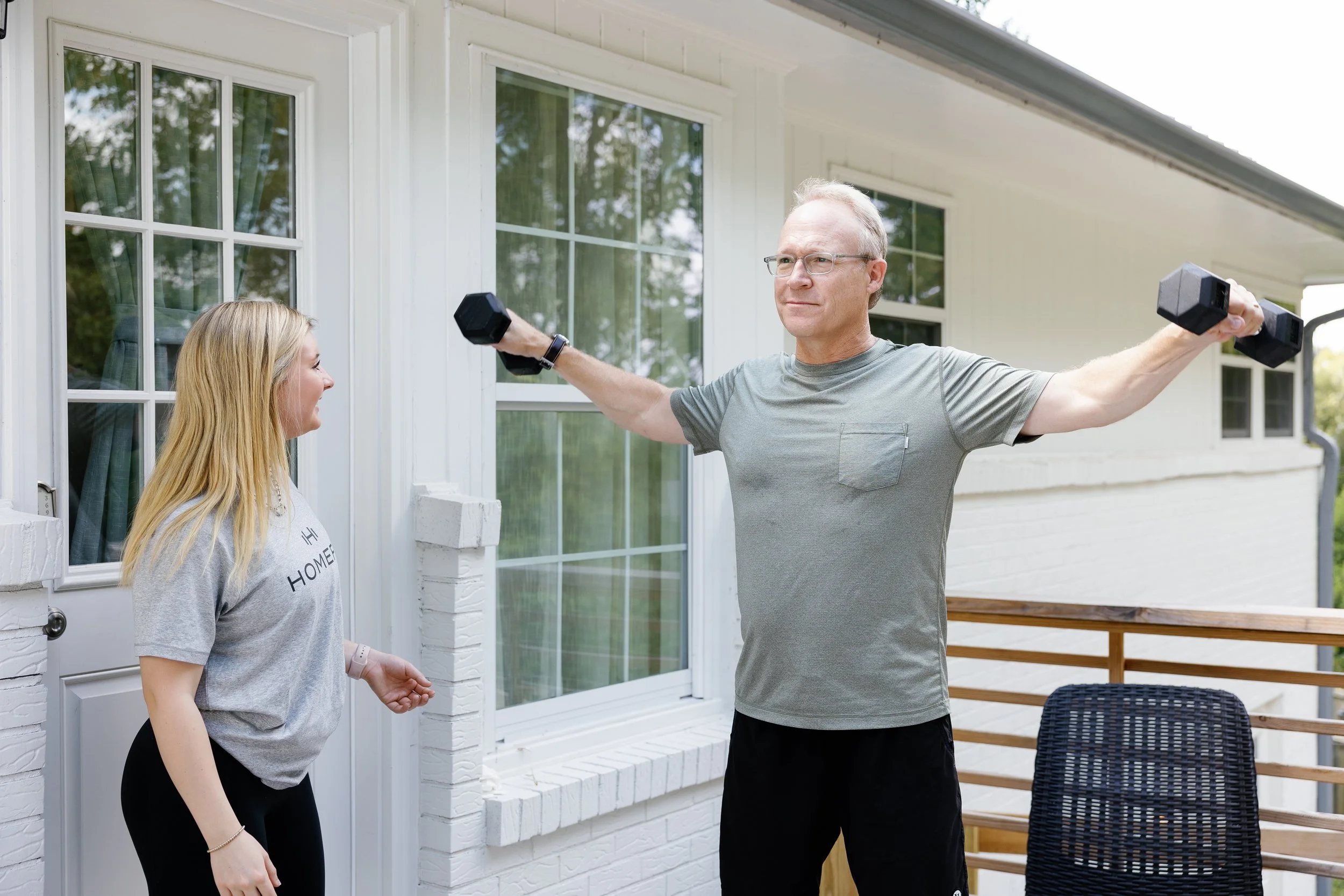
Resistance does not have to mean lifting a barbell loaded with hundreds of pounds. Strength training can involve dumbbells, resistance bands, body weight, machines, kettlebells, or other forms of resistance. The CDC specifically lists weights, resistance bands, and body-weight exercises among the many ways older adults can strengthen major muscle groups.
The best form of strength training is not necessarily the most impressive-looking one. It is the version that is appropriate for your body, challenging enough to create progress, and realistic enough to continue.
Train for What You Want to Keep Doing
One of the most useful ways to think about strength training for healthy aging is to stop thinking exclusively in terms of individual exercises and start thinking in terms of life outside the workout.
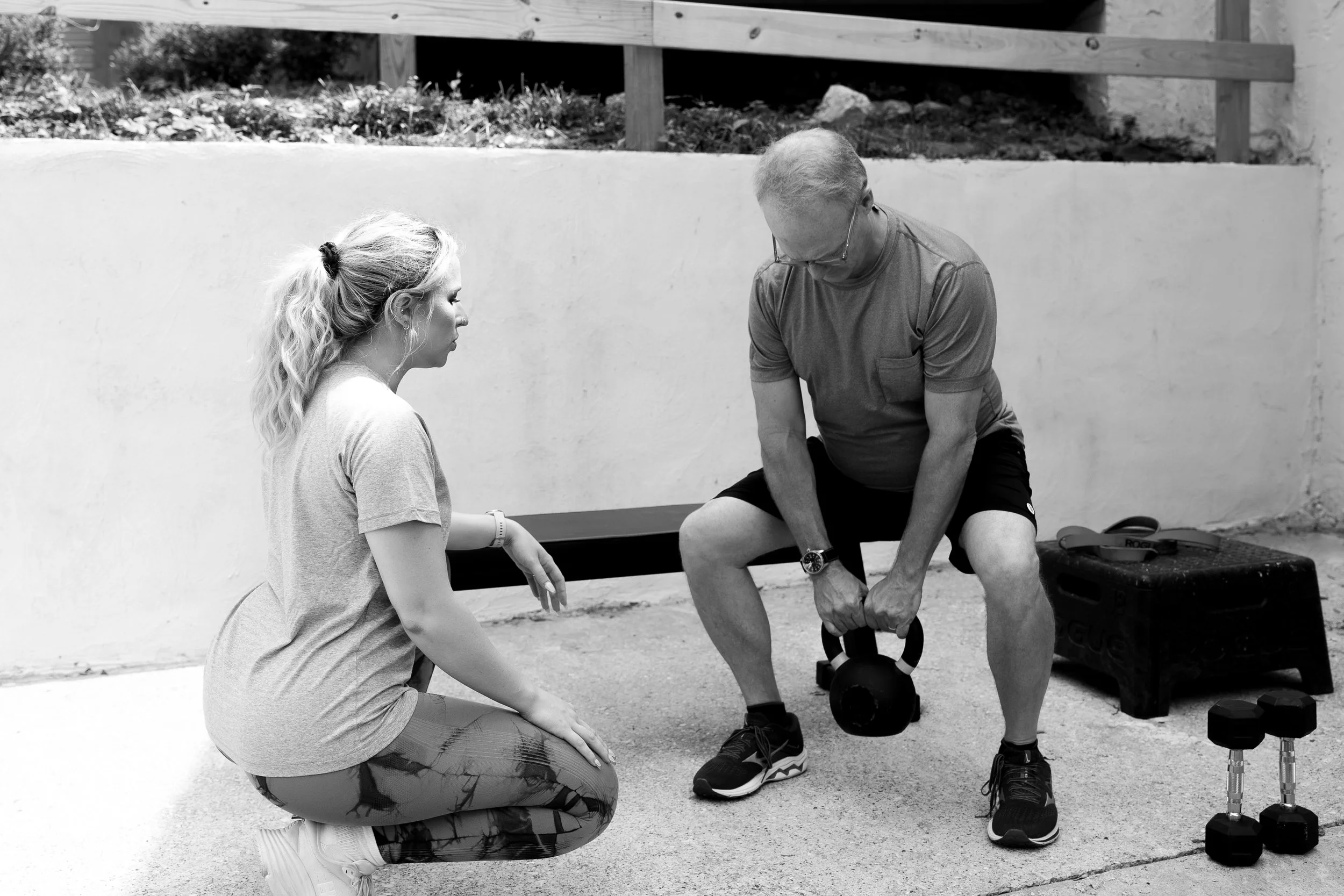
A squat is not just a leg exercise. It trains a movement pattern you use every time you sit down and stand back up. A loaded carry is not just a grip exercise. It resembles carrying groceries, luggage, gardening supplies, or a grandchild. A step-up is not just something you do during a workout. It develops strength and control that can transfer to stairs, curbs, hiking trails, and uneven surfaces.
Rows and presses can help develop the upper-body strength involved in pulling, pushing, carrying, and reaching. Core exercises train the trunk to control and transfer force while the body moves.
This is what functional strength training is really about. It does not need to involve complicated exercises performed on unstable equipment. Functional training simply means developing physical abilities that support the things you need and want to do.
The National Institute on Aging notes that muscle-strengthening exercise can make daily activities such as getting out of a chair, climbing stairs, and carrying groceries easier.
For someone who wants to remain independent and active well into later life, those are meaningful training goals.
Strength Matters, but Healthy Aging Requires More Than Strength Alone
Strength training deserves attention, but a well-rounded healthy aging program should not consist of lifting weights and nothing else.
Current physical activity recommendations for adults 65 and older call for a combination of aerobic activity, muscle-strengthening activity, and balance training. The CDC recommends at least 150 minutes of moderate-intensity aerobic activity each week, or an equivalent amount of vigorous activity, along with muscle-strengthening activities on at least two days per week. Balance activities should also be incorporated.
That combination matters because different forms of exercise develop different abilities.
Walking, cycling, swimming, and other aerobic activities challenge the cardiovascular system and endurance. Resistance training develops muscular strength and capacity. Balance exercises challenge the body's ability to maintain stability and control its position.
Some activities can even address multiple components at once. Federal physical activity guidance describes multicomponent physical activity as movement that combines aerobic, strength, and balance elements, noting that this type of activity can improve physical function and reduce fall and fall-related injury risk in older adults.
A well-designed program might therefore include strength exercises, walking, step-ups, balance drills, mobility work, and other movements selected around an individual's ability.
The goal is not to become exceptional at one exercise. It is to build a body that can handle a wide variety of demands.
Balance Is a Fitness Skill, Too
Balance sometimes receives less attention than cardio or strength training until someone begins having trouble with it. That is unfortunate because balance is a trainable physical skill and an especially important component of fitness as we age.
Balance depends on several systems working together, including muscular strength, coordination, vision, sensory information, and the body's ability to react when its position changes.
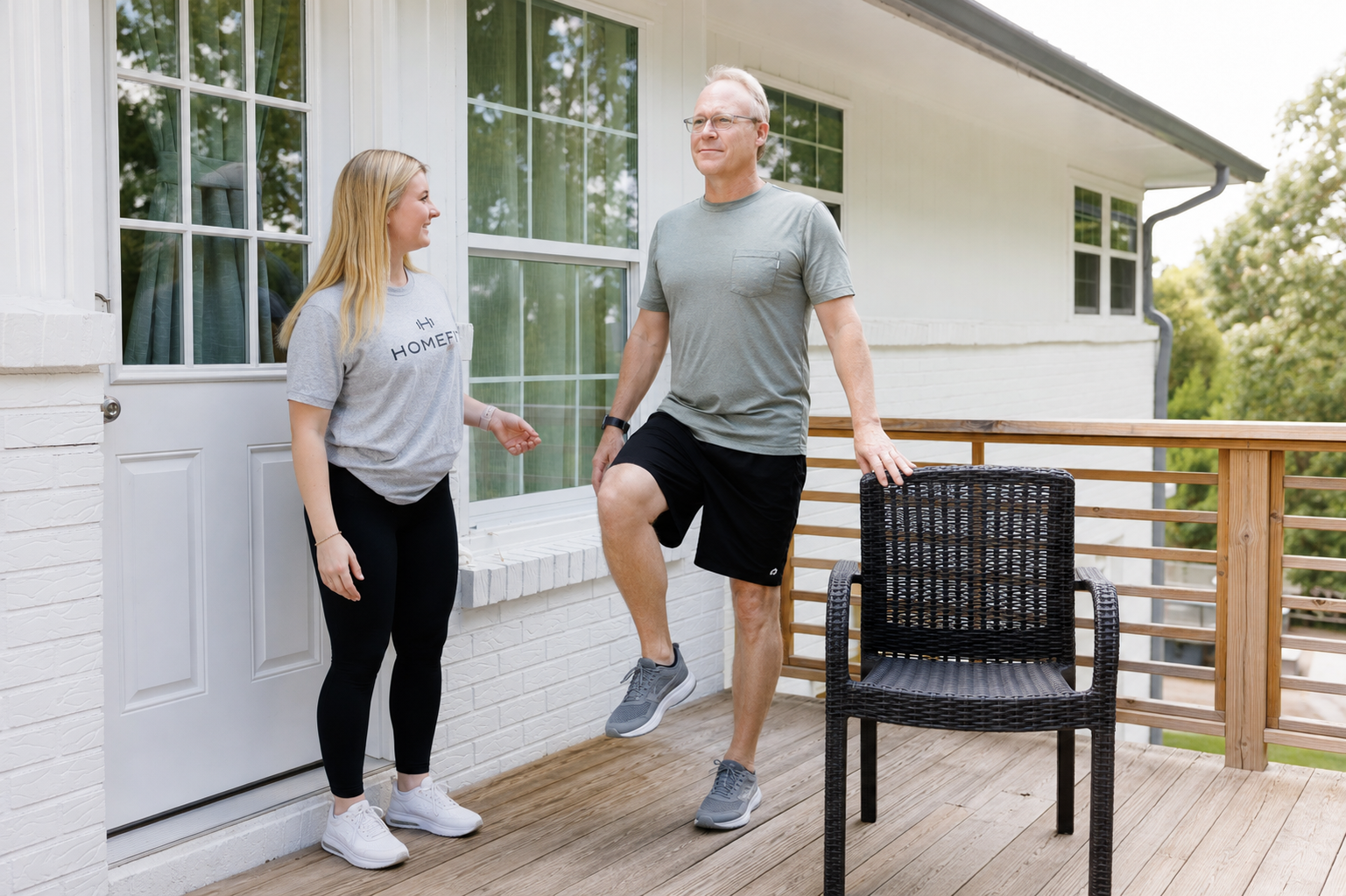
Exercises do not have to look dramatic to challenge balance. Standing on one leg, performing a controlled step-up, moving from sitting to standing, walking heel-to-toe, or completing certain strength exercises can all introduce balance demands at an appropriate level.
The National Institute on Aging recommends balance exercises as part of an older adult fitness routine and highlights options including standing on one foot, heel-to-toe walking, walking backward or sideways, and practicing standing from a seated position.
Strength and balance also complement each other. Being able to recognize that you are losing your balance is important, but having enough strength and control to react matters too.
This is another reason personalized exercise programming can become particularly valuable later in life. The right level of challenge varies enormously from person to person. An exercise that is appropriate for one 70-year-old may be far too easy or far too difficult for another.
Age tells us surprisingly little about what someone is physically capable of.
You Do Not Have to Wait Until Something Becomes Difficult
One of the biggest misconceptions about senior fitness is that exercise needs to become more important only after strength, mobility, or balance has already declined. A better strategy is to build and maintain those abilities before you desperately need them.
Someone in their 40’s may not think twice about getting off the floor. Someone in their 50’s may still carry heavy luggage without difficulty. Someone in their early 60’s may have no concerns about balance at all.
That is exactly why those decades can be such valuable times to train.
Healthy aging is less about suddenly beginning a “senior workout program” and more about continuing to develop strength and physical capacity throughout adulthood. A 45-year-old who begins strength training is not training because they are old. They are training partly because they plan to become older.
That shift in perspective can also make exercise feel more meaningful.
Rather than asking, “How many calories did I burn?” you might ask:
Can I lift more than I could six months ago? Do I feel steadier? Can I walk farther without becoming tired? Is getting up from the floor easier? Do I feel confident carrying something heavy?
Those are powerful measurements of progress.
Starting Later Still Counts
Of course, not everyone has been exercising consistently since their 20s.
Some people reach their 50s, 60s, 70s, or beyond before strength training becomes part of their routine. Others may be returning after years away from exercise, adapting to physical limitations, or learning how to move confidently again.
That does not mean the opportunity has passed.
Evidence summarized by the National Institute on Aging shows that older adults can improve strength through exercise, and federal Healthy People 2030 resources cite evidence that home-based exercise programs for adults 65 and older can improve balance, muscular strength, power, and endurance.
The starting point simply needs to match the person.
For one client, that might involve body-weight sit-to-stands and resistance bands. Another may be comfortable lifting dumbbells or kettlebells. Someone else may need to begin with basic mobility, balance, and movement confidence before progressing resistance.
Progressive training does not mean jumping immediately into difficult workouts. It means beginning at an appropriate level and gradually asking the body to do a little more as strength and confidence improve.
Why In-Home Personal Training Can Make Healthy Aging More Practical
Knowing that exercise is beneficial and actually building a consistent routine are two different things.
Travel time, crowded gyms, uncertainty about equipment, physical limitations, lack of confidence, and simply not knowing what exercises to do can all become barriers to consistency.
This is one reason home-based training can be especially useful.
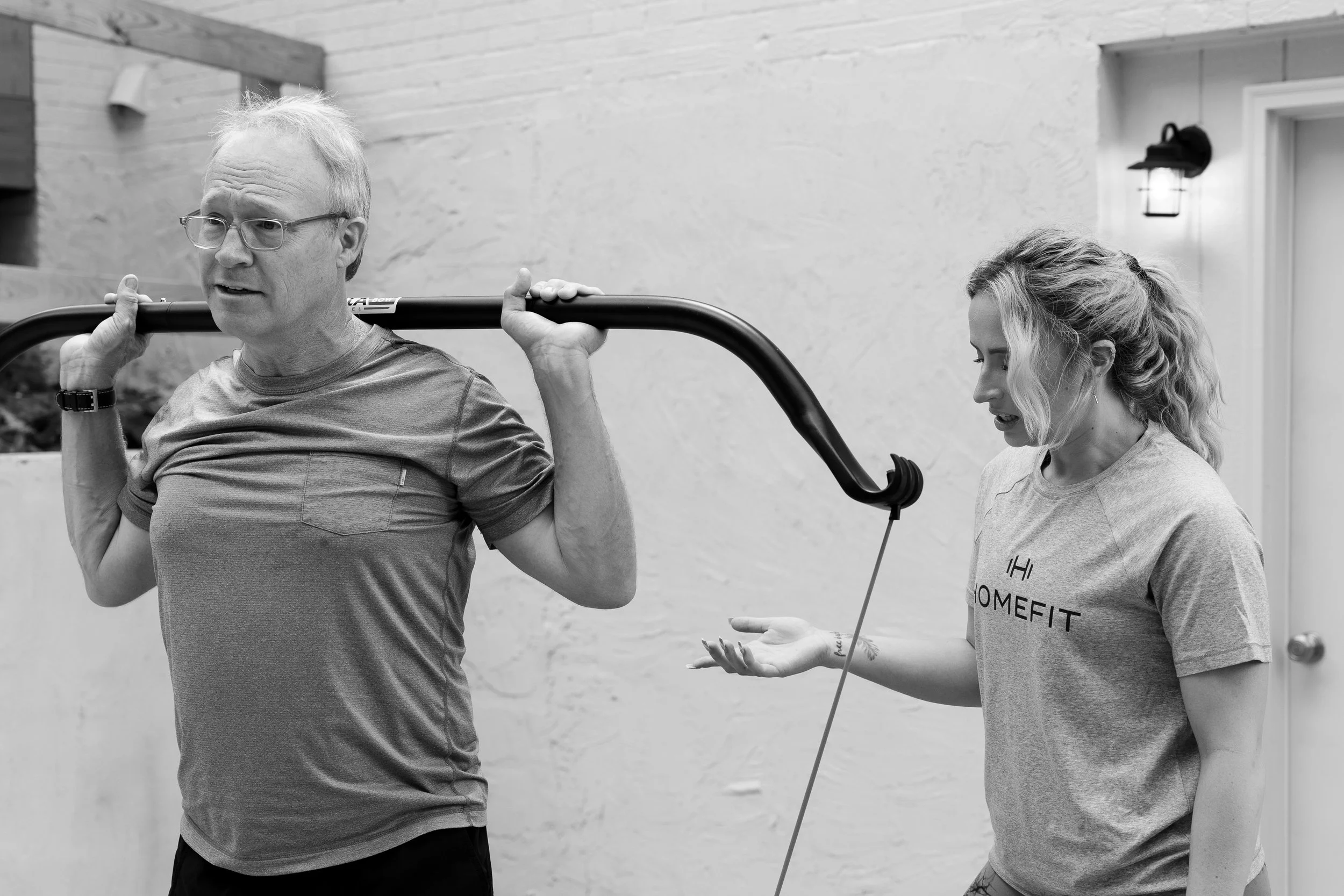
HOMEFIT's senior fitness approach includes areas such as balance, coordination, posture, overall strength, and flexibility, with personal training delivered in the client's own environment. And home-based exercise is not simply a matter of convenience; federal Healthy People 2030 resources cite evidence supporting home-based exercise interventions for improving several measures of physical fitness in adults 65 and older.
Training at home also gives a trainer the opportunity to understand the environment where a client actually moves every day. A staircase, chair, hallway, driveway, or set of steps may provide useful context when designing exercises that support everyday function.
Most importantly, the program can be individualized.
Two people of the same age can have completely different medical histories, fitness backgrounds, goals, mobility levels, and preferences. A thoughtful training plan should reflect that rather than treating “older adults” as one single category.
People managing medical conditions, recovering from an injury, or unsure about starting an exercise program should talk with an appropriate healthcare professional about what is safe for their individual circumstances.
The Goal Is Not to Stay Young. It Is to Stay Capable.
Healthy aging does not mean trying to stop time.
Bodies change. Priorities change. The way we train at 70 may look different from the way we trained at 30, and that is not a failure of fitness. It is exactly why good training evolves.
The goal is to build enough strength, balance, mobility, and endurance to continue participating in your own life.
It is being able to travel when the opportunity comes up. Carry your own groceries. Play with your grandchildren. Work in the yard. Walk the dog. Get down on the floor and back up. Climb the stairs. Keep pursuing hobbies. Maintain confidence in the things your body can do.
September's Healthy Aging Month is a useful reminder that those abilities are worth investing in long before we are worried about losing them.
You cannot control every part of the aging process, but you can continue giving your body opportunities to become stronger, and whether you are 45, 65, or 85, today is still part of your healthy aging plan.
HOMEFIT provides personalized in-home personal training designed around each client's fitness level, goals, lifestyle, and environment. For adults who want to build strength, improve balance and mobility, or simply feel more confident staying active as they age, working with a personal trainer can provide the structure and support needed to keep moving forward.
Contact us today to book a complimentary consultation and get a FREE yoga session or fitness workout today!