How Often Should You Work With a Personal Trainer? 1, 2, or 3 Days a Week Explained
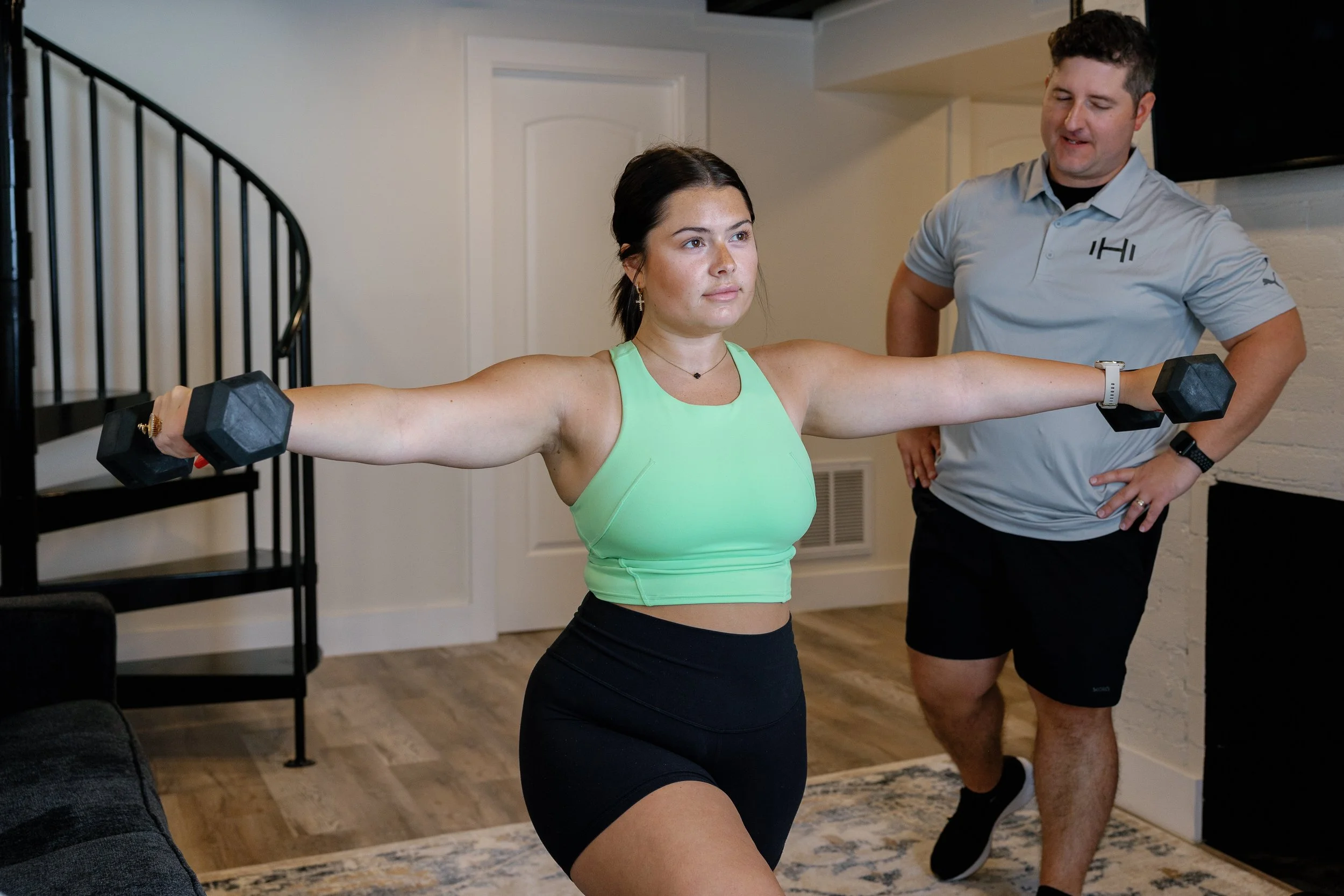
You have decided that working with a personal trainer could help you reach your fitness goals, but then comes another question: How often should you actually meet with one?
Once a week? Twice a week? Three times? Do you need a trainer every time you exercise, or is one session enough to keep you moving in the right direction?
Search for an answer online and you will probably find plenty of confident recommendations. The reality is more individual. The ideal number of personal training sessions per week depends on several factors, including your goals, current fitness level, previous exercise experience, schedule, recovery, confidence exercising independently, and what you are willing and able to do between sessions.
Someone who has trained consistently for years and wants help refining a strength program may need something completely different from someone who has not exercised in a decade and feels overwhelmed by the idea of walking into a gym.
That is why the better question is not simply, “How often should I see a personal trainer?”
It is:
“How much coaching do I need to build a fitness routine I can realistically follow?”
HOMEFIT’s approach to personal training is built around that idea. Rather than starting everyone with the same routine, trainers assess the client's starting point, discuss goals, and develop a customized training plan around the individual’s needs, abilities, and lifestyle.
The number of sessions should be part of that customization.
First, Separate “How Often Should I Exercise?” From “How Often Should I See a Trainer?”
This distinction is important.
The number of times you meet with a personal trainer does not necessarily equal the total number of times you should be physically active during the week.
Current CDC recommendations encourage adults to get at least 150 minutes of moderate-intensity aerobic activity per week, or an equivalent amount of vigorous activity, along with muscle-strengthening activity on at least two days each week.
The American College of Sports Medicine's updated 2026 resistance training guidance similarly emphasizes training the major muscle groups at least twice per week, while noting that consistency and individualization matter more than making a program unnecessarily complicated.
That does not mean everyone needs to hire a personal trainer twice a week.
Someone might meet with a trainer once and complete another strength workout independently. Another person might meet with a trainer twice and walk, cycle, play pickleball, or complete mobility work on other days. Someone else may prefer three coached workouts because having the appointment on the calendar is what keeps exercise consistent.
Your personal training frequency is about how much instruction, programming, progression, accountability, and hands-on coaching you need. Your overall fitness routine is bigger than those appointments.
Understanding that difference makes choosing a schedule much easier.

Is Working With a Personal Trainer Once a Week Enough?
For some people, one personal training session per week can absolutely be useful, particularly when that session is part of a larger plan.
Once-weekly personal training may make sense if you already feel comfortable exercising independently but want professional guidance to make sure your program continues moving in the right direction. A trainer can use that weekly session to check technique, introduce new exercises, adjust resistance, review progress, and help decide what you should be doing during the rest of the week.
It can also be an approachable starting point for someone who is hesitant to commit to a larger schedule.
The key is what happens between those appointments.
If your trainer sees you Monday morning and you do absolutely nothing until the following Monday, one weekly session is unlikely to provide the same training stimulus as a week that includes additional strength training and physical activity. On the other hand, if Monday's appointment gives you the confidence and structure to complete another workout later in the week and stay active on your own, that single coached session can play an important role in a much broader routine.
This is especially relevant for experienced exercisers.
Someone who already understands basic strength exercises and can comfortably follow a program may not need a trainer watching every repetition. Instead, the trainer becomes a resource for progression, accountability, problem-solving, and ongoing program design.
Once-a-week personal training may work well for:
People who already exercise independently
Clients looking for weekly accountability
Experienced exercisers who want programming guidance
Someone easing back into structured fitness
Clients who can reliably complete workouts between sessions
People who want regular coaching without having every workout supervised
The biggest question is not whether one day is objectively “enough.” It is whether one coached day leads to a consistent week.
What About Working With a Personal Trainer Twice a Week?
For many people, two personal training sessions per week can be a practical middle ground.
It creates multiple opportunities for coaching while still leaving space between sessions for recovery, independent activity, work, family responsibilities, and everyday life.
Twice-weekly training can be especially valuable for beginners because learning how to strength train involves more than memorizing a list of exercises. There is technique to learn, equipment to understand, effort levels to recognize, and a progression process that can be difficult to judge when everything is new.
Seeing a trainer twice a week gives you another opportunity to practice those skills before too much time passes between sessions.
There is also a convenient connection with general strength-training recommendations. Both CDC guidance and ACSM's current resistance-training recommendations support working the major muscle groups on at least two days per week.
Again, that does not mean those two days must be personal training sessions. However, for a beginner who wants their strength workouts fully coached, two weekly trainer-led sessions can provide a straightforward way to establish that foundation.
For example, a client might train with a personal trainer on Tuesday and Friday, walk or participate in other aerobic activity throughout the week, and add mobility or recreational movement on other days.
Someone else may use Tuesday's and Friday's sessions as full-body strength workouts and eventually become comfortable completing a third workout independently.
A personal trainer can help determine how those pieces fit together rather than simply adding more workouts for the sake of doing more.
Is Three Days a Week With a Personal Trainer Better?
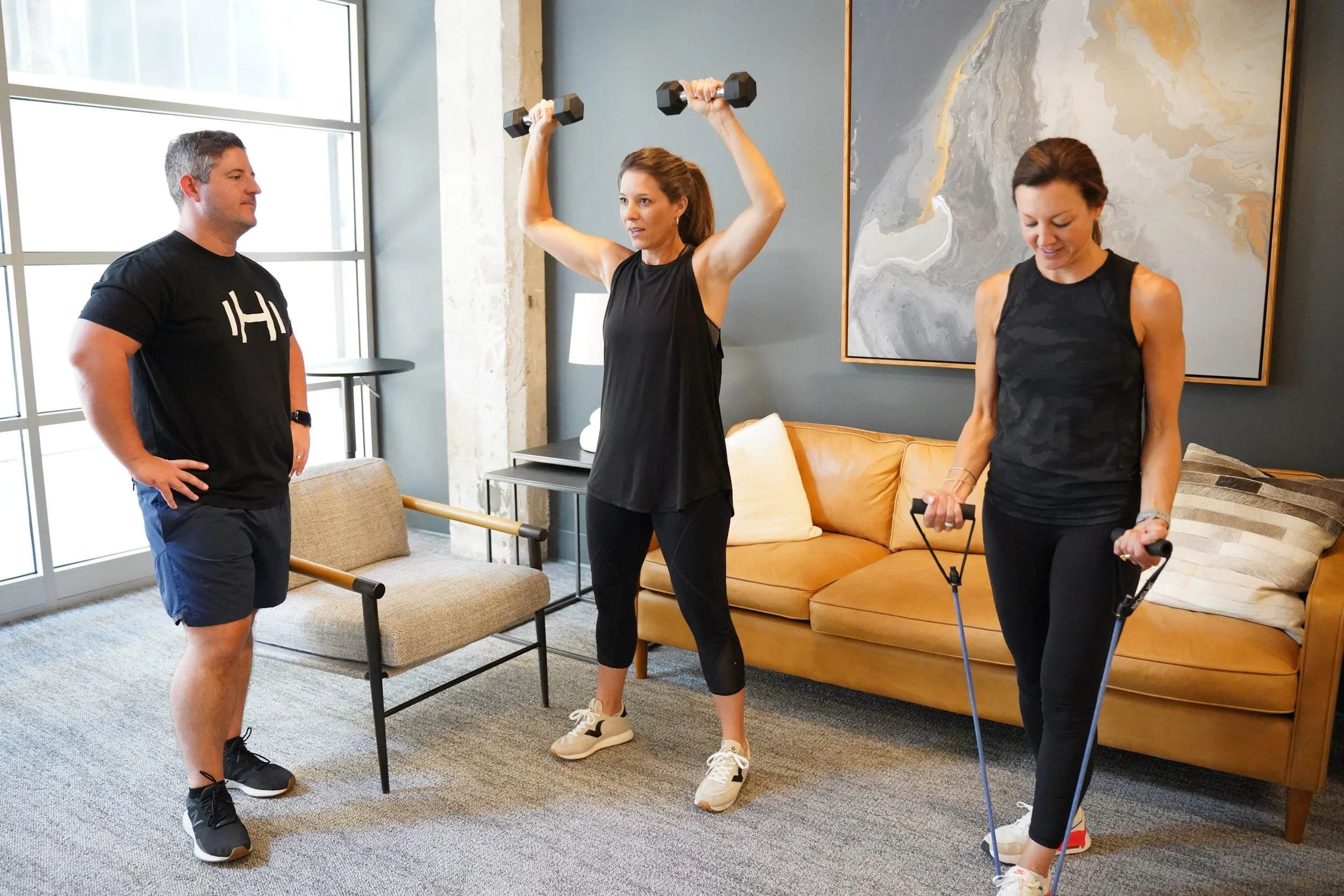
Three weekly personal training sessions can be an excellent fit for some clients, but more sessions do not automatically mean better results.
The question is whether those sessions improve the overall quality and consistency of the program. Three days a week may be useful for someone who is completely new to exercise and wants close supervision while developing confidence. It can also work for someone who simply knows they are far more likely to exercise when there is a scheduled appointment and another person waiting for them.
For clients with specific performance or strength goals, three weekly sessions can also give a trainer more opportunities to distribute training volume across the week.
The important part is programming.
Three sessions should not mean repeating the exact same difficult workout on three consecutive days. A thoughtful personal training schedule considers what was trained previously, how the client is recovering, what their goals require, and what other physical activity is taking place.
Research on resistance-training frequency reinforces why there is not one universally superior number. When overall training volume is considered, studies have found that different weekly frequencies can produce similar improvements, particularly when the amount of work performed is comparable.
In other words, the question is more complicated than:
Three is greater than two, so three must be better.
Three-times-per-week personal training may be useful for:
Beginners who want additional instruction and supervision
Clients who struggle to exercise without scheduled appointments
People pursuing specific strength or performance goals
Clients who want most of their strength workouts professionally coached
People who benefit from frequent accountability
Individuals whose schedules allow them to train and recover consistently
For the right person, three sessions can create tremendous momentum. For someone whose schedule is already overwhelmed, forcing three appointments into the week may create another routine that becomes difficult to sustain. The better schedule is the one you can continue.
If You Are a Beginner, More Coaching Can Help You Learn What You Are Doing
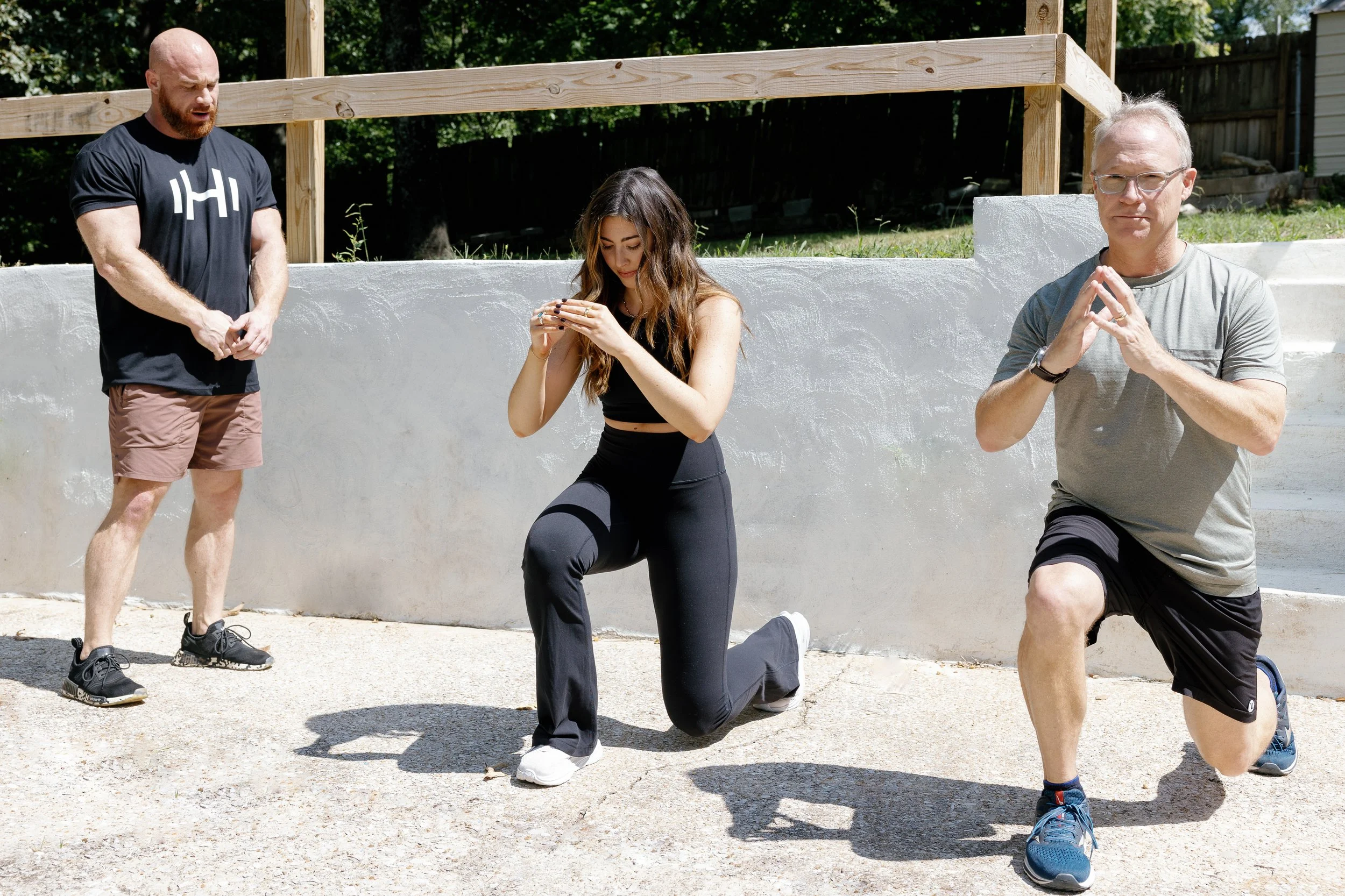
A personal trainer for beginners provides something YouTube videos and downloadable workout plans cannot easily provide: immediate feedback based on what is happening in front of them.
You may think your squat looks one way when it actually looks another. You may not know whether the weight you selected is challenging enough. You may feel an exercise in an unexpected place and be unsure whether that is normal. You may simply have no idea how to arrange exercises into a sensible workout.
Those questions are completely normal when starting.
One reason HOMEFIT emphasizes personalized fitness plans is that fitness level, experience, ability, and goals differ from person to person. The company's personal training model is designed to meet clients at their current starting point and build a customized program from there.
For beginners, that can mean spending more time learning movement patterns and gradually increasing difficulty rather than jumping into advanced exercises.
ACSM's updated 2026 guidance makes a similar broader point: consistency beats perfection, and moving from no resistance training to some resistance training produces meaningful benefit. The organization also emphasizes that an effective program should match the person's goals, schedule, and comfort level rather than becoming unnecessarily complicated.
That is an important message for anyone searching for a personal trainer because they feel like they are “too out of shape” to begin.
You do not need to get fit before hiring a trainer.
Learning how to train can be part of the training itself.
Your Goal Should Influence Your Personal Training Schedule
Two people can hire the same trainer and still need completely different schedules because they are working toward different outcomes.
If Your Goal Is General Fitness
Someone who wants to become stronger, have more energy, move consistently, and improve general fitness may do very well with one or two coached sessions paired with independent activity.
The trainer can establish the foundation while helping the client gradually become more comfortable moving outside scheduled sessions.
If Your Goal Is Building Strength or Muscle
Strength and muscle-building programs need enough weekly training to provide a meaningful stimulus, but they also need progression and recovery.
A trainer might divide the program across two or three sessions, or coach one portion of the week while providing a plan for additional independent exercise.
ACSM's 2026 resistance training guidance emphasizes matching resistance-training variables to the goal rather than assuming one method is ideal for everyone.
If Your Goal Is Weight Management
Personal training can provide structured exercise and help build consistency, but weight management is influenced by far more than the number of weekly trainer appointments.
Daily movement, nutrition, sleep, stress, total activity, and long-term adherence all matter.
Three workouts do not erase an otherwise inactive week, just as missing a single workout does not erase your progress.
If Your Goal Is Learning Proper Technique
You may initially benefit from more frequent contact with a trainer while learning exercises, then reduce the number of supervised sessions as your confidence grows.
This is an important point: your ideal personal training schedule does not have to remain the same forever.
What you need in month one may look very different from what you need six months later.

Do You Need a Personal Trainer for Every Workout?
One of the long-term benefits of good coaching should be increasing your understanding of exercise rather than making you feel incapable of moving without a trainer standing beside you.
A trainer can teach you how exercises should feel, how to recognize appropriate effort, how to progress movements, and how to make adjustments when circumstances change. That does not mean accountability stops being valuable.
Some people genuinely enjoy having every strength session coached and perform better when they have an appointment. There is nothing wrong with that. Others want to become increasingly independent and use their trainer as a combination of coach, programmer, and regular checkpoint.
The right balance depends on what keeps you consistent.
HOMEFIT also offers online and virtual training options in addition to in-home and onsite personal training, providing another way for coaching to extend beyond a traditional face-to-face session. The HOMEFIT Training App includes personalized workout plans, exercise demonstrations, goal and habit tracking, and integrations with other devices and apps.
That creates the possibility of a hybrid routine: train face-to-face with a trainer during part of the week and follow professionally designed programming independently during other sessions.
Recovery Matters, Too
When someone becomes motivated about fitness, the instinct is often to ask:
“How much can I do?”
A better question may be:
“How much can I consistently recover from?”
Your weekly schedule needs to account for exercise intensity, training experience, sleep, work demands, other sports, recreational activities, and how you are actually feeling.
That is another reason simply copying someone else's personal training schedule does not make much sense.
A person training for a recreational sport three nights a week may need a different strength schedule from someone who spends most of the workday sitting. A parent sleeping poorly because of a new baby may temporarily need something different from the program they followed six months earlier.
Even work stress and travel can affect how realistic a training week feels.
A thoughtful trainer looks at the whole picture and adjusts rather than treating the original plan as something that can never change.
Your Schedule Matters More Than the “Perfect” Number
The theoretically perfect training plan is not very useful if it repeatedly conflicts with your actual life.
Imagine someone decides they “should” train with a personal trainer three times a week. Their schedule already includes long workdays, school drop-offs, children's activities, travel, and family responsibilities.
For two weeks, they make it happen. By week three, appointments begin getting canceled. By week four, fitness once again feels like something they are failing to manage.
Compare that with someone who schedules two realistic sessions every week and consistently shows up for months. Which plan is better?
The second one.
One of the central advantages of in-home personal training is reducing some of the friction surrounding the workout itself. Instead of adding driving time, parking, waiting for equipment, and the logistics of getting to and from a gym, the trainer and necessary equipment can come to the client. HOMEFIT specifically offers flexible scheduling and customized training in the client's chosen environment.
For a busy professional or parent, eliminating the commute may be what turns two theoretical workouts into two workouts that actually happen.
That is why people searching “personal training near me” should consider more than simply which trainer is geographically closest.
So, Is 1, 2, or 3 Days a Week Best?
There is no universal winner.
Here is the simplest way to think about it.
One session per week can provide valuable coaching and accountability, particularly if you can exercise independently between appointments. Two sessions per week can offer a strong balance of coaching, repetition, strength training, recovery, and schedule flexibility. It can be especially practical for beginners who want multiple professionally guided workouts. Three sessions per week can provide additional supervision, structure, and accountability for people who want most of their training coached or who have goals that support a higher training frequency.
A well-designed two-day program may be more effective than three inconsistent or poorly structured workouts. One coached session plus several well-planned independent activities may work beautifully for an experienced client. Someone else may finally become consistent only after putting three appointments on the calendar.
The right amount is the amount that supports your goals and your life.
What Should You Ask Before Choosing a Personal Training Schedule?
Before automatically booking the highest or lowest number of sessions, think about what you actually need from the relationship.
Ask yourself:
How many days per week can I realistically devote to exercise?
Do I currently work out when no one is holding me accountable?
Am I comfortable exercising independently?
Am I learning strength training for the first time?
Do I have a specific performance or strength goal?
What other physical activities do I already do?
How well am I recovering between workouts?
Would removing the commute to a gym make consistency easier?
A trainer should ask many of these questions too.
HOMEFIT begins with a consultation and initial session designed to understand the client's goals, preferences, schedule, and starting point before developing a personalized fitness plan.
That is a much better starting point than deciding every client needs exactly three workouts a week.
The Best Personal Training Schedule Is the One You Can Build a Life Around
People often assume fitness results come from finding the perfect workout. Usually, the harder part is creating a routine that continues long enough for that workout to matter.
Whether you work with a personal trainer once, twice, or three times each week, the most important factors are that your program is appropriate for your goals, progresses over time, includes enough recovery, and fits realistically into the rest of your life.
You do not get bonus points for choosing the most demanding schedule. You get results from consistently following a good one.
For some people, that means one weekly appointment that keeps the rest of the week on track. For others, two coached strength sessions become the foundation of their fitness routine. Someone else may thrive with three appointments because the structure and accountability remove the constant decision of when and how to exercise.
There is no reason those people should all train the same way. That is the point of personal training.
HOMEFIT provides in-home, onsite, and virtual personal training built around the client's starting point, goals, preferences, and schedule. Trainers develop personalized fitness plans and can bring the workout and necessary equipment directly to the client, helping remove many of the barriers that make consistency difficult.
Book your complimentary consultation today and get a yoga session or training workout on US!